Welcome to YQtravelling’s FoodFriday–the day of the week when I show off some of the lovely eats I had while travelling.
Today’s post is a special feature where I teach you how to cook instant noodles in a hostel. Let’s get cooking.
Last month, I showed you how to cook a steak in a hostel. Today, I want to show you how to cook instant noodles in a hostel.
OK, I caved in and ate instant noodles in my hostel in Arequipa, Peru. The result wasn’t that good but if you need to eat, you need to eat.
For this recipe, you will need
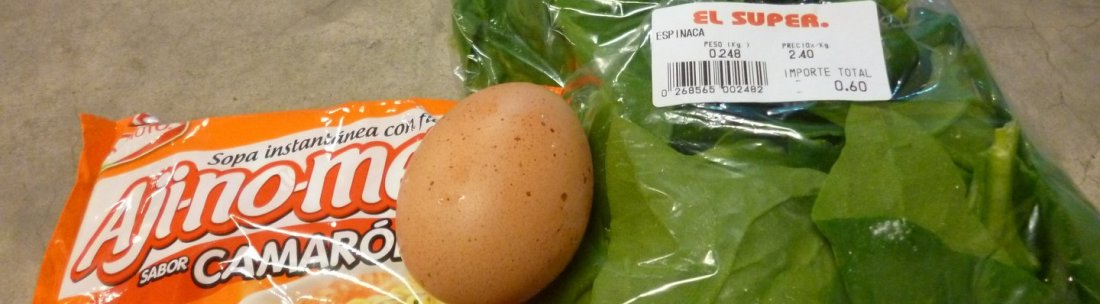
One instant noodle
One egg
Some vegetable
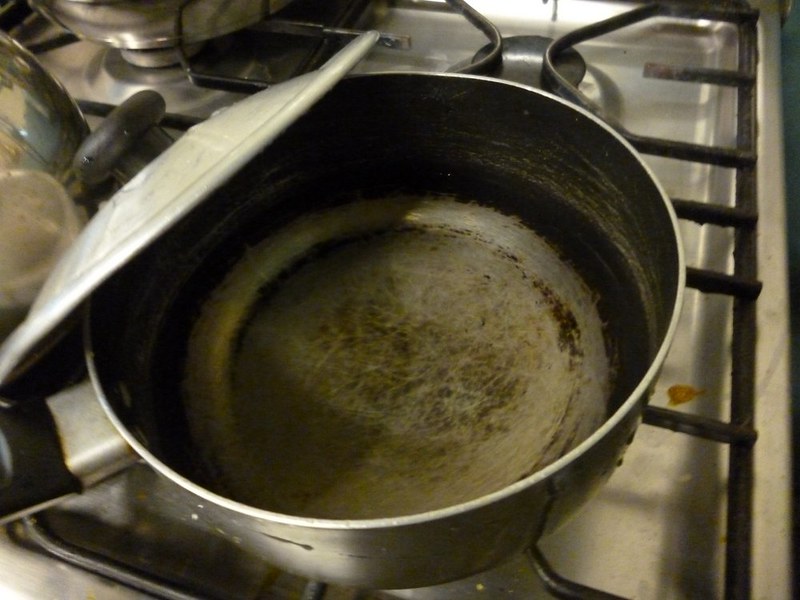
Pot with cover
Water
Step 1: Boil some water in the pot
Get the water to a boil to cook the noodles.
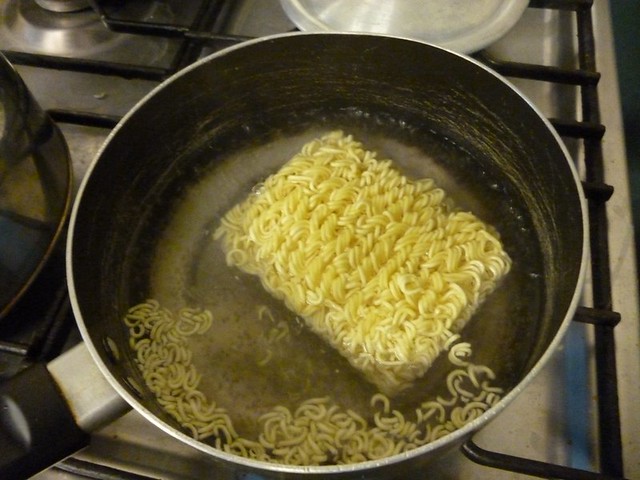
Step 2: Cook the noodles
Cook the noodles.
I don’t time my cooking and wait for the noodles to disintegrate from brick of noodles.
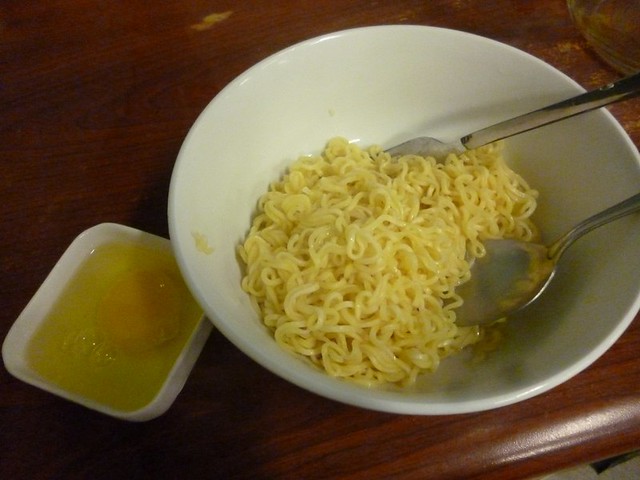
Take out the separated noodles and put them into a bowl.
Step 3: Make the soup with new pot of water
Pour out the noodle water and wash the pot.
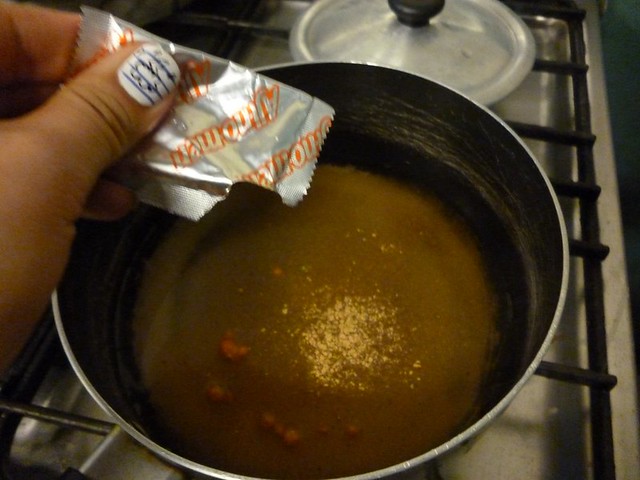
Boil another pot of water but don’t use too much because you don’t want thin soup. While you wait for the water to boil, put the seasoning into the water.
I usually use part of the seasoning, pinching one corner of the packet so those seasoning do not fall into the soup. This results in disgustingly underseasoned noodles but that’s how I roll.
Step 4: Cook the vegetable and egg
If you have more vegetable than water, cook your veggies in batch. Blanch your veggies until they turn a darker shade. Take the veggies out into the bowl.
When you have your last batch of veggies, you can crack the egg into the soup. Break up the egg if you want floating pieces of eggs or leave it untouched.
Step 5: Serve
When the egg is cooked to your preference, pour the soup into your bowl of noodles.
Do you have any secret recipe for yummy instant noodles? Share them in the comments.
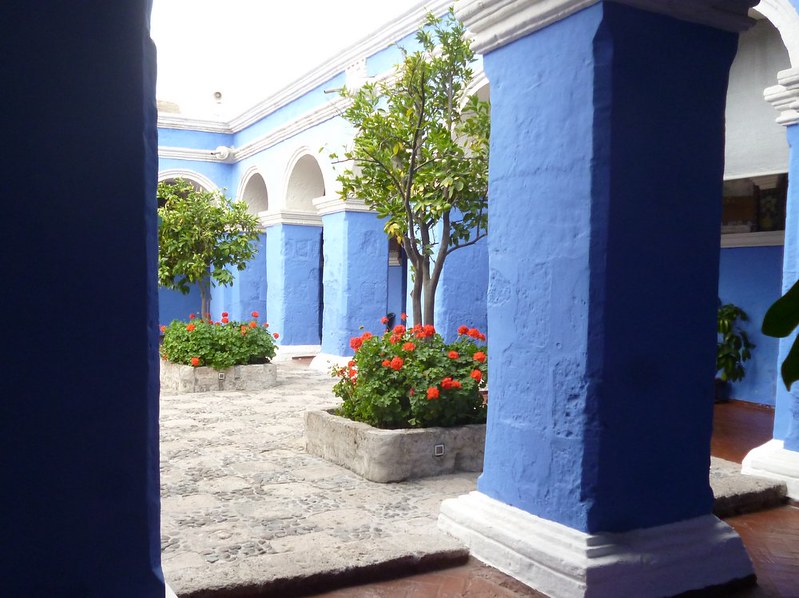
Santa Catalina Monastery is one of the most important sights in Arequipa. The monastery is known as a city-in-a-city because the nuns were quite self sufficient.
The entrance fee is 35 soles (S$17.50) which is quite expensive for Peruvian price. One of the tour guides in the monastery approached me and said the usual rate for a 1-hour guided tour is 20 soles (S$10).
With a guide, you will know more about the history of the monastery and hear interesting stories.
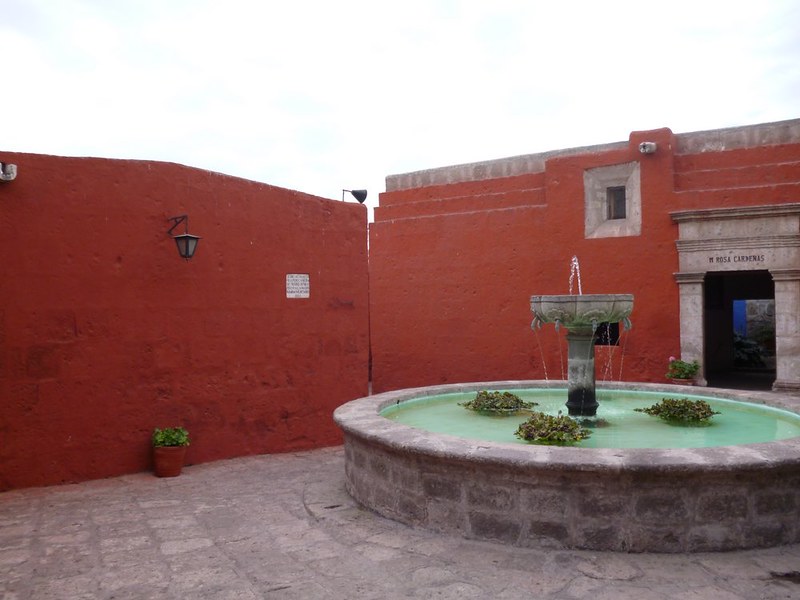
Fountain in Santa Catalina
Back when the monastery started, it was a period when the people in Arequipa followed Spanish customs and sent their second child into the church. “To pray for the whole family,” said my guide.
It was an honor to go into church and become a nun. The girls who entered the church were from upper class family. The families were able to afford building houses for their daughters which is why there are separated houses–complete with a bedroom, a kitchen and a servant’s room for the smallest houses.
The custom of having servants for the nuns stopped when one of the Pope Pius required the nuns to live together and share a same kitchen so they can understand how the poor live.
Now, there are still nuns staying in the monastery but they live in a separate section, called “New Monastery”. They make cookies, soap and perfumed rosaries which are sold in a small shop in the old monastery.
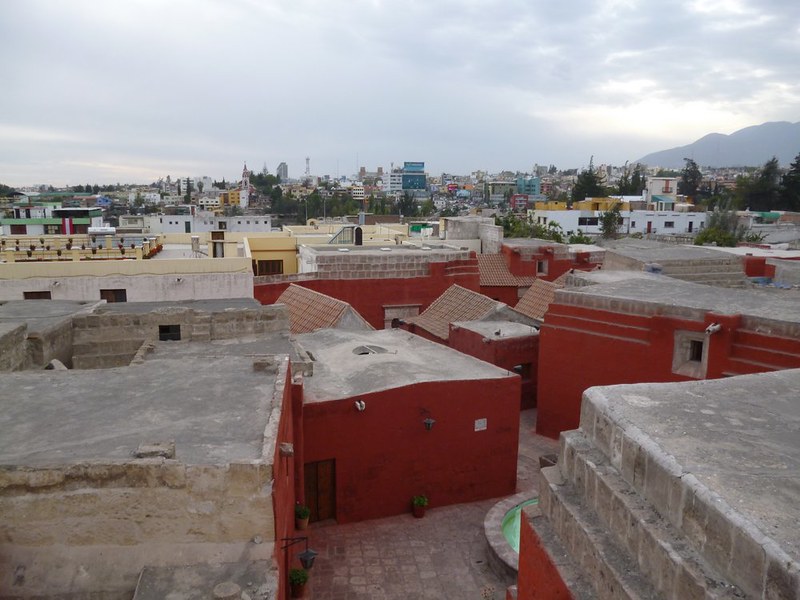
View from Santa Catalina’s top
At the end of the tour, we reach the paintings hall where religious painting by the Cusco School are displayed.
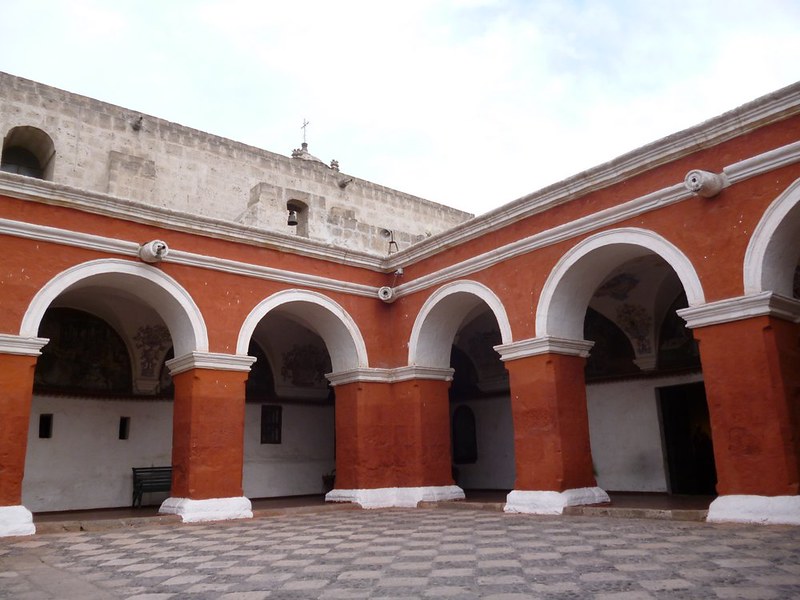
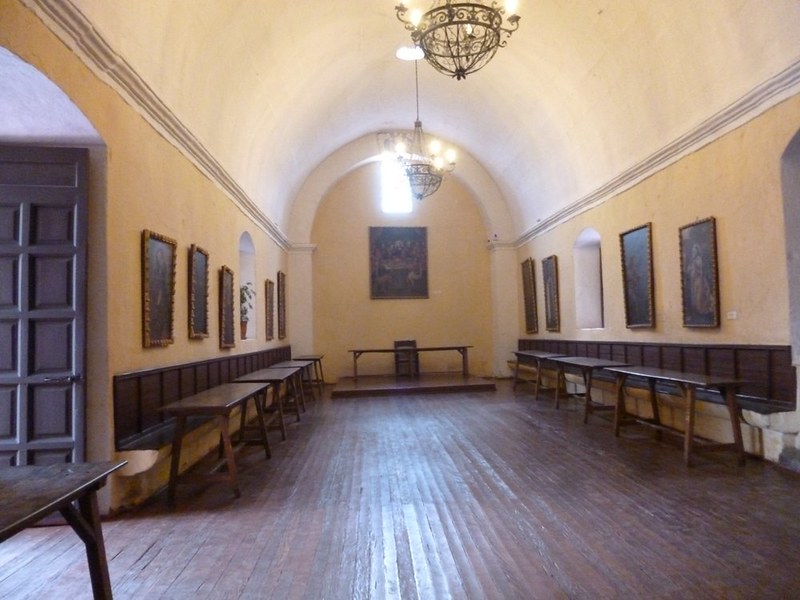
Santa Catalina archesHall in Santa Catalina where nuns ate
This morning, I realized how different it is to cook eggs here in Arequipa compared to Singapore. Usually, it takes about 5 minutes of boiling water for the eggs to be the middle of soft and hard boiled eggs.
Here in Arequipa (2380 meters above sea level), things take a lot longer to cook.
My eggs turned out to be the consistency of Yakun’s 10% boiled eggs. It was gross. I had to boil the eggs for a longer time before they were soft boiled.
I love my eggs hard boiled though so I’ll need to figure out how long I need to cook them.
Street harassment: How men and women handle it differently
At my language school, we have two different teachers in the morning, each for 2 hours of lesson.
At the end of my classes, I asked the teachers how I should handle street harassment here in Arequipa. I’ve had a problem of random men (it’s always men) on the streets calling out pseudo Chinese such as, “Ching Chong.”
I sometimes imagine saying to the , “Are you talking to me, then you’d better say it to my face. A–hole!” But the most I’ve done was this.
My teachers couldn’t help with this problem.
My male teacher did tell me to say something offensive but suggested that I ask my female teacher how to respond. Despite how angry I am, I would not use the word though.
My female teacher told me to ignore it and just continue on with my life.
How would you respond to racist street harassment?
The only time I’ve ever gotten a manicure was part of a free event by some sanitary napkin company. My nails were painted a pearly pink.
While I liked my shiny nails, I’ve never found the time or money to visit a manicurist since then.
Today, my school mate N suggested that we visit a manicurist and that the price in Arequipa is a lot lower than overseas.
We went to a little alley that led into a courtyard a few blocks away from the hostel. The manicurists in one of the shops weren’t doing much when we went in.
I chose to do a plain manicure for 10 soles but N convinced me to get something fancy. I flipped through the samples and found one that I liked.
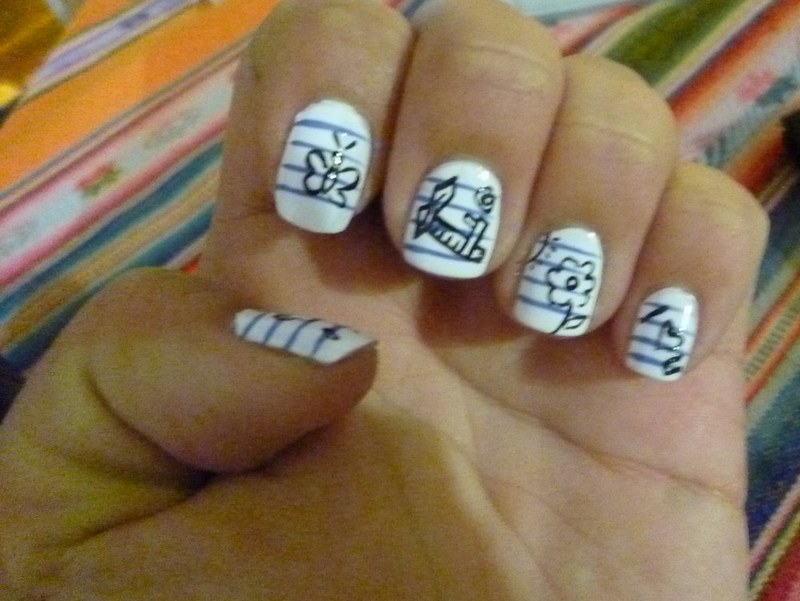
It was a white-background with blue lines like in an exercise book and doodles. I heart it very much.
YQ gets her nail painted
The cost of the nail art was 20 soles (S$10) but it felt like a lot more work than that price. There was so much preparation: filing, cuticle pushing, painting the white base, painting the lines, painting the actual doodles. (You see what a noob I am at nailcare.)
The result was awesome. It looks like I am carrying exercise books on my nails.
My nails look like an exercise book. I love them!
Maybe I should have asked them to draw on the different past tense in Spanish, that would be very useful in class.
Throughout the manicure session, I felt something like guilt. Here I was with sweaty palms and my nails being painted with art. Am I exploiting the cheap labor of Peru or is this a fair trade?
Some things are best left unsolved.
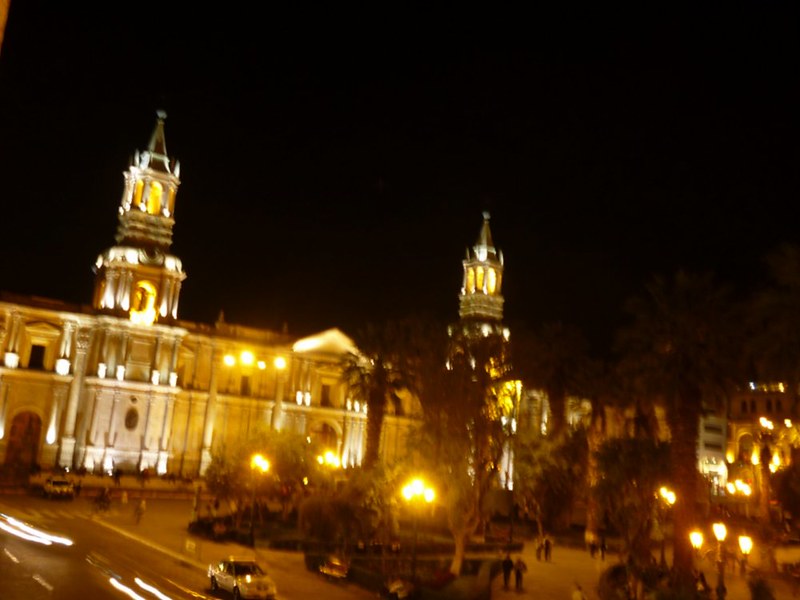
Arequipa at night
Here is a photo of Arequipa at night to distract us all.
I moved out of my homestay in Arequipa on Sunday. I realized that I was a lot more happy when I can make a huge mess of my hostel room without feeling embarrassed.
I’m not a very good homestay guest. I like to stay in my room when I get back. I like to shower twice in a day. I like to stay near the city center.
Hosts are so hospitable I feel bad that I’m not as open and friendly
Feel miserable not being able to live as I want
Homestay ends
I do have a friend who did a homestay in France and loved her experience. She still contacts the host family and the little boys (now grown up). The difference between her and I is that she’s an extrovert who enjoys having active fun. My opinion of fun is the internet and books.
Have you been in a homestay? How was your experience?
I’m only taking the usual four hours of Spanish lessons this week. This means that I have a really long lunch time.
For today’s lunch, my schoolmate N brought me and her teacher to a picanteria (local restaurant) near where I used to stay.
La Capitana, Arequipa, Peru
The picanteria felt like it was a long taxi ride away.
On the taxi, the teacher (who’s my age) told us about a bachelorette party her friend had. The friends were thinking of whether they should hire male strippers because the bride-to-be is religious.
The restaurant was packed with people having lunch. There were a mix of people from all walks of life. People in office wear and people in “dressed down” wear all share tables in this midsized restaurant.
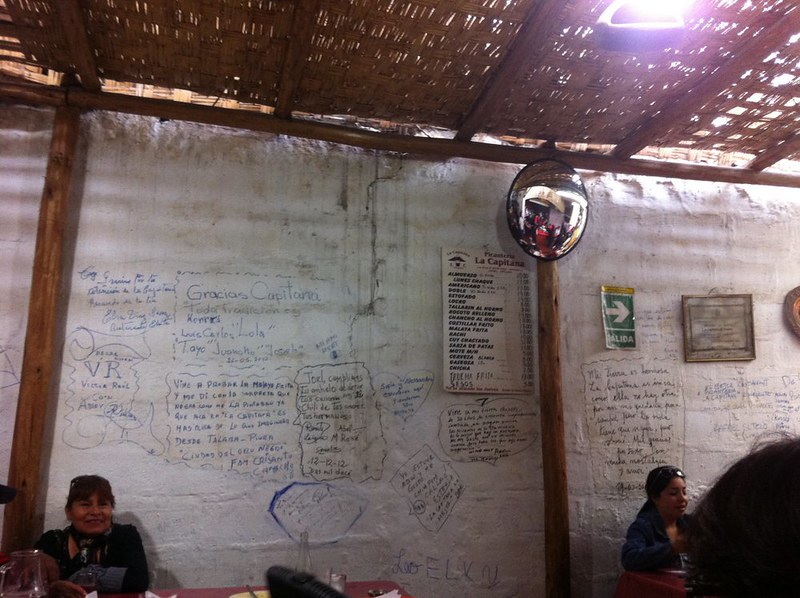
Walls of La Capitana
We shared a jar of chicha, a deep purple drink made of fermented corn. It’s an acquired taste and I prefer Fanta Grape (which I hate) over chicha.
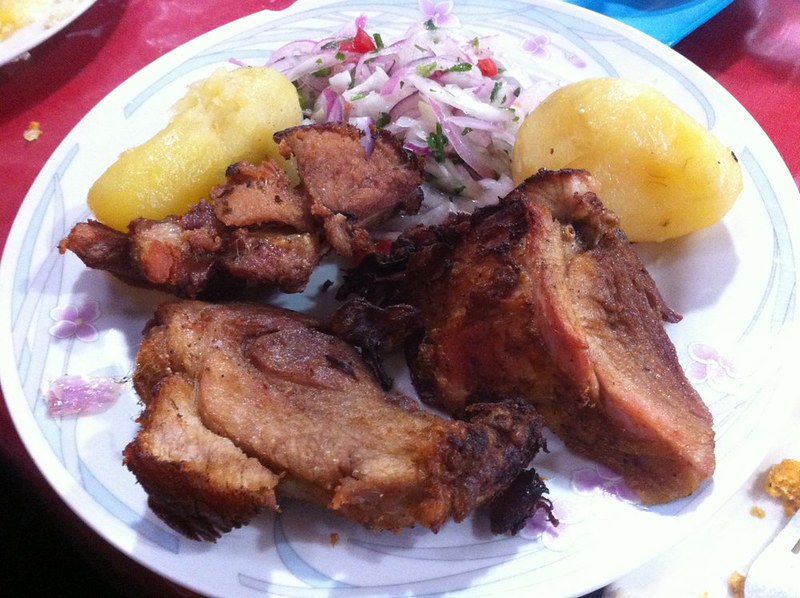
My meal was chicharron which reminded me a lot of 烧肉 which is Chinese roasted pork.
Pork at La Capitana
After lunch, we walked back to the city center. I dropped off my laundry at one of the laundry places. I have to admit that I have not used a washing machine for the past 3 months. I’ve always washed my laundry by hand.
Laundry here is quite cheap. The place I went to charges 3 soles (S$1.50) per kilogram. My bag of dirty clothes were 2kg.
Visiting the Confucius Institute in Arequipa
I also headed to the Confucius Institute which is just down the road from the hostel.
They had a small museum with very Chinese things.
Small museum at Confucius Institute in Arequipa
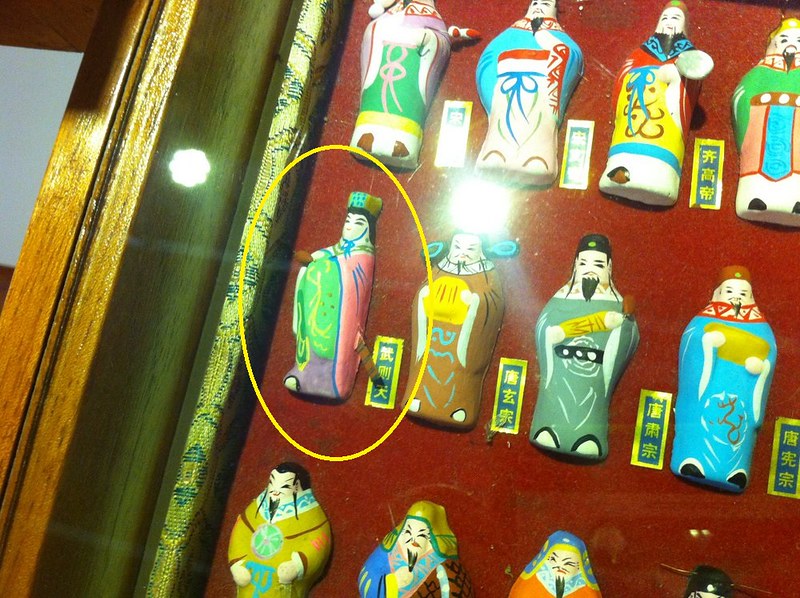
My favorite display was the little porcelain figurines of past emperors and empress. I looked among the mini men to find the only female emperor in Chinese history.
One morning when I was walking to school, I saw a large tour bus advertising Mundo Alpaca (Alpaca World). Several days later, I saw a brochure for the place and figured out where the location is and decided to visit.
I had imagined Mundo Alpaca to be a big safari filled with frolicking alpacas. I imagined being able to pet one or two wooly alpacas.
Mundo Alpaca is at the end of Santa Catalina street so it’s really easy to find.
The place consists of a large shop with alpaca-derived products. I didn’t look at any of the clothes because my main mission was ALPACAS!
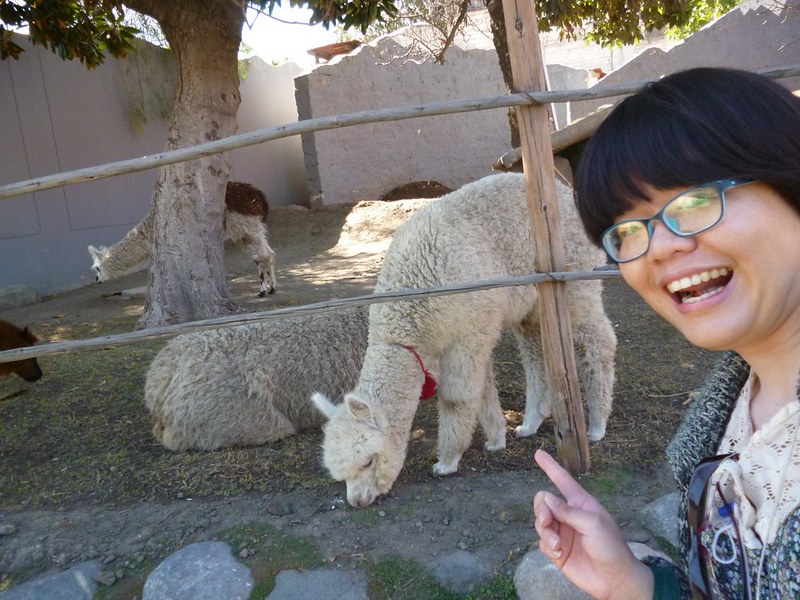
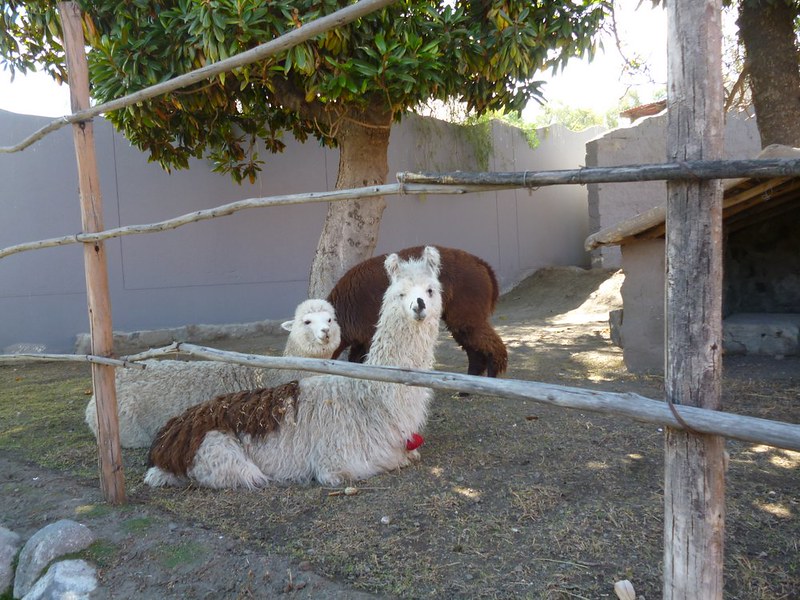
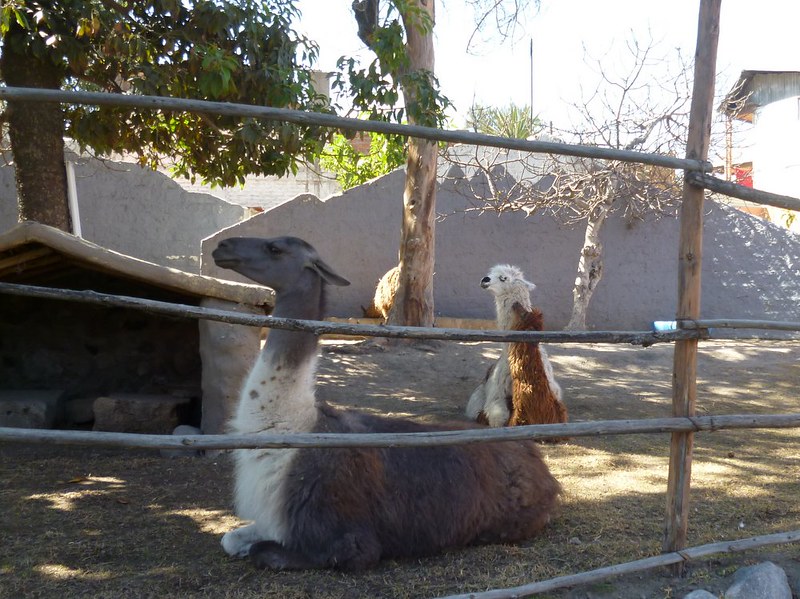
I found the alpacas at the end of the path. It wasn’t a large safari of alpacas but a midsized pen with alpacas, llamas and even other camelids.
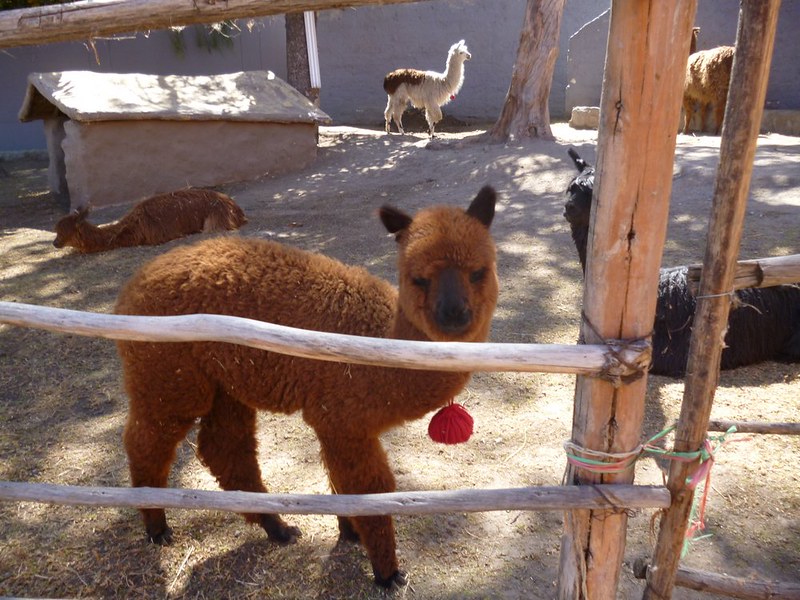
The animals were mostly sitting around doing nothing, except the two baby alpacas which were nibbling at the grass.
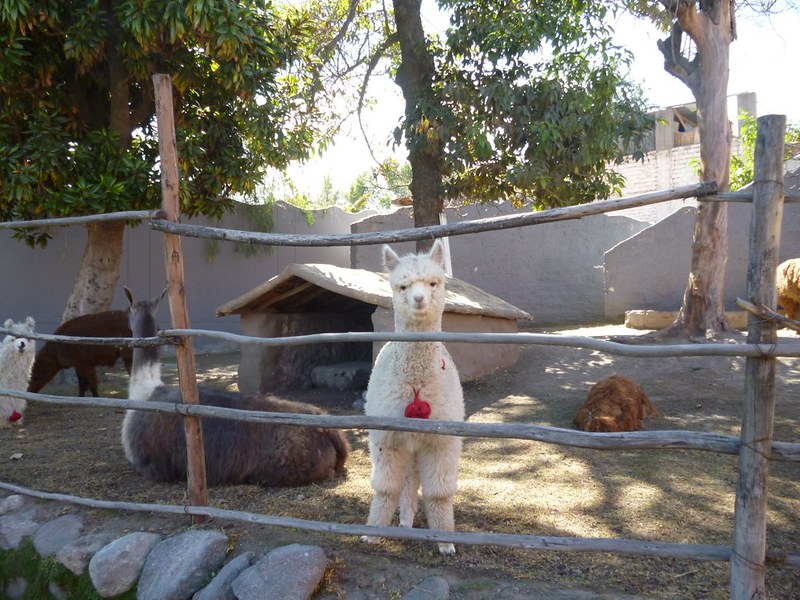
The white baby alpaca stopped grazing to look at me (or maybe it was a stare down, I didn’t know enough alpaca body language).
Baby alpaca at Mundo AlpacaBrown baby alpaca I call Coffee.
I didn’t dare pet any of the animals in case they chomp my hands off. There were one or two animals which sat in a dignified way, looking down on me. Others look at me a bit like dumb sheeps (not that I’ve seen any sheeps or their IQ test results).
Llamas or alpacas?
I headed into the exhibition area where there were a few bags of alpaca and llama wool. As I read the description of the different animals, I heard a strange grunting outside.
I rushed out and tried to find what was wrong. Then I realized that one of the white large llama was sitting on top of the other brown llama. It was quite disturbing to see the two animals mating.
Llama sex in the background.
Very soon, the brown alpaca shook itself, causing the white llama to fall off it. Then the brown llama walked away, leaving the large white llama standing there looking at nothing.
I was tired of Alpaca World really soon and headed off for lunch. At lunch, I had llama steak wrapped in crepe. Oops.
More alpaca photos can be found on my Facebook page. Click on the link for more squee!
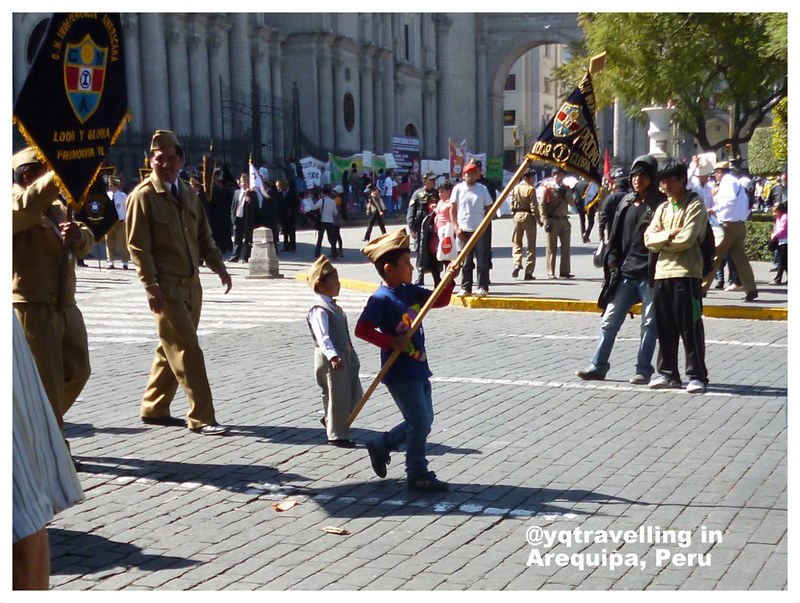
Another cute event that happened on Sunday was a parade in the city center. There were men marching in suits. But the most adorable were the little boys leading the marches of their groups.
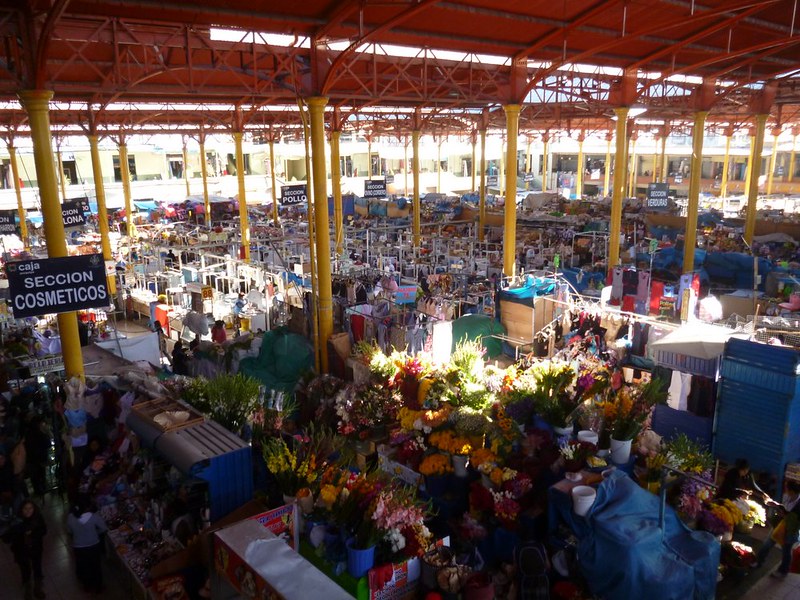
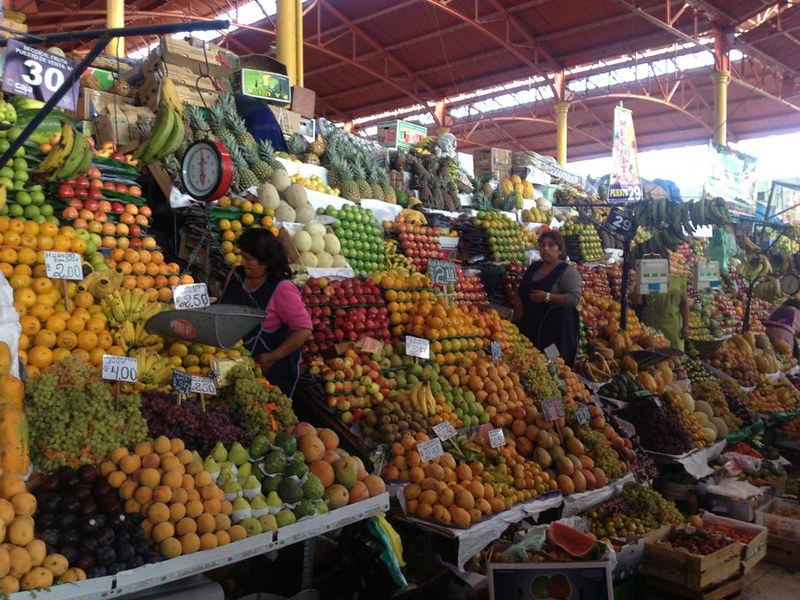
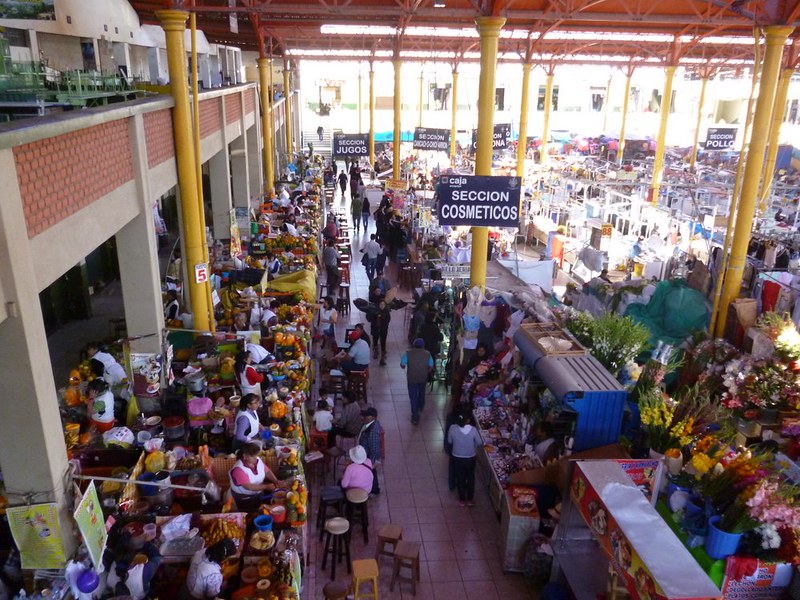
View of the inside of San Camilo market in Arequipa
It’s Saturday and I have no class! (Although I still need to get on with memorizing my verbs, never mind that for a moment.) I checked out San Camilo a little past lunch time.
The market is very near the city center. Like many other buildings in South America (OK, maybe just this other one in Arica), it was designed by Gustave Eiffel.
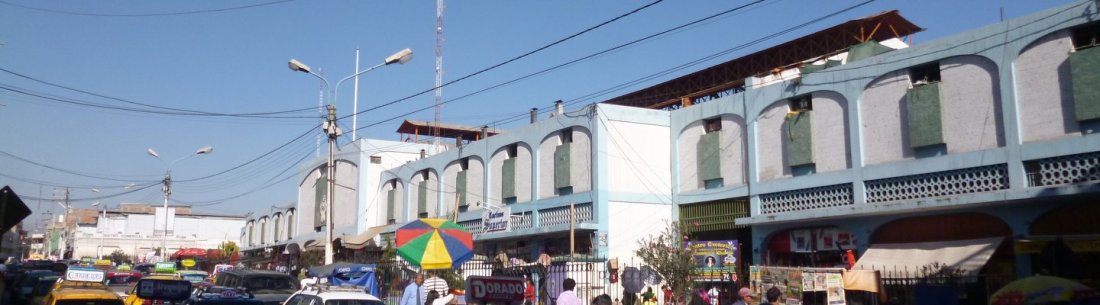
From the outside, the market doesn’t look that impressive. It’s kind looks like Kuala Lumpur’s central market. But the inside is something I’ve not seen before.
Tall metal poles support the metal roofs and sunlight pours in from the side. I have a feeling the inside of the market is modern.
For me, the most impressive part of the market was the fruit stall lane. The fruits were stacked really high on a sloped display.
At the market, I ate ceviche and drank mix fruit juice. I’ll leave the food entry for one of the #FoodFriday but you can check out the photos in my Chinese blog.
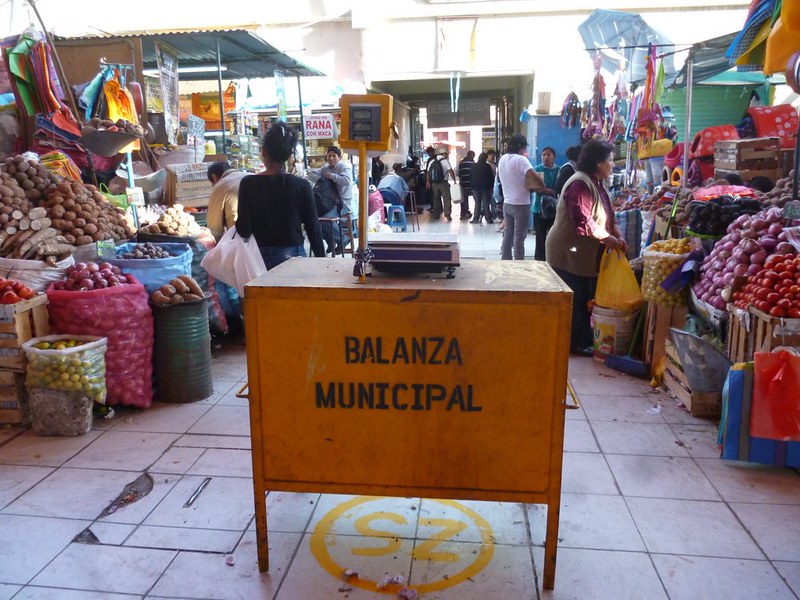
Juice stalls at San Camilo marketOfficial scale in the market. Reminds me of ancient Rome.
Other important news
I’ve moved out of my host family’s place. I’ve discovered that I’m not very good at host families.
Yes, it’s a good chance for language practice but only if I’m willing to talk. Most of the time, I’m more willing to sit in front of my computer.
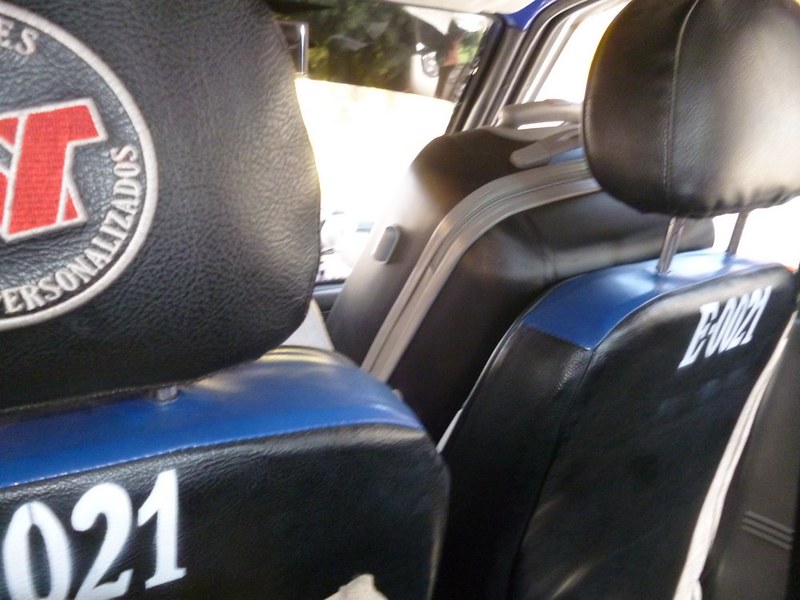
Taxi in Arequipa
Today was moving day. I called one of the taxi companies in my broken Spanish for a cab. The cab never came.
In the end, the host-sister helped me call for one and shared what the usual price of a taxi ride is.
My room at the hostel has 3 beds, enough for 7 people and all that for me. That is just AWESOME. I’ve also made myself at home, which is I’ve made a mess of the room. Just in one day!

















 YQtravelling