Welcome to YQtravelling’s FoodFriday. The day of the week when I show off some of the lovely eats I had while travelling.
Today we’re slurping some soups made of fruits of the sea in Peru.
Some time ago, I talked about Latin America’s ceviche, a dish with raw fish cooked in lime or lemon juice. Today, we’re still eating food from under the sea but it’s cooked using fire.
I love soups and this extends to noodle dishes in soup. There is something very comforting about a food that doesn’t require you to chew too much.
I also like my soups tongue-burningly hot because that’s when I know that I am alive. I’m a bit of a masochist when it comes to soup.
Seafood soups in Peru
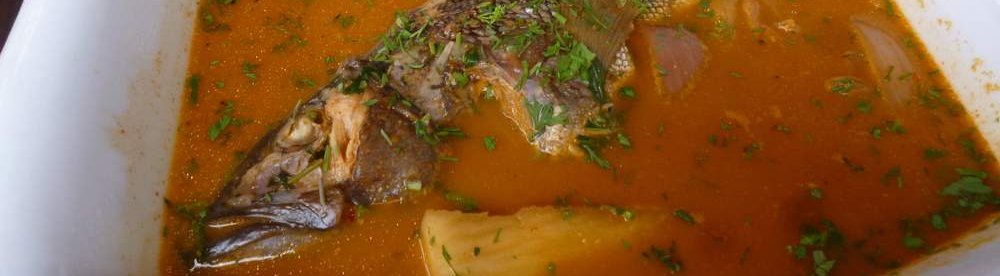
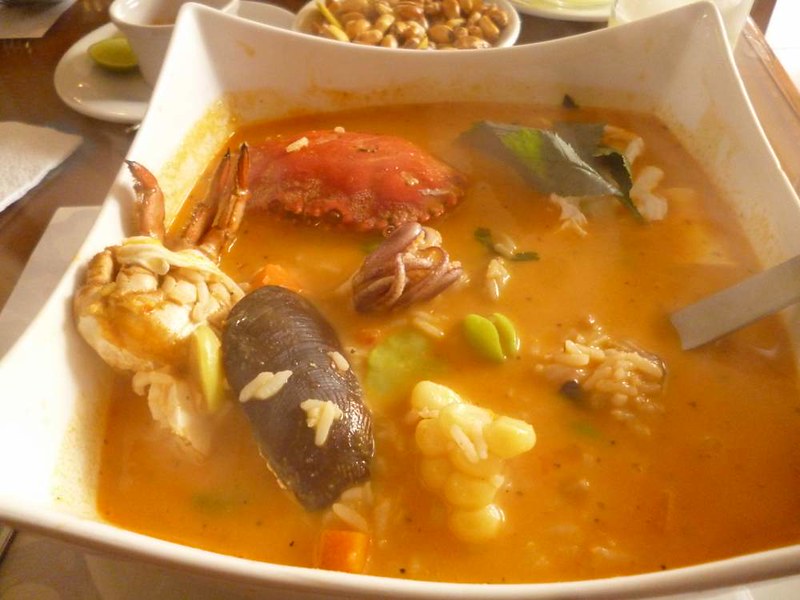
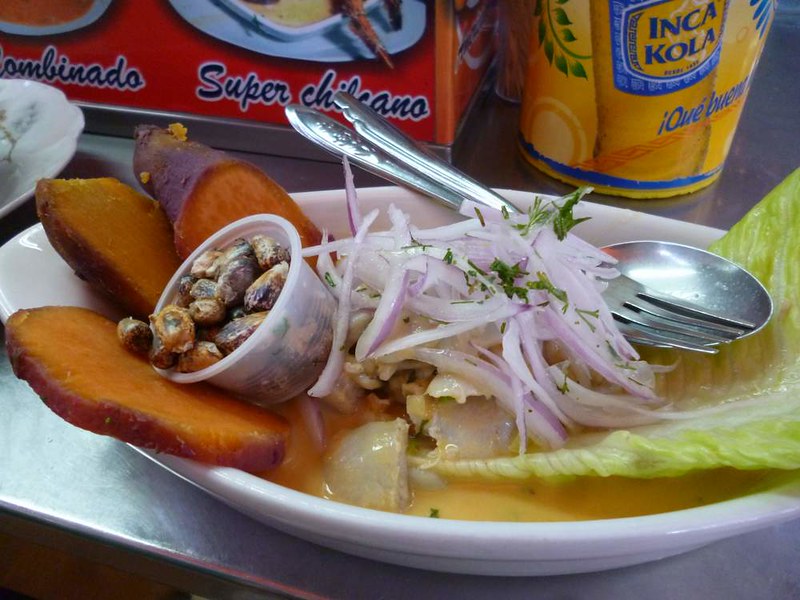
Seafood soups in Peru were unlike the Chinese soups that I’m used to. Instead of clear soup, we have a stock that is bright orange. The ingredients always seem to threaten to escape from the bowls which are huge.
Welcome to YQtravelling’s FoodFriday. The day of the week when I show off some of the lovely eats I had while travelling.
Today we’re making our own hot chocolate, Argentinian style.
I was introduced to the submarino–a winter Argentinian drink–in my Spanish class in Buenos Aires. Out teacher asked our class of 3 if we knew what a submarino was.
Being the smart ass (although truthfully more ass than smart) that I am, I said that it was a sandwich, thinking that it was a quirky nickname for Subway.
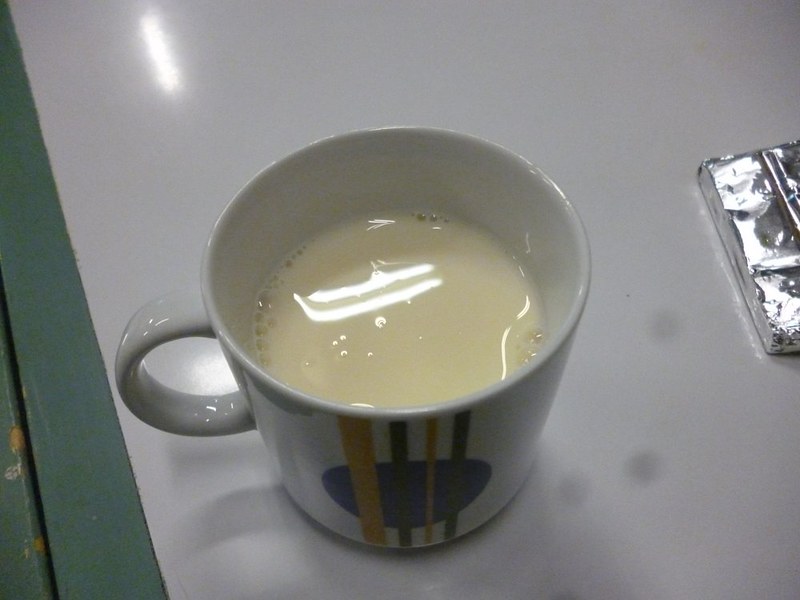
Then the teacher explained that it was a drink. In a tall glass of hot milk, a bar of chocolate is submerged, giving it its name “submarino” (submarine).
One day, I tried the drink at a Buenos Aires cafe. The waitress came with a glass of milk and TWO bars of chocolate. The chocolate’s label indicated that it was for submarinos. However, I took a nibble and discovered that it tasted the same as regular dark chocolate.
Instead of flying to Buenos Aires during winter to try the submarino, I will share my recipe for making a submarino in 4 simple steps.
Step 1: Prepare the ingredients
For this recipe, you will need:
Milk
A bar of chocolate, preferably dark
Microwave-friendly heat-resistant mug
A spoon
Step 2: Heat the milk
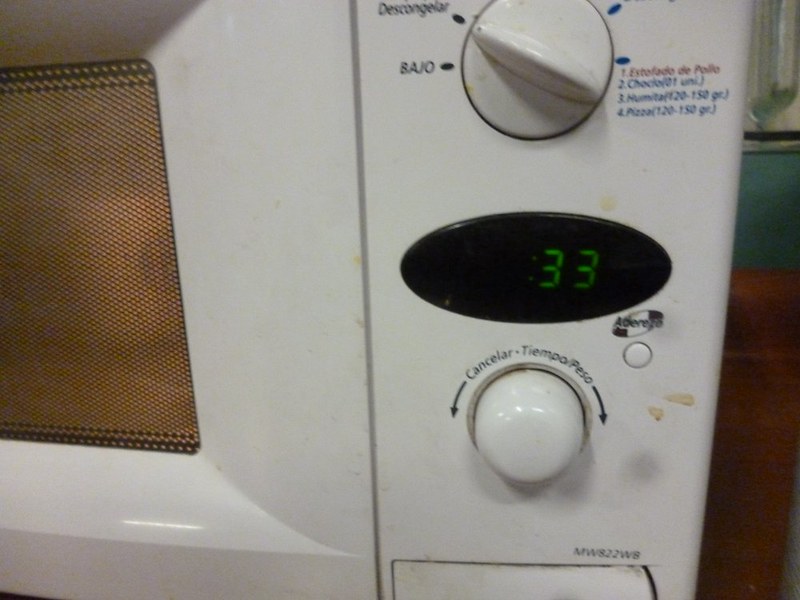
Pour out your milk into your mug. Put the mug of milk into the microwave and heat it up in 20-30 seconds intervals, test the temperature of the milk and you are ready when the the milk is steaming hot.
Step 3: Submerge your chocolate and stir
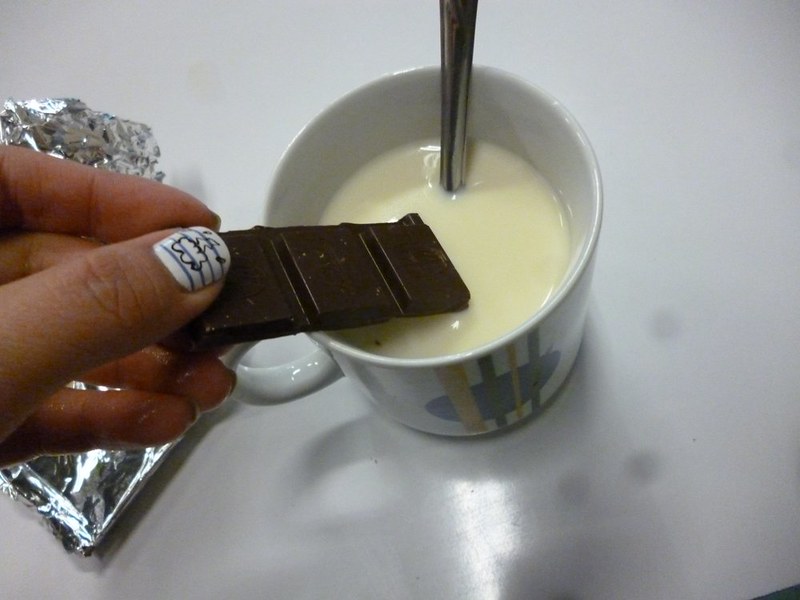
Break off a row of chocolate and drown it in milk. Stir vigorously with your spoon.
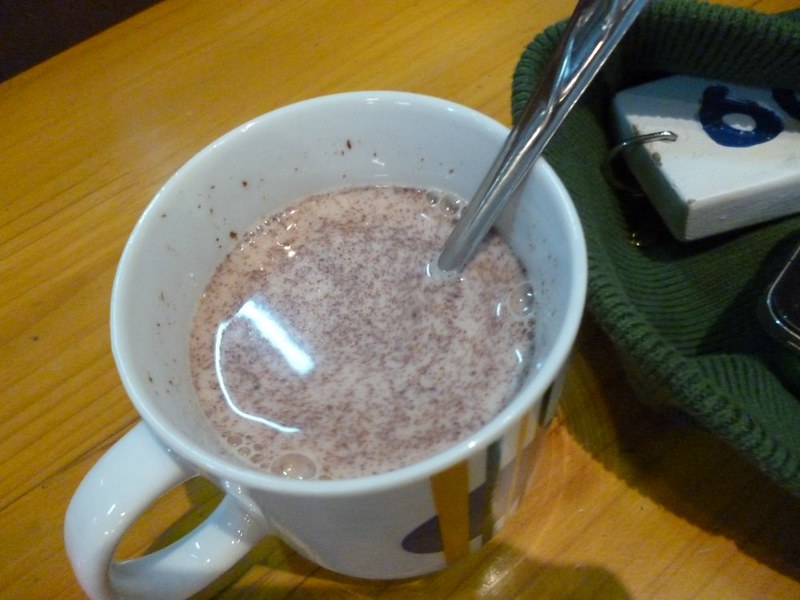
Once most of the chocolate has turned to liquid, you are ready to…
Step 4: Serve
Drink the whole mug in a go.
Oh, you might need to bathroom afterwards because even people who are not usually lactose intolerant will have some of its symptoms when finishing a large glass of milk. (Or maybe it’s just me.)
Welcome to YQtravelling’s FoodFriday. The day of the week when I show off some of the lovely eats I had while travelling.
Today we’re going to going to South and Central America for some raw fish yummies.
It was my mom who introduced me to the wonders of sashimi. A long long time ago, I didn’t realize just how tasty raw fish with a hint of spicy wasabi is. One day, she encouraged me to try out “just one slice” of tuna sashimi. I was hooked!
Since then, I always welcome dishes with raw seafood (even if they taste like rubber) so imagine my joy when I learned about Latin America’s ceviche.
The dish, also spelled as “cebiche”, is raw fish or seafood marinated in citrus juice. The juice “cooks” the fish using some scientific magic. Or About.com can explain better:
In the culinary arts, ceviche is a Latin American recipe for raw fish and seafood marinated in citrus juice, mainly lime and lemon juice. The acid in the citrus juice coagulates the proteins in the fish, effectively cooking it.
Ceviche is served in the morning and until noon in Peru because it’s not good to keep the half-cooked fish until dinner time. However, for tourists, restaurants do serve ceviche for dinner.
Ceviche at Chan Chan, Buenos Aires
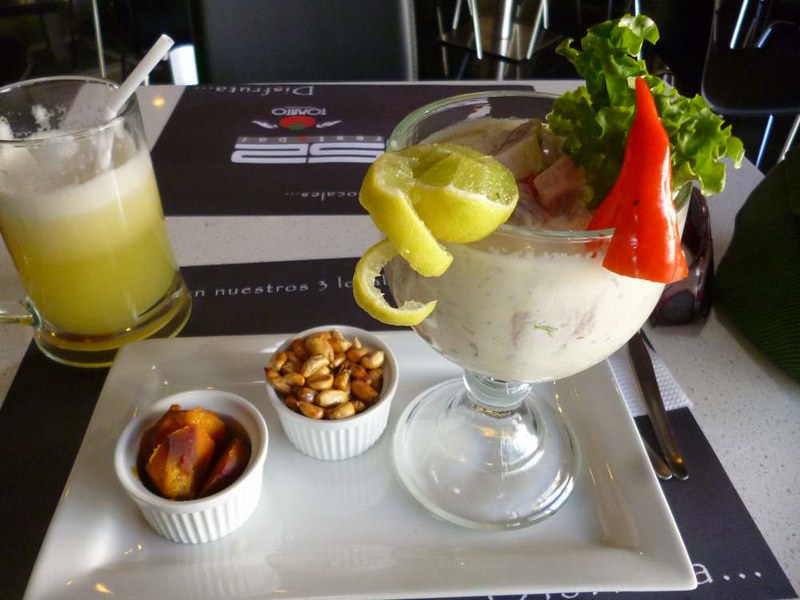
My first ceviche experience was in a Peruvian restaurant in Buenos Aires.
Chan Chan was near my hostel and was said to serve cheap food. I ordered the ceviche, despite not knowing what to expect. I imagined a large plate of sashimi slices but it looked like this:
Cebiche from Chan Chan, Buenos Aires
There was a bush of onion on my fish and a piece of tapioca and a small corn. I thought it was going to be all meat. :(
Still, I fell in love with the tangy dish despite my ulcers which were stabbed by the lime juice with each bite.
From then on, I was open to tasting as many ceviches as I could. However, until now, the dish from Chan Chan remained the best tasting and the most filling ceviche that I’ve had.
Ceviche at San Camilo Market, Arequipa, Peru
I’m hesitant about eating ceviche in most places because the combination of raw fish and unsanitary conditions equals disaster.
So I was glad to learn that the couple from GQtrippin did not have problems with the ceviche at San Camilo Market in Arequipa. I made it a point to visit the market and taste the local ceviche.
Cebiche from Chan Chan, Buenos Aires
The sauce for my ceviche was dyed a slight orange color from what I hope was the tapioca. The dish was nice but it couldn’t compete with my memory of my dish in Buenos Aires.
This other ceviche place in Arequipa
I adore ceviches but I find it frustrating that they never serve a big enough serving to strerch my stomach. Ceviches are served in petite portions with more garnish than the actual fish.
Sometimes the dish is served in fancy wine glasses like this one from a ceviche recommended by one of the teachers in Arequipa.
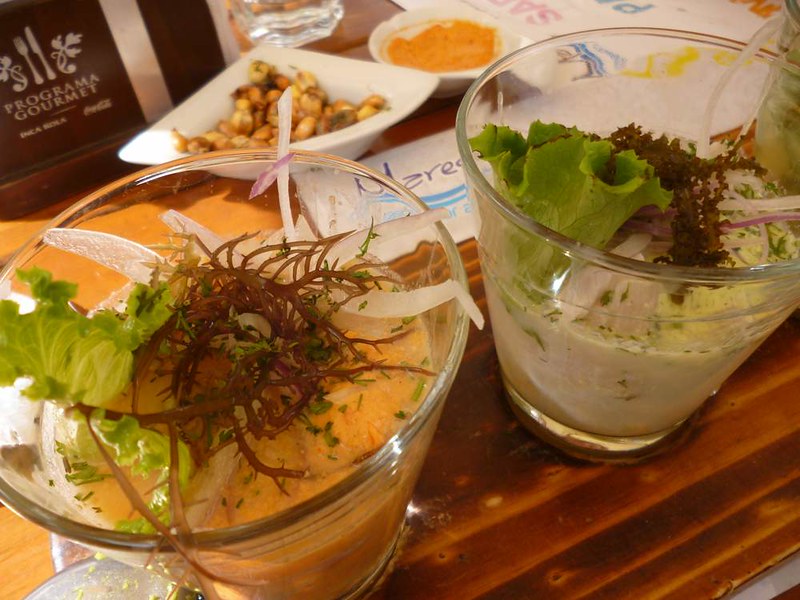
Four-taste ceviche from Mares, Arequipa
Cebiche from Mares
As a budget traveller, I do not frequent fancy restaurants much. But when I was studying in Arequipa, Peru, my retired schoolmate Tasha* (not her real name) always had plans to visit nice restaurants. I could have said no but I always went along.
At Mares in Arequipa, they have a dish with four different sauces for ceviche. I quite like the one that tasted of fruit but I do not remember the proper name.
El Salvadorian ceviche
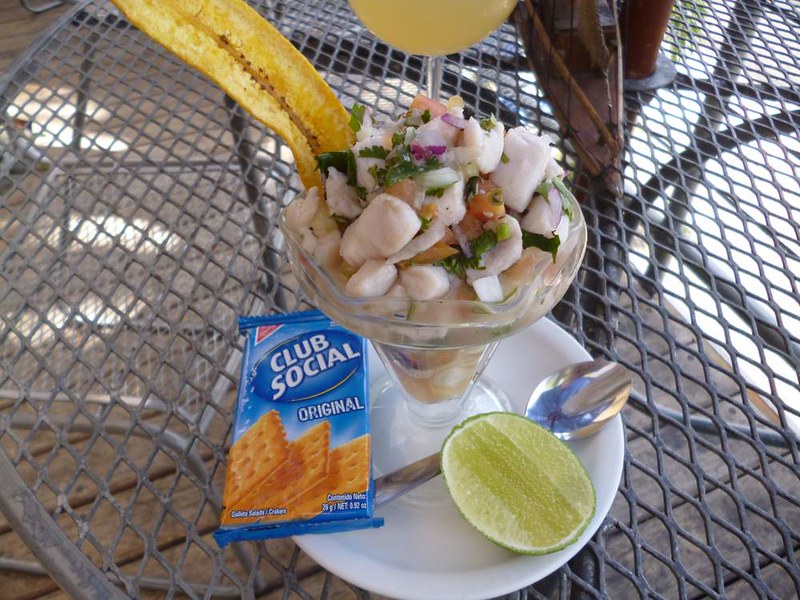
El Salvadorian ceviche
I tried ceviche at a seafood restaurant in San Salvador. There was quite a lot of fish and even a fried banana biscuit to garnish.
I was surprised by the crackers they gave me. The waiter told me that I should eat the fish with the cracker.
The fish was quite OK and I liked the salty taste of the cracker combined with the lime juice. Yum yum.
When I head back to Southeast Asia, I’ll miss ceviche the most. Even if restaurants sell ceviche, I seriously think that the price will be over the roof so I’ll just eat all my share of ceviche here before I head home.
[I have been binge-watching The Lizzie Bennet Diaries and I’ve almost forgotten to write today’s post.]
After 6 days of holiday in El Salvador, the country is back into school and business mode. For the tourist, this is much better news as it means shops are finally open and there aren’t too many people on the streets.
For me, this means I can finally visit the museums.
Since there were only two museums on my to-visit list, I left the hostel at around 11am. Unfortunately, proper restaurants do not open until noon so I had to settle with a few mini pastries from a bakery and a cafe latte from a cafe.
I strolled back to Zona Rosa (the tourist area) to see the museums. Roads in San Salvador are kind of strange. The vehicles need to follow the road and make a big turn before it goes back to what should have been directly in front. That’s why I do not take the buses to Zona Rosa and prefer walking.
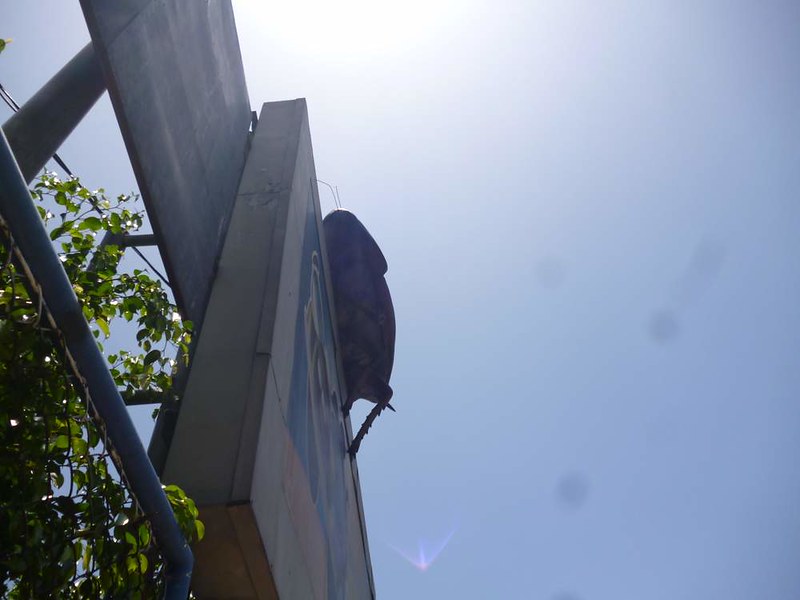
Big bug!
Walking in the El Salvadorian heat is quite a torture. Luckily, I have my umbrella from Sri Lanka or else I think I might get sunstroke. Umbrellas are also useful as defence weapons but luckily I haven’t needed to use it that way.
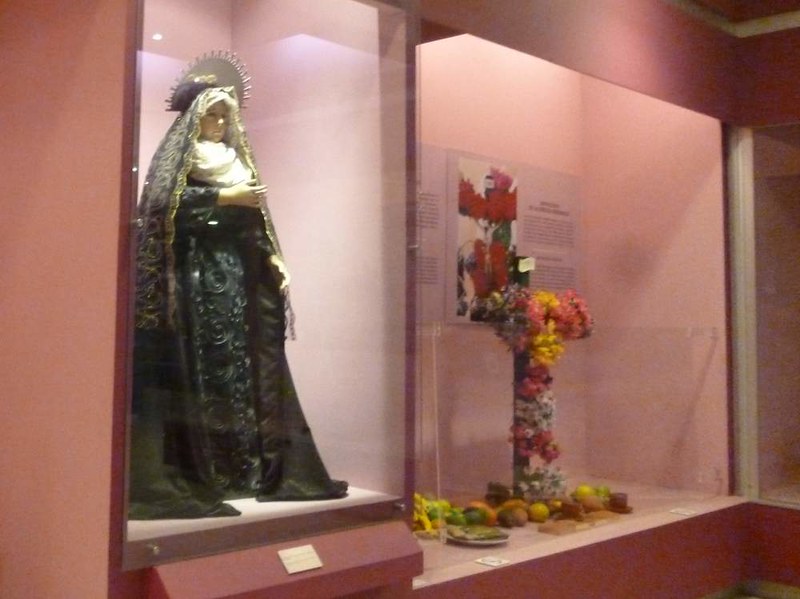
My first stop was the Archaeology Museum. For US$3, there wasn’t much to see there although I quite enjoyed the exhibit on religion in the country.
Exhibit at the museum
After the museum, I dropped by the restaurant in the compound. They have US$7 set lunches during the weekend. While eating, I started reading Love with a Chance of Drowning.
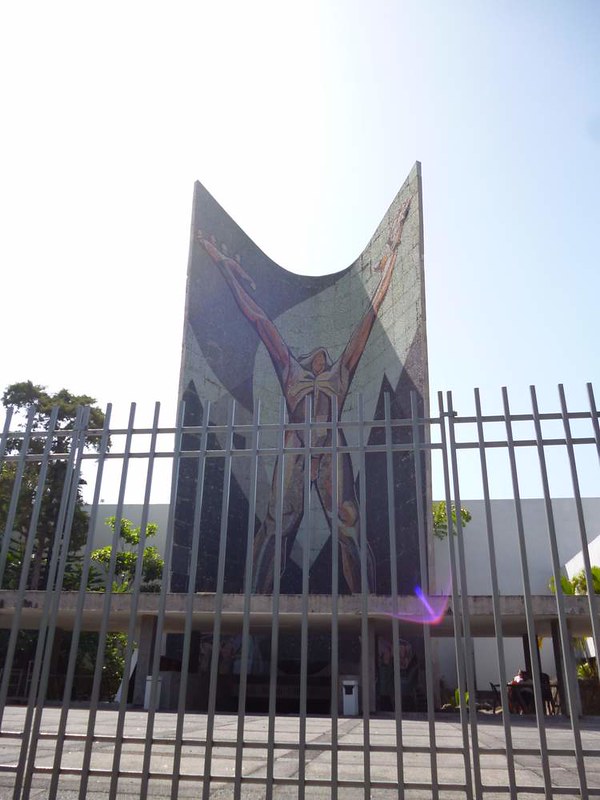
After the satisfying lunch, I had to trek up the hill to the art museum. I couldn’t figure out the entrance so I had to sit on the steps and stare out into space for a while.
El Salvador art museum
I was glad to find the entrance in the end because the art museum is deliciously air conditioned. The exhibits were quite nice too.
Finding change for a bus ride
After the requisite museum visits, I was free (and quite bored). I initially planned to take the bus from Zona Rosa to the shopping malls but I realized that I only had 22 cents in change and US$10 and US$20 bills.
The buses that stopped had the fares written on their windows. One mini buses listed 32 cents and I remembered that the other mini bus I took was 25 cents. I don’t have enough!
So I had to walk a long way to the malls. However, I stopped to catch my breathe at one of the bus stops and found a big bus that charges only 20 cents. I hopped on, asked about the fare, gave my money and sat next to a fat man who decided to spread his knees even more after I sat down.
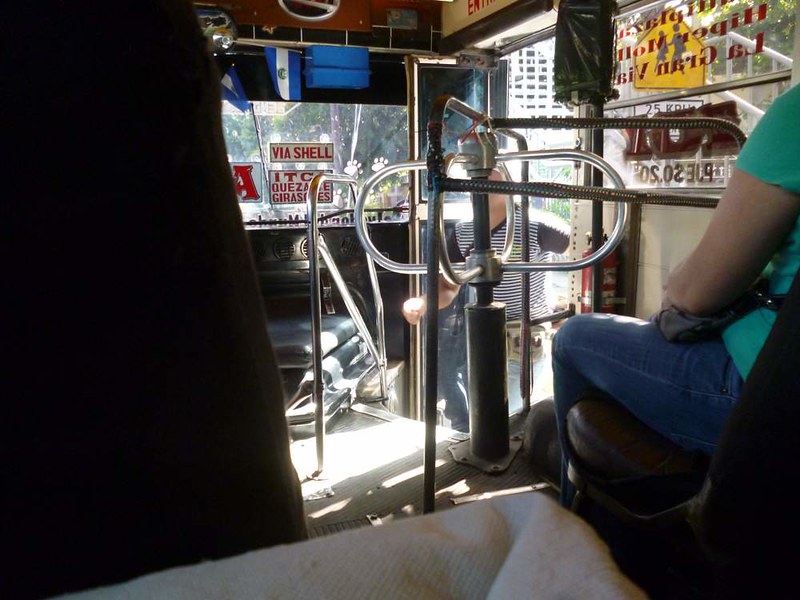
By the way, the big buses in El Salvador has turnstiles on them! TURNSTILES! I took a sneak shot of the object.
El Salvador bus with a turnstile!
I bought some soap at the supermarket. Then I bought a local SIM card even though I would only be in the country for another 5 days. You never know when it’ll come in handy.
After the malls, I walked back to the hostel. I decided that I would visit Santa Ana tomorrow for 3 nights because I’m rather bored with San Salvador.
I searched for rooms in Santa Ana but strangely, they were all booked out on the online accommodation sites. In the end, I had to SMS one of the hostels. Fortunately, they arranged a room (through SMS!) so I will not be roofless tomorrow.
Eating Japanese in El Salvador
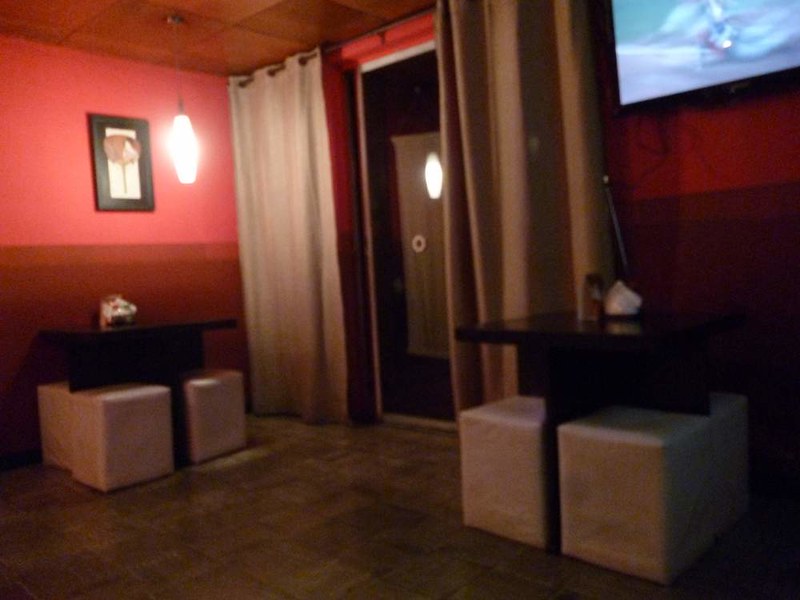
For dinner, I visited a Japanese restaurant I found on Foursquare. The restaurant was located in the residential area and was actually in a house! There wasn’t a proper sign outside and they only had a fluttering stand-sign near its door.
Sushi King, San Salvador
To enter, you have to ring the house doorbell and they will show you in. The interior was a dark mysterious red. The food was also mysterious since they only had sushi rolls.
I chose the OMG roll which had some unagi-like meat on top of my roll. The taste wasn’t something I was familiar with but it wasn’t as bad as the supermarket sushi I had in San Francisco.
After dinner, I head back to the room for some LBD watching. Now it’s time to go to bed since I need to wake up early tomorrow for check out.
Aguas Calientes is the town nearest to Machu Picchu. This is where you will likely stay a night before you visit the site or having a meal before you take the train back to Cusco or Ollantaytambo.
Most of the infrastructure in Aguas Calientes is targeted at tourists. This means jacked up prices.
In Aguas Calientes, I had eaten a 45 soles (S$21) set meal where the rice was as large as the head of my fork and a 67 soles meal (S$30) that was actually pretty tasty.
Of course, not every meal in Aguas Calientes has to exceed 50 soles. I can show you a place where you can have a meal plus a fruit juice for just 10 soles (S$4.50).
Where to find cheap food in Aguas Calientes
This little piggy went to market
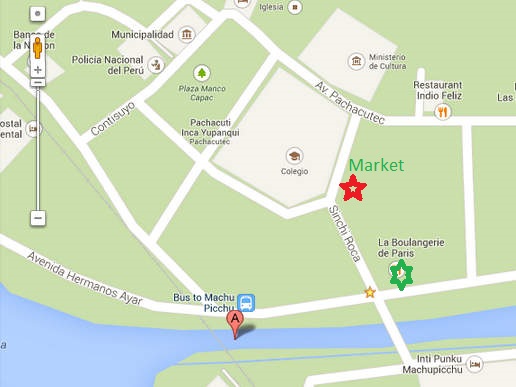
Go to Aguas Calientes market for cheap food
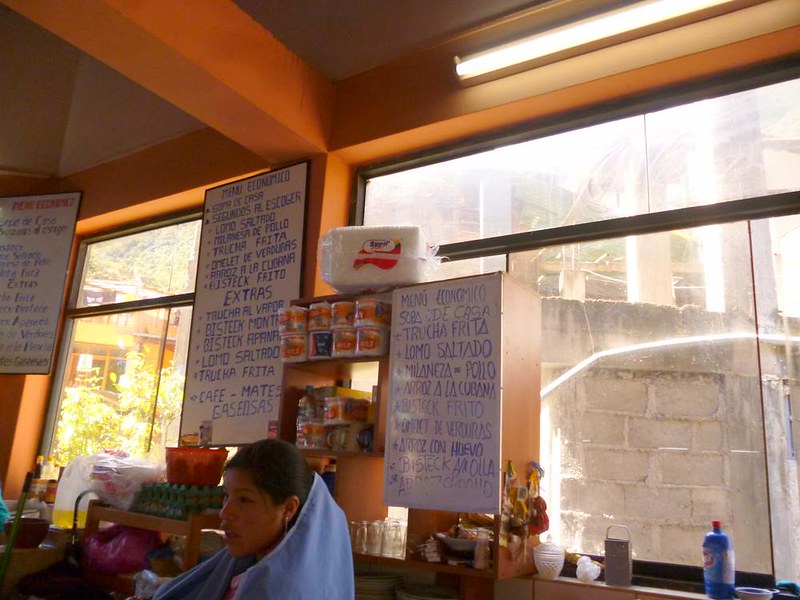
On the second floor of the local market (not the “craft market) is where they sell cooked food. At lunch time, a lot of the stalls write their dishes of the day on a whiteboard. Just order off the list and you will have tasty, freshly made food.
Second stall in Aguas Calientes market
The second stall on the left gave me a good vibe so I had both my meals there. The stall is run by a family of women. The first time I went, the elder sister cooked while the second time, the mother cooked.
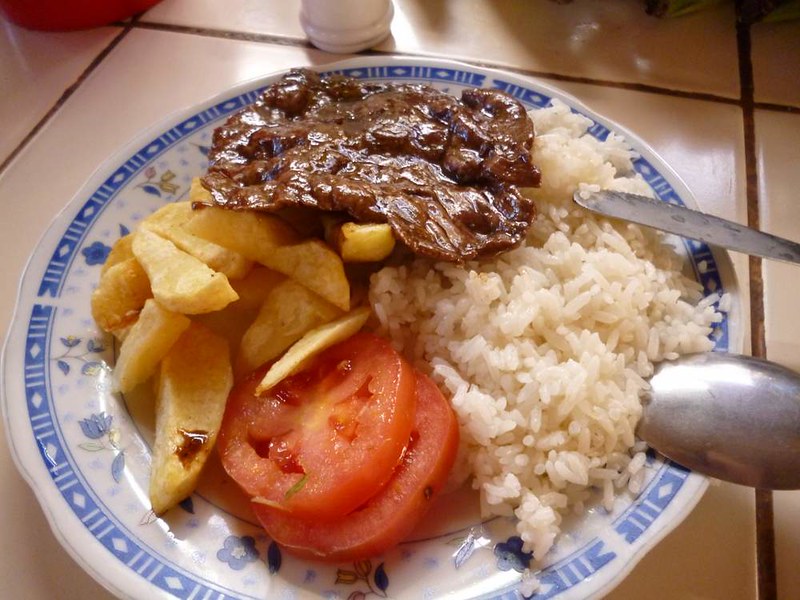
Bistek frita
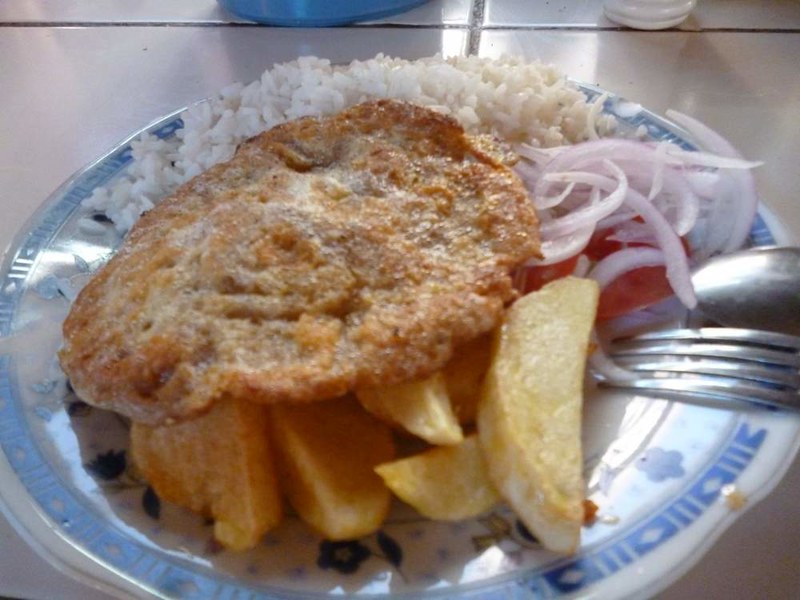
The beef steak meal was lovely but the Milanese chicken (breaded chicken cutlet) wasn’t as good. I love how they have rice along with the meal. I also requested that they only give me tomatos and not greens as the salad.
Milanesa pollo
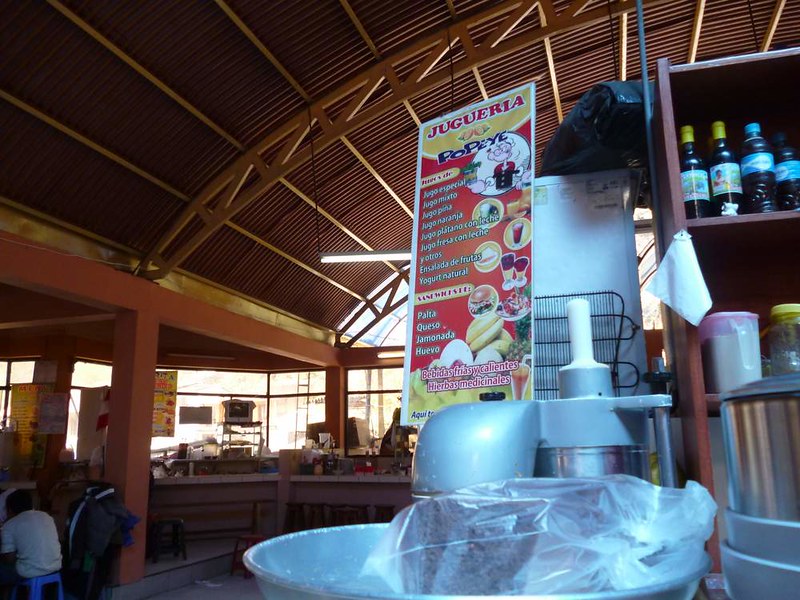
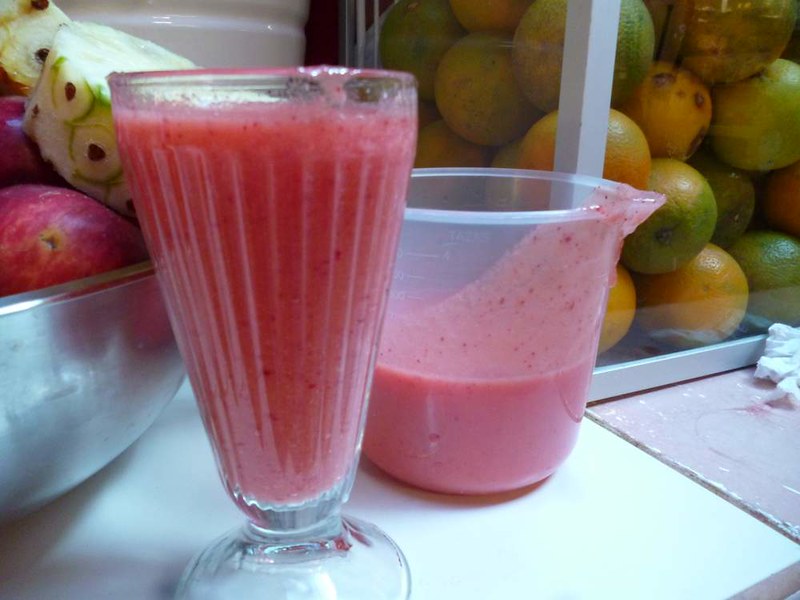
After your meal, you might want to have a drink. At the market, juices sell for 5 soles. For this price, you get about 2 glass-full of juice. That was enough to stretch my stomach.
Fruit juice stall at Aguas Calientes
I will definitely miss the generous servings of fruit juices in Peru.
Special fruit juiceMixed fruit juice in Aguas Calientes market
Did you know that you can suddenly get lactose intolerance even though you were OK with dairy products for the longest time?
That happened to my friend D. She was the biggest fan of dairy (Milk! Cheese! Cakes! Milk tea!) so she’s now missing out on a lot of her favorite food.
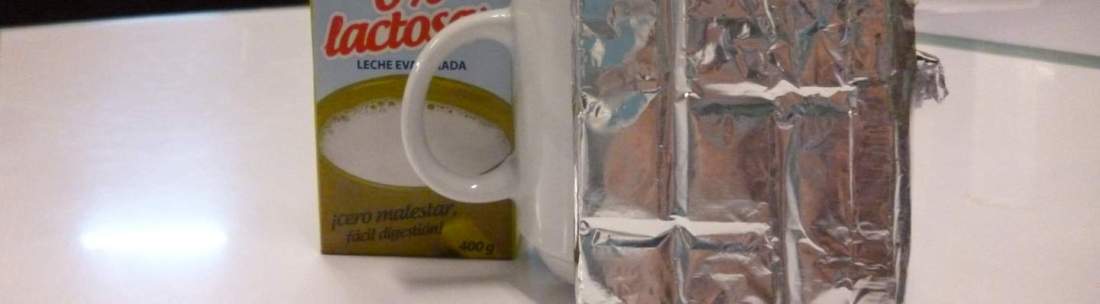
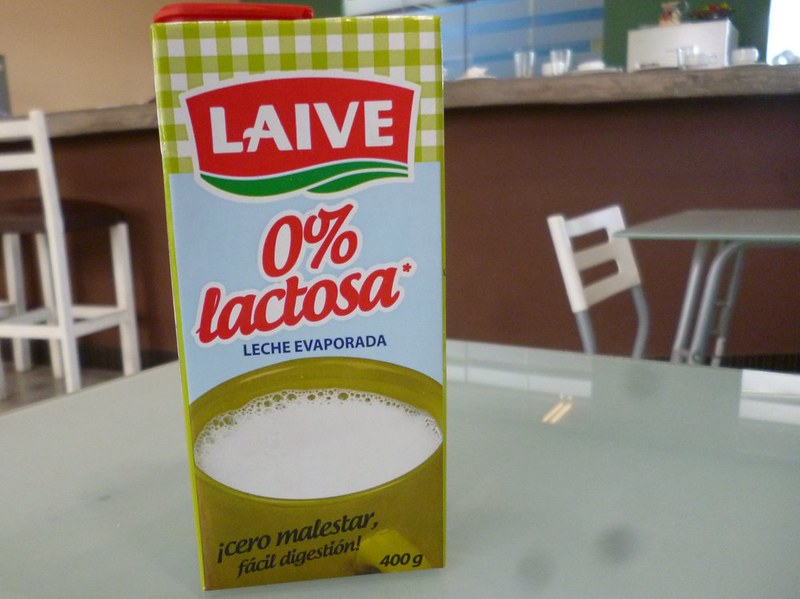
That’s why I instantly thought of D when I saw lactose-less milk in an Arequipa supermarket. I even snuck a photo on my phone.
Even though there’s high lactose intolerance among Asians, I’ve not seen such a product in my life. I wonder if there’s a market for it in high-income countries such as Singapore and Japan. (Please do steal my business idea.)
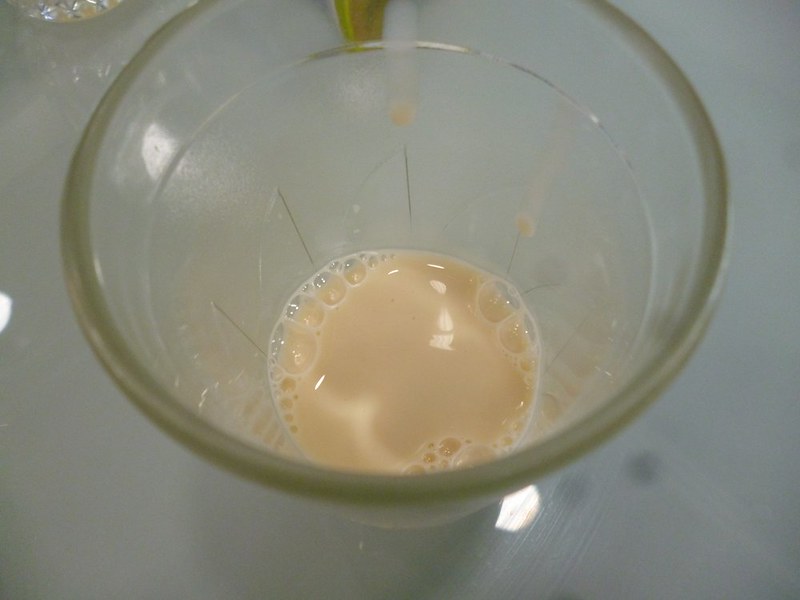
0% lactose milk taste test
The lactose-less milk was available in a 1 liter plastic bag or in small boxes. I bought the 400g box because I don’t think I was able to finish a liter in a week.
0% lactose milk
0% lactose*
Evaporated milk
Zero discomfort, easy to digest
400g
I then discovered that the box was actually evaporated milk and not whole milk. Oh well, I can add it into my coffee in the morning. (I also added equal parts of water to the milk to make it whole milk.)
Color of lactose-less evaporate milk is the same as regular evaporated milk. I was expecting something paler.
One morning, I used the lactose-less milk in my coffee instead of the regular milk the hostel provides.
Surprisingly, it tasted the same!
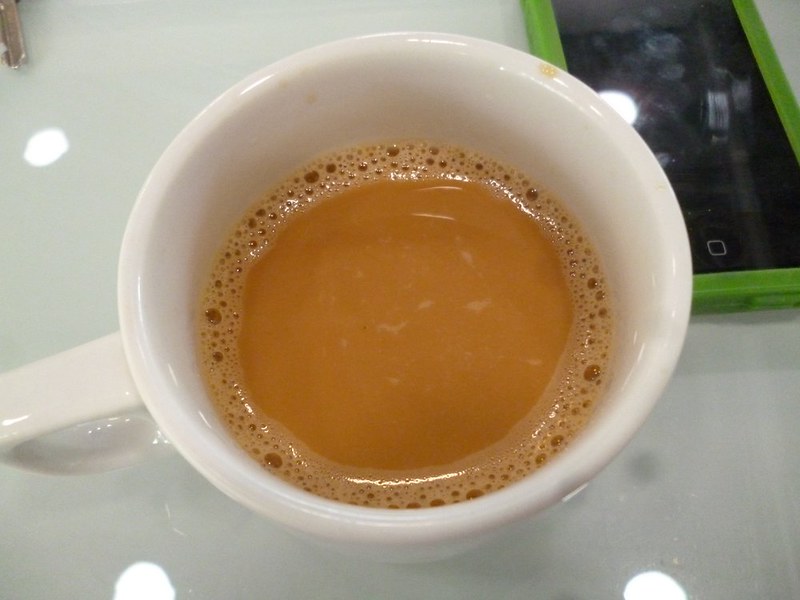
Kopi C suitable for the lactose intolerants
I also made a submarino with the lactose less milk. (The how-to will I’m glad to report that the submarino did not cause “symptoms of lactose intolerance”.
Someone really should start a lactose-less milk business in Singapore.
More from the lactose-less milk box
Nutritional label of lactose-less milk
On left:
0% lactose*
Address bla bla bla
Ingredients: Low fat milk, Vitamins (A, C and D), stabilizers (E-399, E-407) and lactase enzyme
*(LDD) Detection limit 0.01g/ml
Suitable for celiacs
100% cow milk, low fat, ultra pasturized and homogenized
Would you invest in my lactose-free milk business?
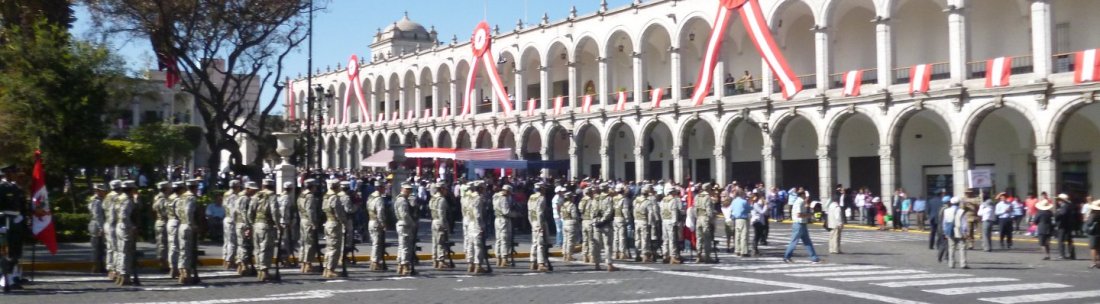
I spent the morning walking in the “rich” part of Arequipa with schoolmates N and S. When we got out of the hostel, I was surprised to find that the road was blocked.
It turns out that there was a parade. Last week, there was one and today another. Does Arequipa have a parade every Sunday?
The walk in Selva was alright. There were modern houses and about 2 very large parks. One of the parks had a few alpacas but they kept away from the gates.
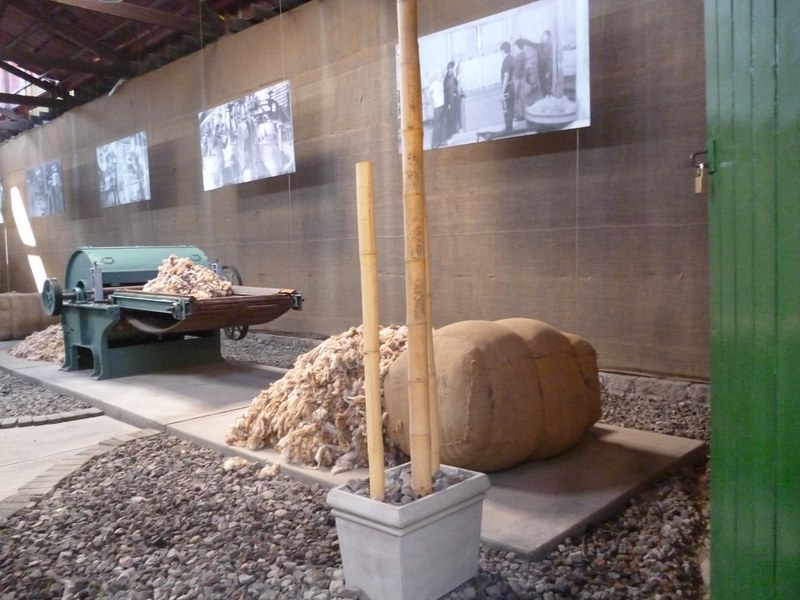
We also stopped by Mundo Alpaca (again!) at my request. This time, I saw the little machinery museum underneath the show area. On display, there were a lot of machines used in turning alpaca wool into stuff you can knit things with.
Machinery museum at Mundo Alpaca
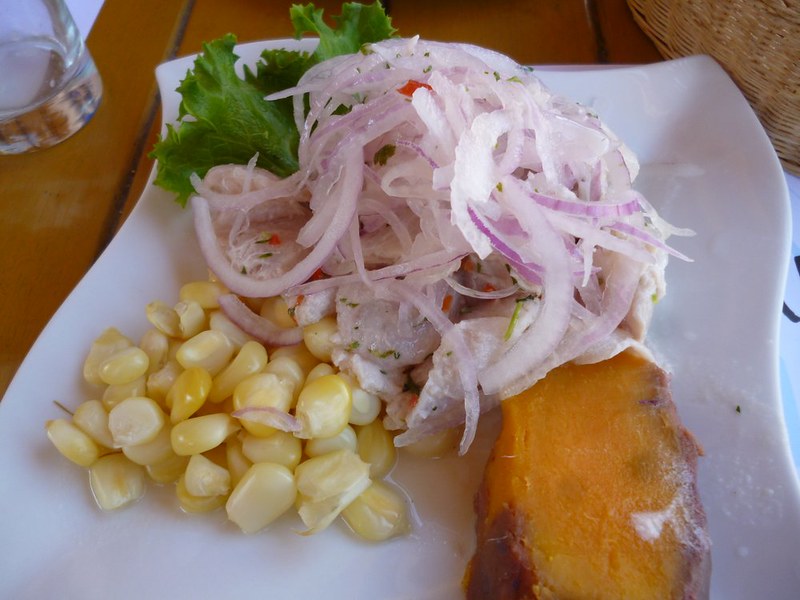
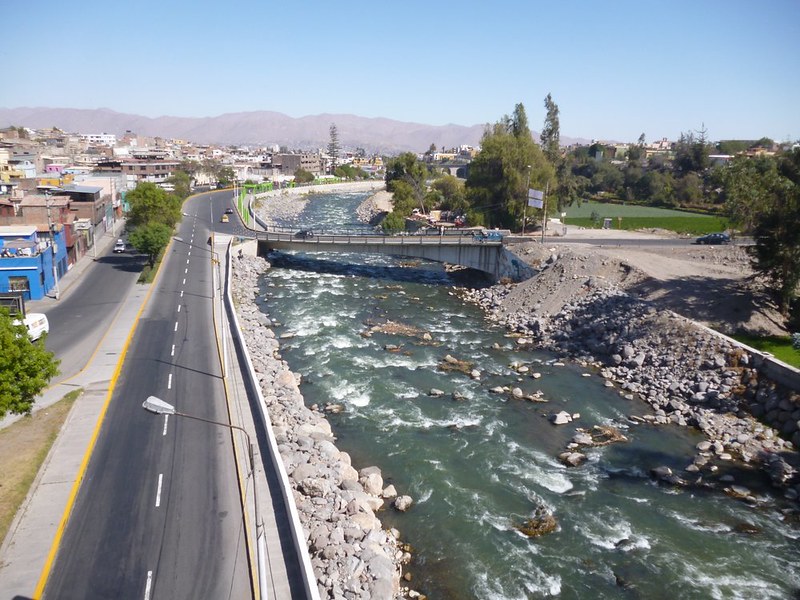
We walked across the bridge to Yanahuara area. Lunch was ceviche, probably my favorite dish in Peru. It reminds me a lot of Japanese sashimi.
Ceviche in ArequipaArequipa’s Rio Chili
We walked back to the hostel for a siesta. I didn’t really nap but spent my time doing more planning for the rest of my trip in Peru as well as watch TV.
Before 5pm, N came over to bring me to the Tango place. Some day ago, there was a lady passing out fliers for dance classes during the weekend. N who did tango in Argentina insisted that I go with her.
Unfortunately, the dance teacher was not there. Another local girl was waiting at the lobby as well. She called the dance teacher and told us that there was no class today.
We headed to Valenzuela for coffee. The drink wasn’t that fantastic but I got to cross off the place from my To Visit list.
We walked around before heading back to the hostel.
For dinner, I ate two pepino melon and made a submarino. Unlike the submarino in Buenos Aires, the one I made didn’t cause any stomach problems. I suspect it’s because I used my 0% lactose evaporated milk.
Despite the things I ate, my stomach craved something salty with animal protein. I still have to pack my bags for tomorrow’s check out at 11pm.
I’ll be taking a 10-hour bus from Arequipa to Cusco tomorrow evening. From there, I will head to Ollantaytambo before my train to Machu Picchu.
Welcome to YQtravelling’s FoodFriday–the day of the week when I show off some of the lovely eats I had while travelling.
Today’s post is a special feature where I teach you how to cook instant noodles in a hostel. Let’s get cooking.
Last month, I showed you how to cook a steak in a hostel. Today, I want to show you how to cook instant noodles in a hostel.
OK, I caved in and ate instant noodles in my hostel in Arequipa, Peru. The result wasn’t that good but if you need to eat, you need to eat.
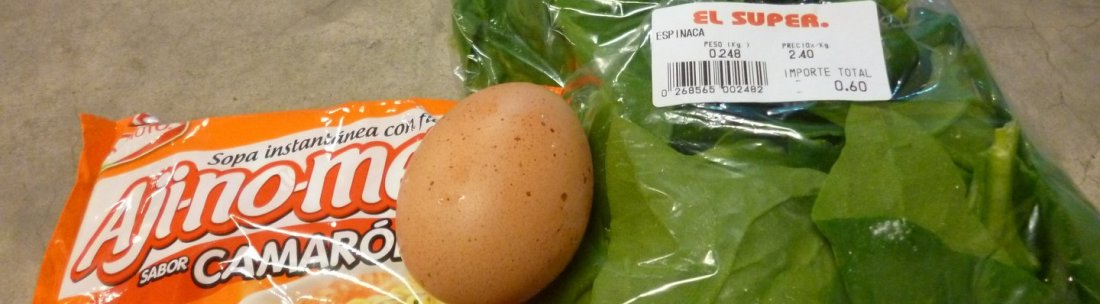
For this recipe, you will need
One instant noodle
One egg
Some vegetable
Pot with cover
Water
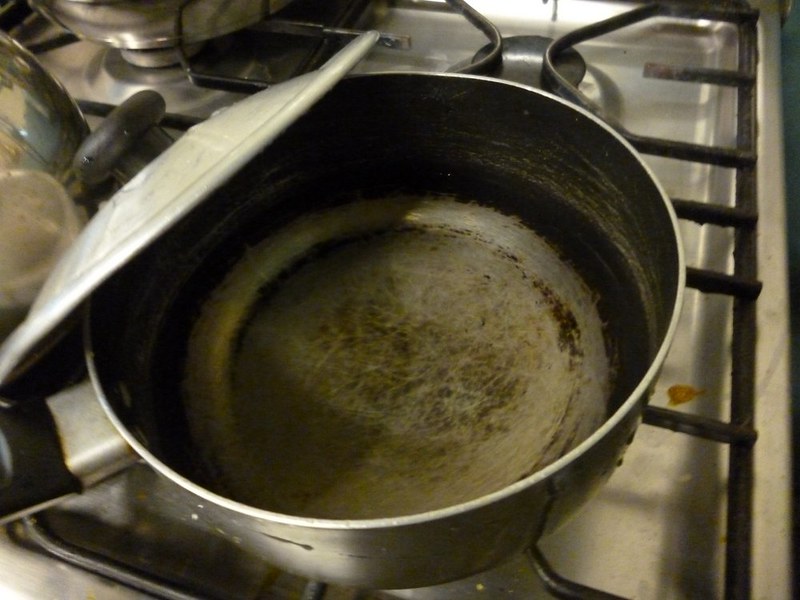
Step 1: Boil some water in the pot
Get the water to a boil to cook the noodles.
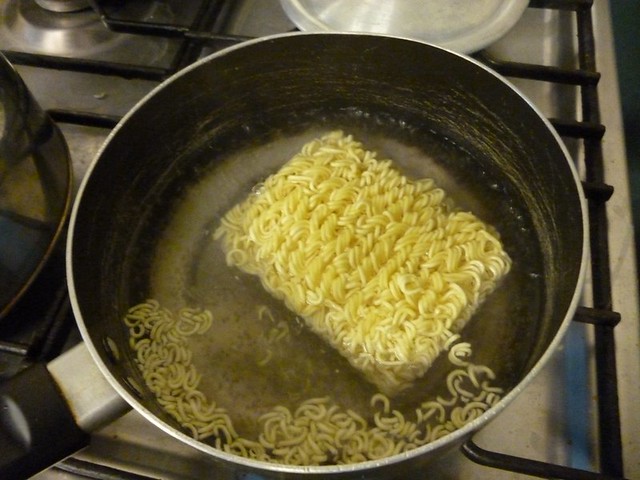
Step 2: Cook the noodles
Cook the noodles.
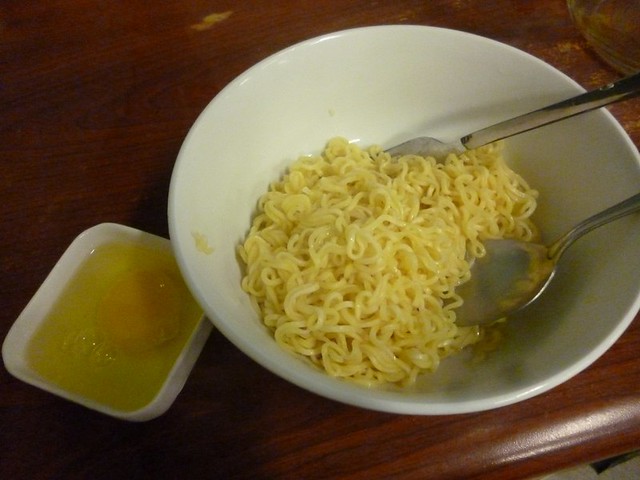
I don’t time my cooking and wait for the noodles to disintegrate from brick of noodles.
Take out the separated noodles and put them into a bowl.
Step 3: Make the soup with new pot of water
Pour out the noodle water and wash the pot.
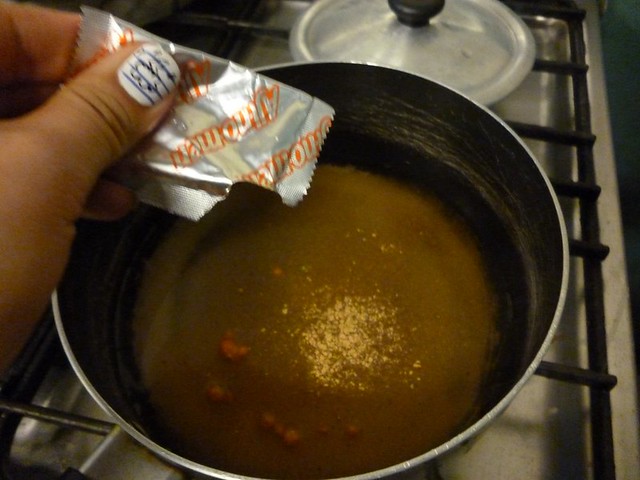
Boil another pot of water but don’t use too much because you don’t want thin soup. While you wait for the water to boil, put the seasoning into the water.
I usually use part of the seasoning, pinching one corner of the packet so those seasoning do not fall into the soup. This results in disgustingly underseasoned noodles but that’s how I roll.
Step 4: Cook the vegetable and egg
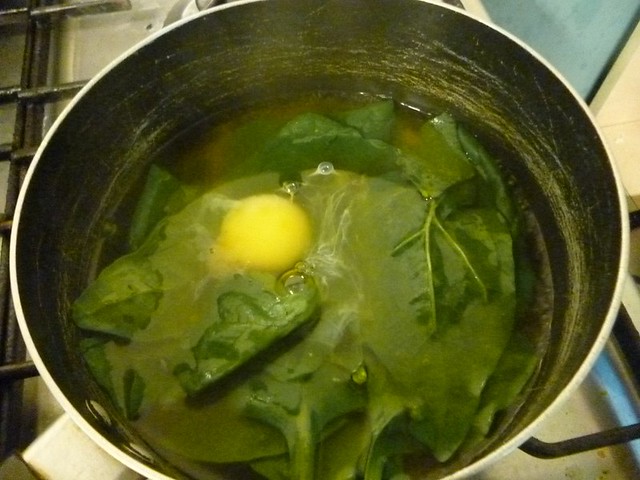
If you have more vegetable than water, cook your veggies in batch. Blanch your veggies until they turn a darker shade. Take the veggies out into the bowl.
When you have your last batch of veggies, you can crack the egg into the soup. Break up the egg if you want floating pieces of eggs or leave it untouched.
Step 5: Serve
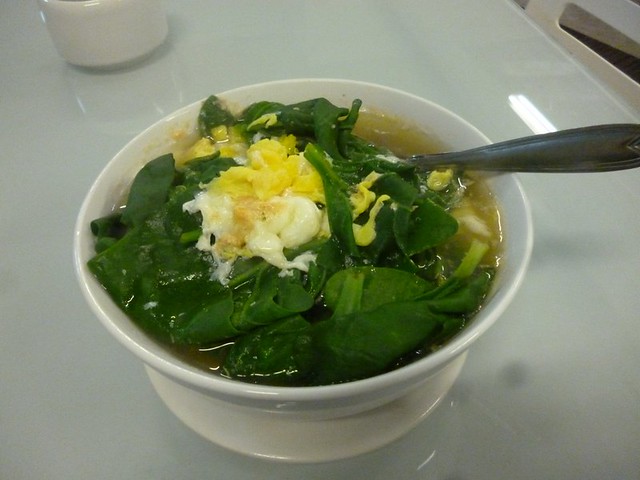
When the egg is cooked to your preference, pour the soup into your bowl of noodles.
Do you have any secret recipe for yummy instant noodles? Share them in the comments.
I’m only taking the usual four hours of Spanish lessons this week. This means that I have a really long lunch time.
For today’s lunch, my schoolmate N brought me and her teacher to a picanteria (local restaurant) near where I used to stay.
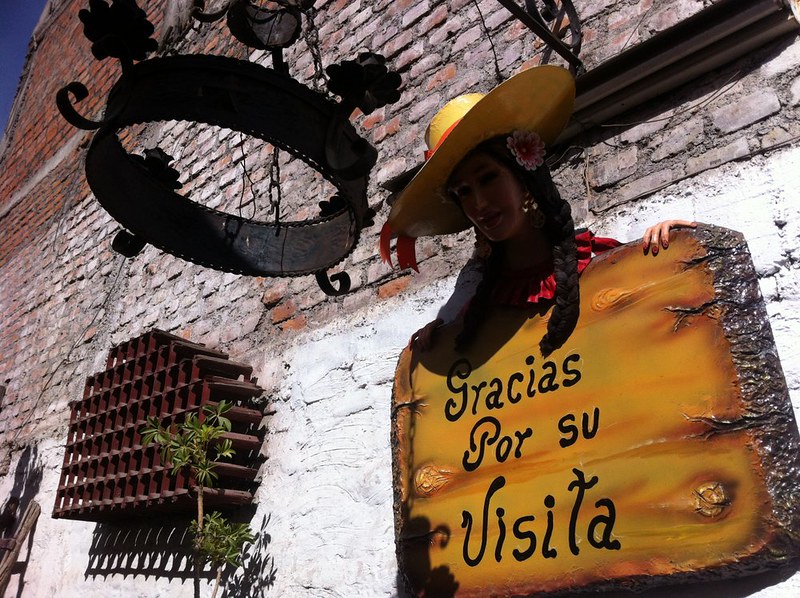
La Capitana, Arequipa, Peru
The picanteria felt like it was a long taxi ride away.
On the taxi, the teacher (who’s my age) told us about a bachelorette party her friend had. The friends were thinking of whether they should hire male strippers because the bride-to-be is religious.
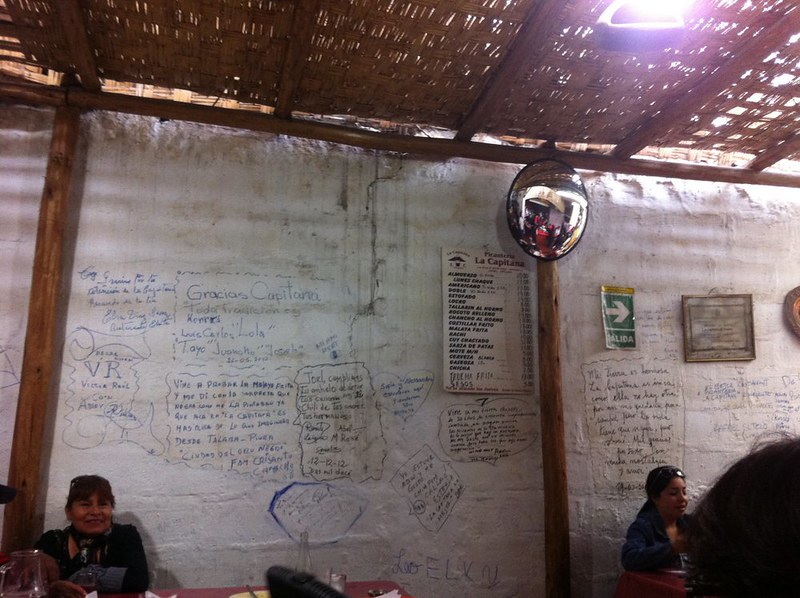
The restaurant was packed with people having lunch. There were a mix of people from all walks of life. People in office wear and people in “dressed down” wear all share tables in this midsized restaurant.
Walls of La Capitana
We shared a jar of chicha, a deep purple drink made of fermented corn. It’s an acquired taste and I prefer Fanta Grape (which I hate) over chicha.
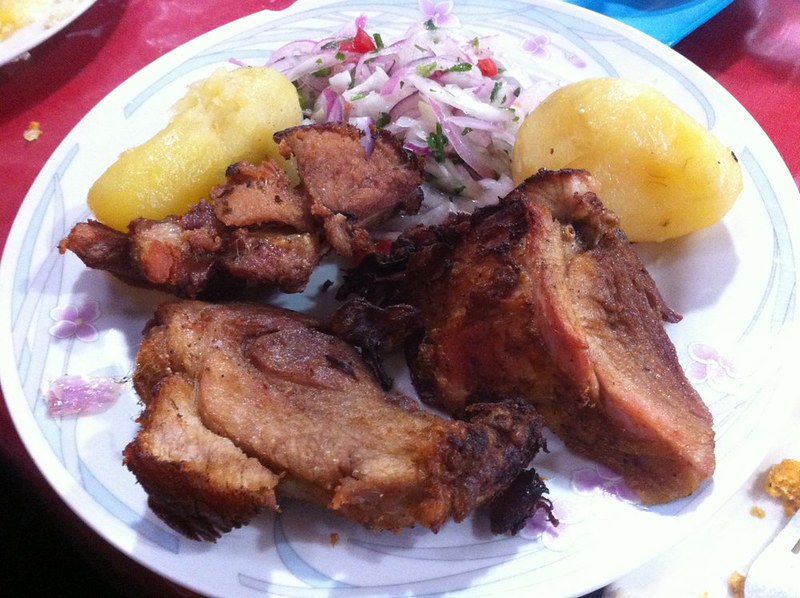
My meal was chicharron which reminded me a lot of 烧肉 which is Chinese roasted pork.
Pork at La Capitana
After lunch, we walked back to the city center. I dropped off my laundry at one of the laundry places. I have to admit that I have not used a washing machine for the past 3 months. I’ve always washed my laundry by hand.
Laundry here is quite cheap. The place I went to charges 3 soles (S$1.50) per kilogram. My bag of dirty clothes were 2kg.
Visiting the Confucius Institute in Arequipa
I also headed to the Confucius Institute which is just down the road from the hostel.
They had a small museum with very Chinese things.
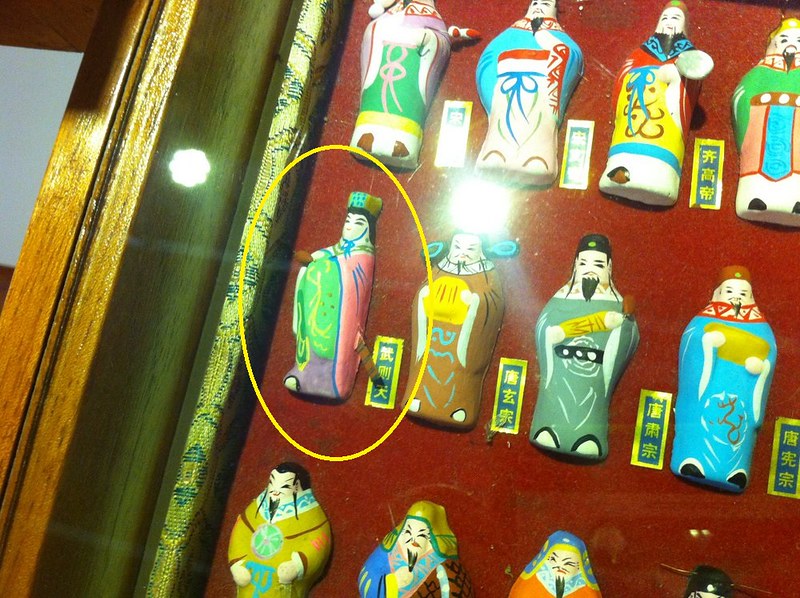
Small museum at Confucius Institute in Arequipa
My favorite display was the little porcelain figurines of past emperors and empress. I looked among the mini men to find the only female emperor in Chinese history.
Today’s highlight was my 5 minute bus ride in a combi (mini bus). I wanted to take the bus yesterday but I was daunted by the crowd so I ended up walking to the cinema and missing the Superman movie.
I love taking public transport to save money since taxis are multiple times more expensive than the bus. Plus, I’m very allergic to dishonest taxi drivers.
The combi system reminds me more of buses back home in Kota Kinabalu because it seems to be an unruly system.
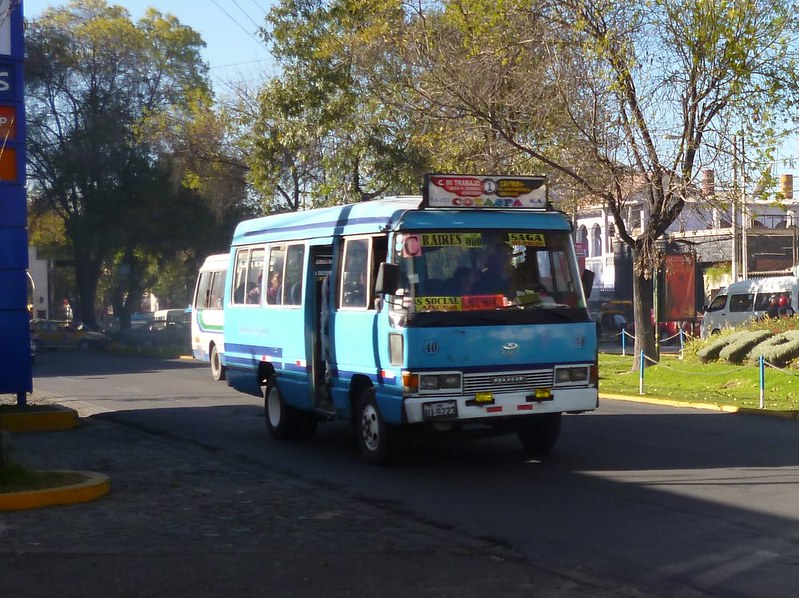
The buses have signs of destination in large signs on their windshields. The bus conductor hangs out of the door, yelling different destinations. (Back home, the conductors yell, “Keh keh. Keh keh.“)
One of the reason I finally dared to take the bus was because I realized that “SAGA” was the name of the department store near where I am staying. I won’t get lost if I hop on buses with that destination.
So I walked to the corner of San Francisco street and waited by the wall while other locals eye me curiously.
Many buses with “SAGA” on their windshields stopped in front of me. However, I didn’t want to go on them because the buses were packed almost to the brim with people.
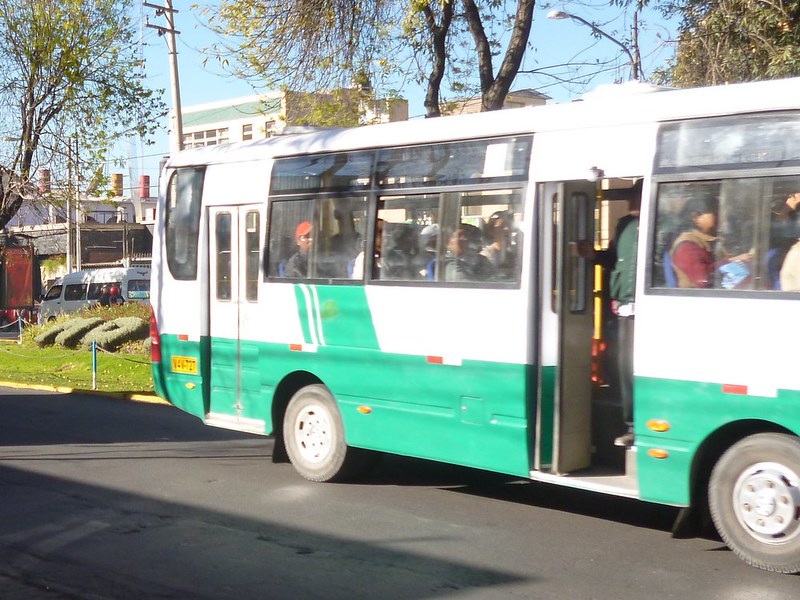
The size of the bus I took was similar to this, but with less people.
Finally, a slightly larger bus came and it looked like not much people were inside. I walked to the bus conductor hanging out of the door and said, “Saga?”
She ushered me into the bus. Even though it was a larger bus, there weren’t a lot of seats. Almost all of the seats were taken. I stood awkwardly at the empty space in front of the seats.
I didn’t take my camera out and take photos of people in there. I didn’t want to be the traveller who treats other people as photo opportunities.
I then saw a seat between the driver and a school kid. I went to the front and plonked myself in the tiny seat. The street that I normally walk past didn’t look much different from higher up in the seat.
Then the boy had to get off the bus so I went back to the empty space and stared either out of the window or at my feet. It would be awkward looking at the passengers, some of whom were gawking at me.
When we were nearing my stop, the bus conductor repeated, “Saga. Saga.” I think it was to notify me that my stop was near.
As I got off, I passed 1 sole (S$0.50) and the lady gave me back 20 cents (10 Singapore cents) in change.
And that, ladies and gentlemen, was my first–and unlikely last–combi ride.
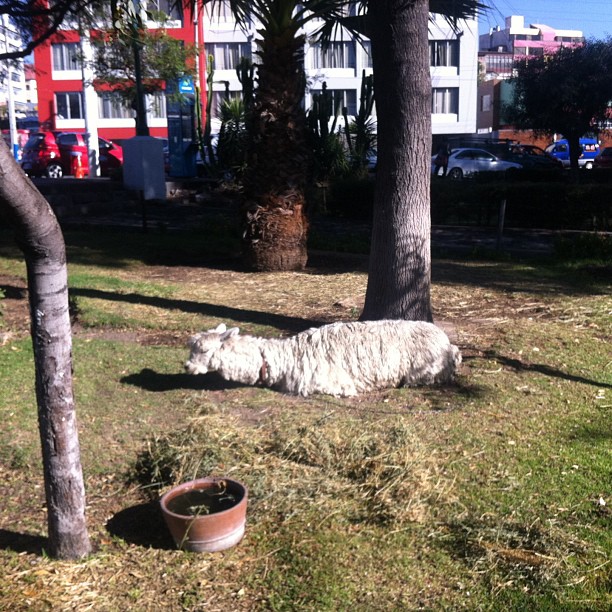
Totally unrelated photo of an alpaca resting:
Alpaca in Arequipa, pretending to be caterpillar
PS Mom convinced me to stay in Arequipa for another week for Spanish class. I’ll be heading to Machu Picchu later in the month. However I won’t be continuing my homestay because the walk to school is really time consuming. And I don’t feel like talk to people in the later part of the evening.
















 YQtravelling