#FoodFriday A fishy meal at Savoy Balik in Istanbul

savoy balik

Welcome to YQtravelling’s FoodFriday. The day of the week when I show off some of the lovely eats I had while travelling.

Today we’re going to heading to Turkey for some seafood.

My mom and I had a good meal at a trendy fish restaurant on her first night in Istanbul.

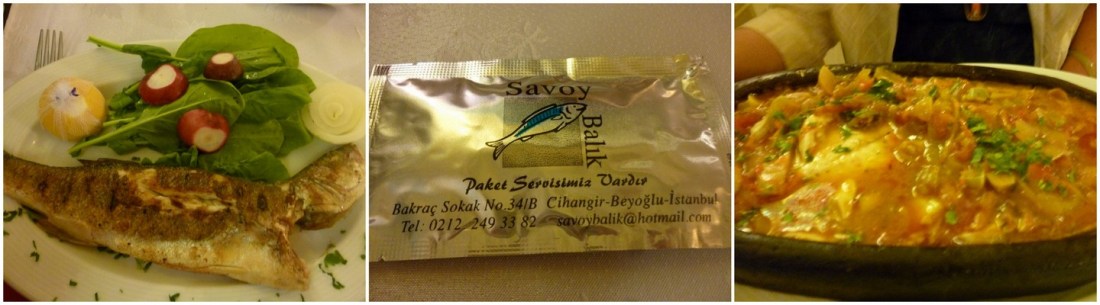
The place was called Savoy Balik (I think “balik” means fish in Turkish and it also means “to return” in Malay.) Getting there was an adventure (see below!) but it was worth it.
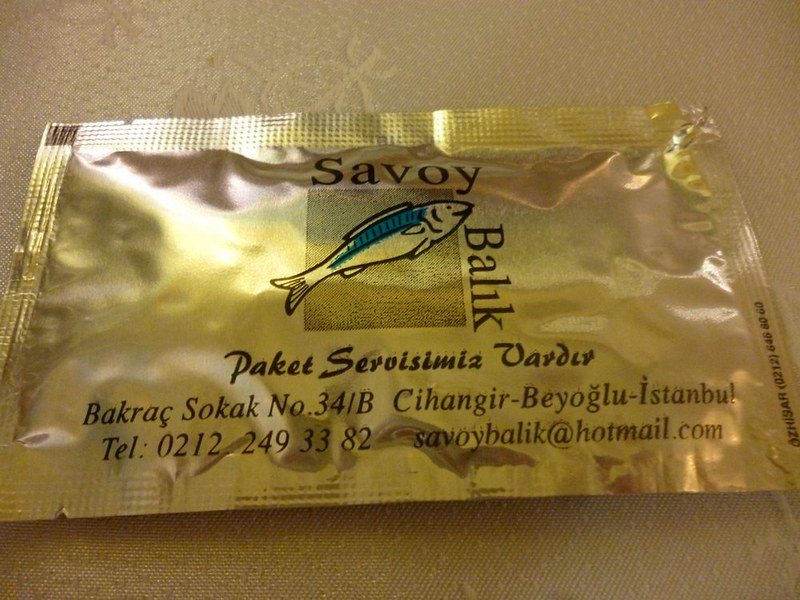
Savoy Balik
Savoy Balik

I ordered grilled fish and it came with half a lemon in a plastic stocking, beets, half a raw onion and raw vegetables. (Eek! I dislike raw veggies.)

Grilled fish

Mom’s fish stew was better and I ended up eating more of her share than mine. The stock that came with the fish tastes of tomatoes. Yummy.

Fish stew at Savoy Balik

Turkish desserts after meal

Although we were quite full after the bread and fish main dishes, I still wanted to try the desserts. I didn’t recognize almost everything on the menu so I picked two dishes which were on the cheaper side.

Semolina pudding

One of the dishes was a sweet pudding. I didn’t write down the name so I’m not sure what it is. It could possibly be semolina pudding with a scoop of vanilla ice cream.

It’s a bit too sweet since we had to mix it with the vanilla ice cream to get it to become not tooth achingly sweet.

Apricot drizzled with sugar water

Another dessert was apricot sprinkled with something unknown. At least I know that it’s apricot?

Walking for our food

The restaurant wasn’t initially on our To-Eat list. How did we end up there?

Well, Foursquare convinced me that it was a short walk away and then I convinced my mom to head there.

So we followed Foursquare’s directions. “Head north and turn to the left.” What Foursquare did not tell me was that there wereA HELL LOT OF STAIRS to climb before we got to the place.

Staircase to food

Mom and I took about 5 sets of stairs this tall before we got to the right street.

Mom kept saying that we should take a cab but I didn’t think it was worth being fleeced if the restaurant was just around the corner.

However, we ended up walking for what seemed like forever until we hit the right corner. The seats outside were all taken so we had to sit inside where the waiters didn’t pay us much attention.

How far have you travelled for a good meal? Share your experience in the comments below.

Glutton at Jogoya buffet, Kuala Lumpur

jogoya buffet

Welcome to YQtravelling’s FoodFriday. The day of the week when I show off some of the lovely eats I had while travelling.

Today we’re flying to Kuala Lumpur for an amazing all-you-can-eat buffet.


Here at YQtravelling, I don’t usually talk about one particular restaurant on FoodFridays.

Usually, it’s either a dish or a particular place where I’ve eaten. Today everything will change because I went to the most amazing buffet place while mom and I were out in Kuala Lumpur on September 11.

Prologue

My mom loves sashimi so when I told her about eating in KL, she requested that we go to an all-you-can-eat buffet and EAT ALL THE SASHIMI!

I did a bit of research and found a buffet restaurant near where we were heading to. (Mom needed to do some paperwork in KL, that’s why we went on the 1-day trip.)

From Jogoya’s website, I found out that they have a RM56++ lunch and supper promo where we can eat all we want for 2 hours. Initially I thought that if we paid the regular fee of RM89++ we were able to sit from 11:30am to 4:30pm, but I think I got it wrong. Anyway, 2 hours of stuffing our faces is more than enough.

The restaurant is located in Starhill Gallery which is kind of a maze since it wasn’t obvious how we could get onto the third floor. (We’re indeed a pair of country bumpkins.) We got directions from one of the security guards and found the place.

At Jogoya, you pay before heading and the person would jot down your deadline on your receipt. I’m not sure if they will remind you about the timing if you happen to stay a bit longer since we left before out time was up.

Jogoya’s decoration was nice, the furniture were all dark brown. We were seated at the two-persons seat area and there weren’t a lot of customers around.

Beginning of a feast

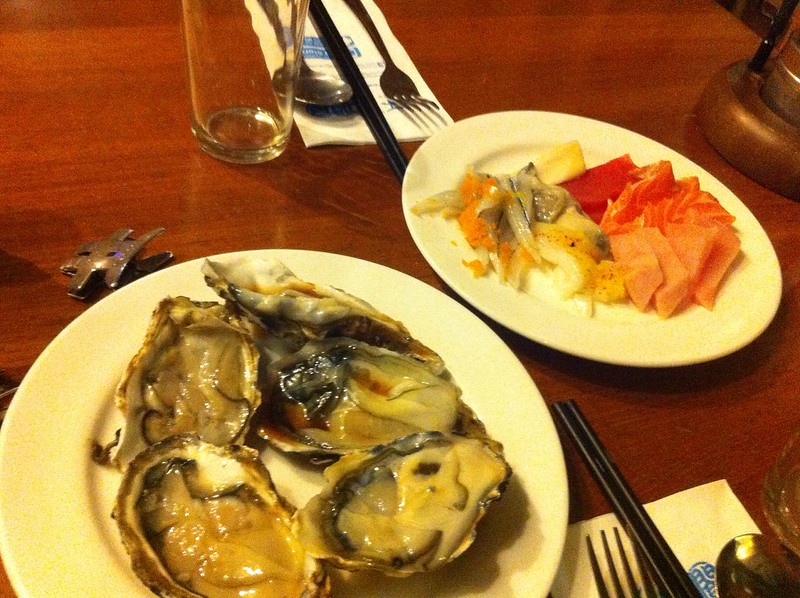
Starters of sashimi and raw oyster

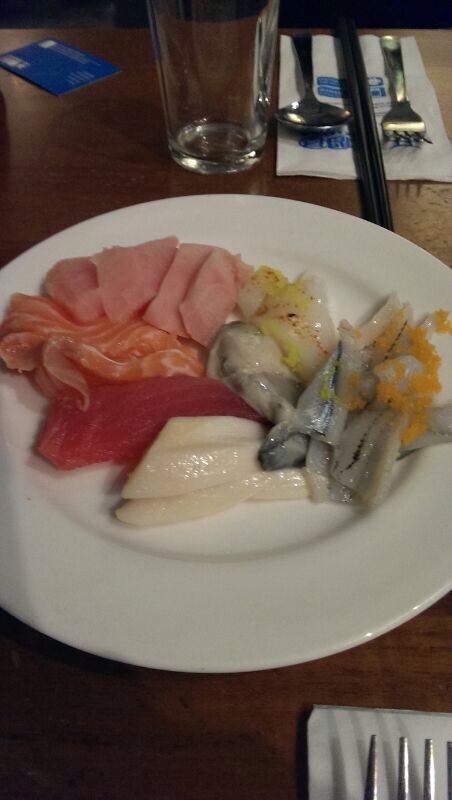
At first, mom and I piled only salmon sashimi onto our plates as the sashimi stall was nearest to us.

Sashimi as appetizer

Later, when I went out to check what other things were available, I was amazed. This wasn’t just a buffet place. This was a food court disguised as a buffet restaurant.

Many of the stalls would stir fry or steam dishes for you. Others served cooked soups in little bowls. Two ice cream stalls were around, one serving Haagen Daaz out of buckets while the other selling New Zealand natural ice cream and waffles.

Jogoya's dessert stall is like a bakery
Jogoya’s dessert stall is like a bakery

The dessert stall had a display fridge that you find in bakeries filled with small cakes and pastries. The drink stall had sweet iced drinks and there was even a several drawers of tea bags which you use with the teapots there.

I’ve lost count of how much salmon sashimi mom ate. I was almost filled to the brim with food so I only had one (!) green tea ice cream with a tiny serving of bread pudding.

Mom brought over a plate of fruits with purple dragonfruit and watermelons. After the fruits, our brain started signaling to us that we were done with the meal. Of course, I washed everything down with green tea and rose tea.

There was a promotion going on when we were there. We paid a total of RM130 for the two of us, after the service charge and tax. I’d say it’s a very reasonable price considering they have salmon sashimi (which didn’t taste fantastic but we just make do with what we have).

I’ve read reviews about Jogoya where the reviewer had food poisoning because he/she visited the place for supper. We didn’t have major problems on the day but the next night, I had stomach problems and even threw up my dinner. I’m not sure if there is a correlation between Jogoya and my sickness but just take note if you have a weak stomach.

Do you like all-you-can-eat buffets? Which is your favorite restaurant for buffet?

If you enjoyed this post, you might like:

Lamuko’s Lokanta: A delightful Japanese restaurant in Pamukkale
亚罗斯打人早餐吃什么?晚餐[YQ游大马]

#FoodFriday Appreciating asado, the Argentinian barbeque

asado

Welcome to YQtravelling’s FoodFriday. The day of the week when I show off some of the lovely eats I had while travelling.

Today we’re going to Argentina for a hell lot of barbecued meat.

Before I went to Argentina, I thought I knew barbecue. To me, BBQ is a time when friends gather around and put dainty raw meat such as chicken wings, hotdogs and maybe some slices of meat on top of some charcoal.

Only wimps eat BBQ chicken wings.

Then on my second night, the Buenos Aires hotel I stayed at had a BBQ Thursday. Just hand over 70 pesos and you can eat all you want. When I heard of the event, I thought about how many chicken wings I can eat (many many!) and was glad that beef is popular in Argentina. Now I can replenish my iron supply!

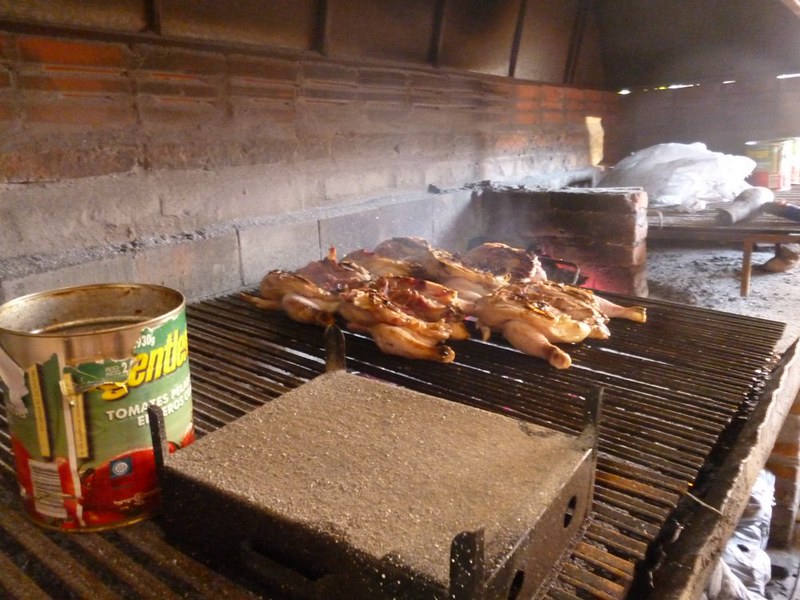
But when I saw the barbecue pit and the meat on it, I realized how wrong I was about Argentina’s BBQ. Those were not chicken wings on the grill, those were huge chunks of meat (fatty parts included without apologies), wrist-sized sausages and half chickens.

Oh, I have to explain. Here, carne (meat) refers to beef.

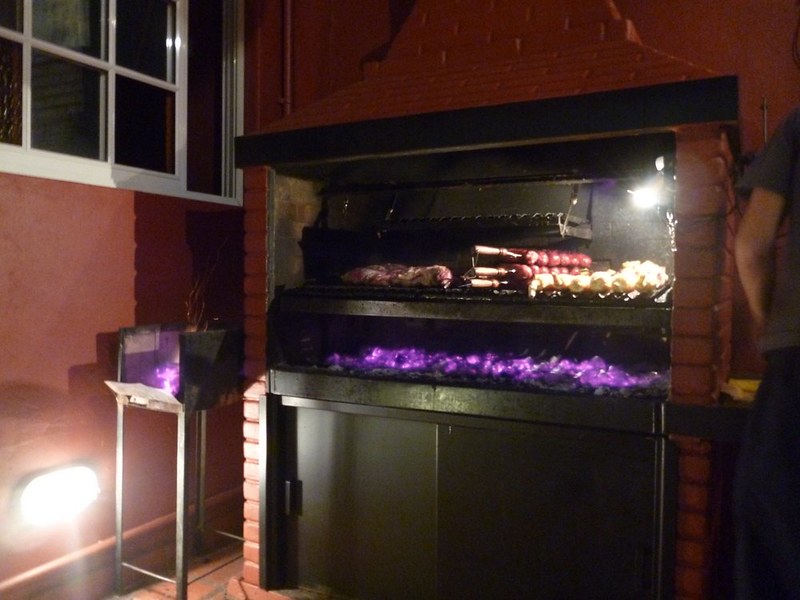
BBQ pit at my Buenos Aires hostel

Some of the guests from the US requested beef that was bleeding, not realizing that different cuts are used for BBQ. Unfortunately, the guys at the hostel didn’t really cook the meat enough so I was feeling a bit queasy after just a few bites.

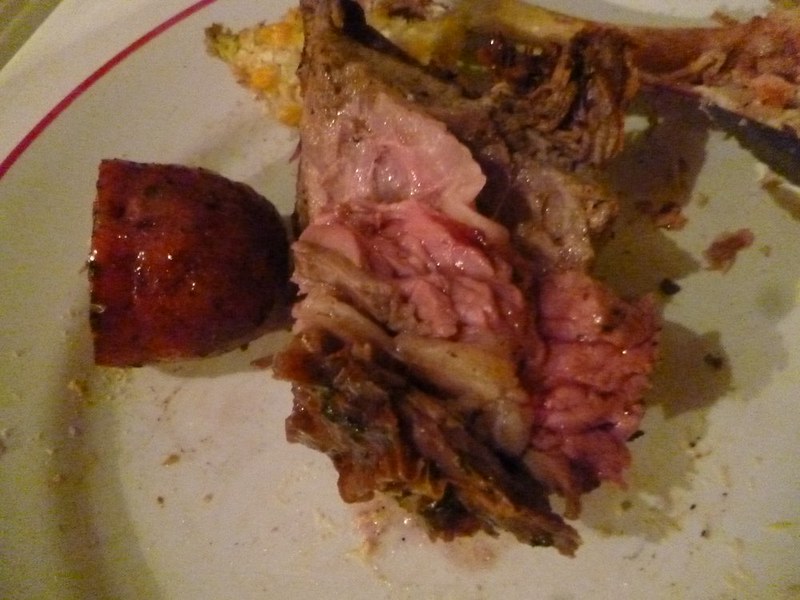
Not very appetizing asado at the hostel BBQ

Later in the supermarket, I saw a huge part of the meat section devoted for barbeque meat. They looked more like large intestines than meat.

Much better asado at restaurants

After the asado at the hostel, I was quick to dismiss Argentinian asado. But one day, I met the best barbecued meat of my life at a restaurant in Iguazu.

The restaurant is called Vaca Verde (Green Cow) and the owner was a really friendly old man who recommended the house’s asado.

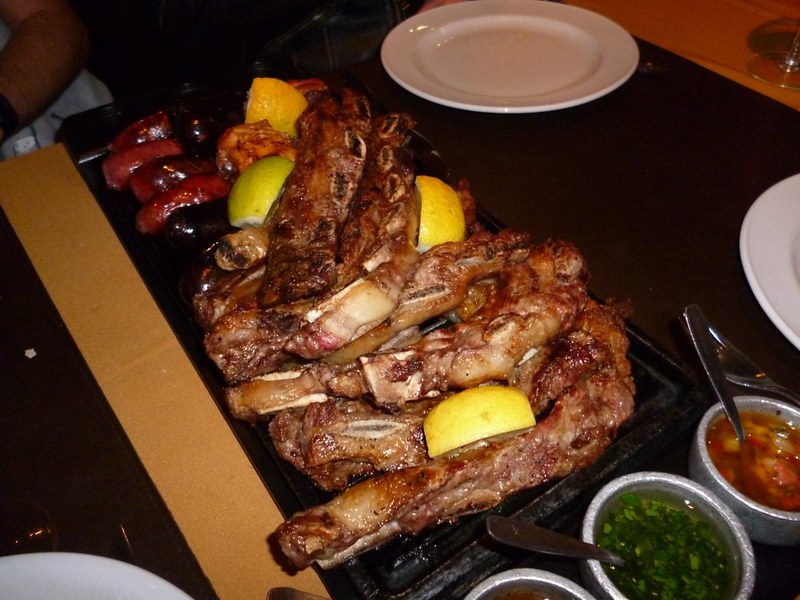
Proper parilla in restaurant

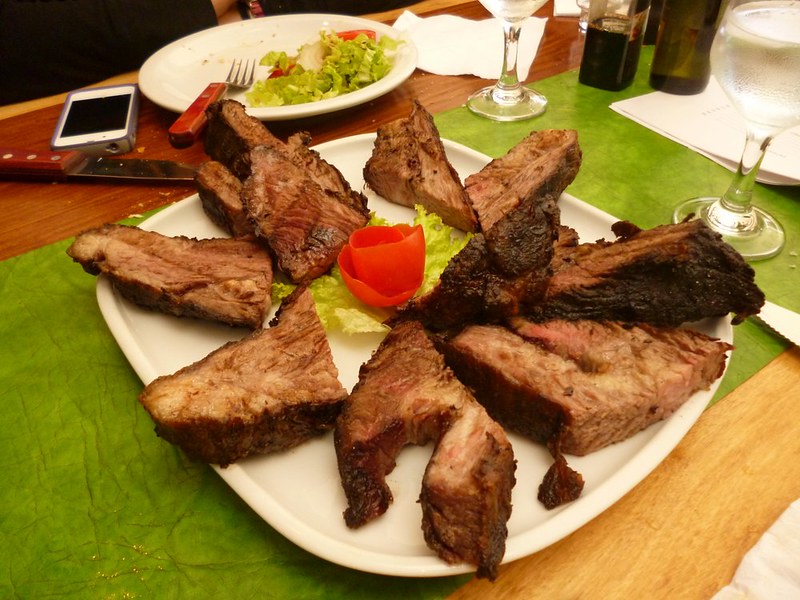
The meat that came out looked a bit charred but the taste was marvelous. The slightly burnt skin tasted sour but the meat was sweet. I gobbled down my share quickly but I wanted more. More of this beautiful meat.

I dreamt about this plate of asado once. It was beautiful.

After the meal, my brain was still hooked on it. I even had a dream where I was served something that tasted exactly the same. Alas, I have not had the dream since then.

Which country serves the best barbeque? Share your thoughts in the comments section below!

#FoodFriday Making Mayan hot chocolate at Chocolate Museum

hot choc

On my first day in Cusco, Peru, I didn’t have anything planned so I looked at the tourist map to see where I could go. Among the list of museums was the very curious chocolate museum. Since it was near where I was staying, I decided to visit and learn more about chocolate.

The museum is located on the second floor and you need to enter from a passage on the side of the building. The museum isn’t really a museum but a shop/café with a few panels with information on chocolate.

Maybe i t was my ninja sightseeing skills, no one from the museum brought me around to look at things. I later noticed that other tourists were swarmed by fawning employees. In the end I decided to take a seat and have a coffee, or a hot chocolate, to waste a way a bit of my time.

The most intriguing item on the menu was the Mayan/ European hot chocolate. Based on information in the museum, we know that Mayans drink their chocolate with chili powder while the Europeans add honey.

You are presented with the ingredients for both versions of the hot chocolate:

Clockwise from top: Chili powder, honey, mug with spoon, warm milk and chocolate paste.

Ingredients for Mayan hot chocolate

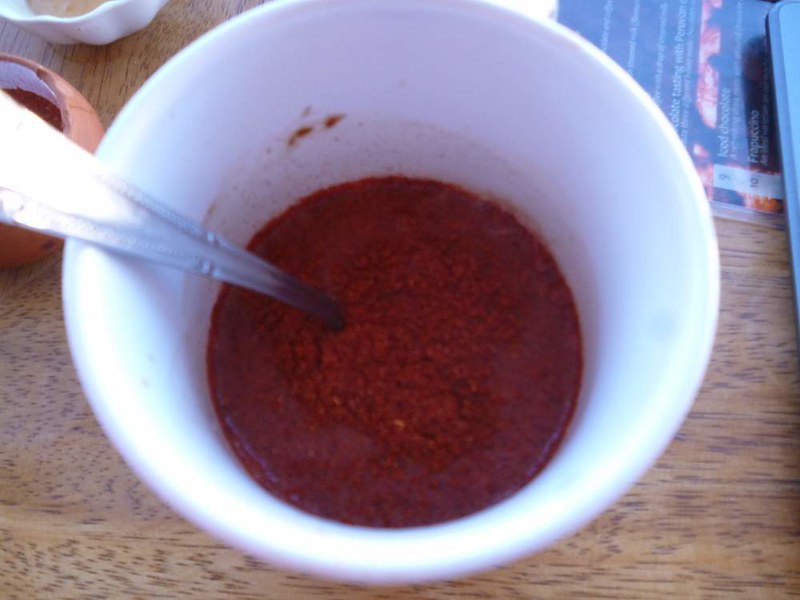
There’s no correct way to make Mayan hot chocolate so I dumped a lot of chili powder in. It didn’t taste as peppery hot as I expected so I was slightly disappointed. It did turn the regular hot chocolate into something festive with its red chili powder.

Spicy Mayan hot chocolate

Where can you find Mayan hot chocolate

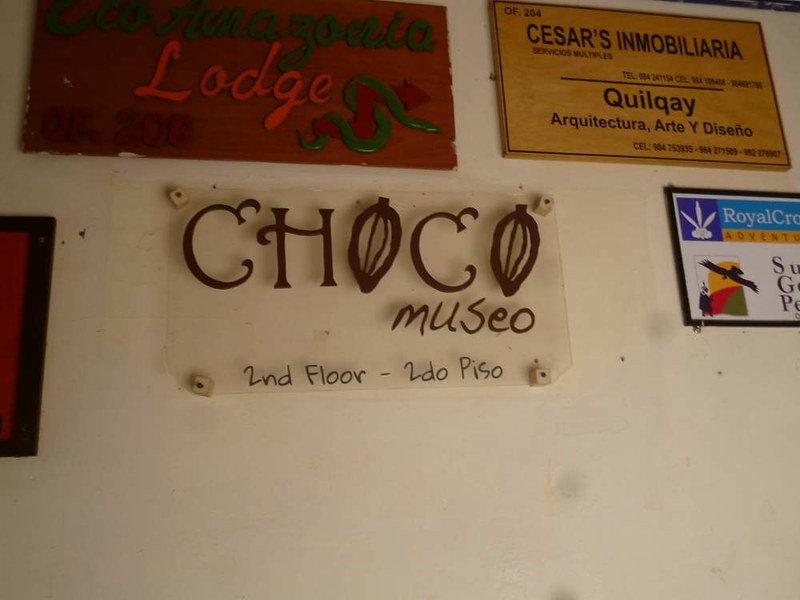
Choco Museum in Cusco

Other yummies in South America:

#FoodFriday Peruvian seafood soup

pescado

Welcome to YQtravelling’s FoodFriday. The day of the week when I show off some of the lovely eats I had while travelling.

Today we’re slurping some soups made of fruits of the sea in Peru.

Some time ago, I talked about Latin America’s ceviche, a dish with raw fish cooked in lime or lemon juice. Today, we’re still eating food from under the sea but it’s cooked using fire.

I love soups and this extends to noodle dishes in soup. There is something very comforting about a food that doesn’t require you to chew too much.

I also like my soups tongue-burningly hot because that’s when I know that I am alive. I’m a bit of a masochist when it comes to soup.

Seafood soups in Peru

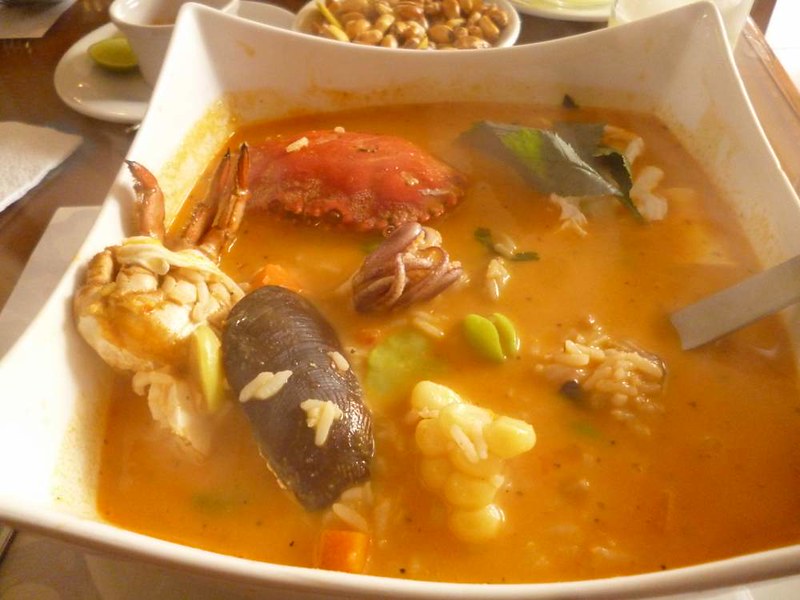
Seafood soups in Peru were unlike the Chinese soups that I’m used to. Instead of clear soup, we have a stock that is bright orange. The ingredients always seem to threaten to escape from the bowls which are huge.

Seafood soup of the house in Lima

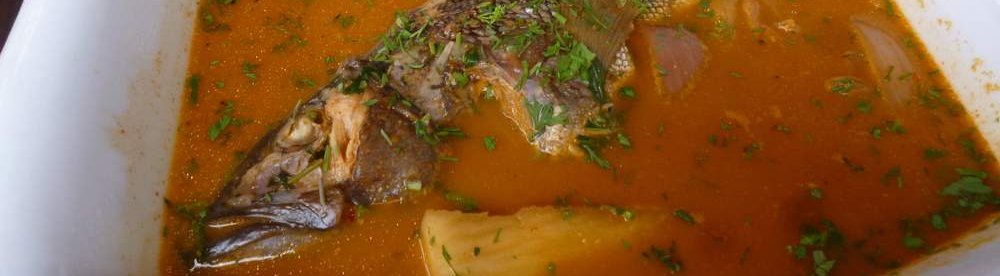
Chupe de pescado--Fish soup!

Read more:

#FoodFriday I love ceviche!

Where to find cheap food in Aguas Calientes [#FoodFriday]

#FoodFriday Lactose-less milk in Peru

#FoodFriday Make Argentinian hot chocolate ‘Submarino’ in 4 easy steps

how to make a submarino

Welcome to YQtravelling’s FoodFriday. The day of the week when I show off some of the lovely eats I had while travelling.

Today we’re making our own hot chocolate, Argentinian style.

I was introduced to the submarino–a winter Argentinian drink–in my Spanish class in Buenos Aires. Out teacher asked our class of 3 if we knew what a submarino was.

Being the smart ass (although truthfully more ass than smart) that I am, I said that it was a sandwich, thinking that it was a quirky nickname for Subway.

Then the teacher explained that it was a drink. In a tall glass of hot milk, a bar of chocolate is submerged, giving it its name “submarino” (submarine).

One day, I tried the drink at a Buenos Aires cafe. The waitress came with a glass of milk and TWO bars of chocolate. The chocolate’s label indicated that it was for submarinos. However, I took a nibble and discovered that it tasted the same as regular dark chocolate.

submarino

Instead of flying to Buenos Aires during winter to try the submarino, I will share my recipe for making a submarino in 4 simple steps.

Step 1: Prepare the ingredients

Ingredients for submarino

For this recipe, you will need:

  • Milk
  • A bar of chocolate, preferably dark
  • Microwave-friendly heat-resistant mug
  • A spoon

Step 2: Heat the milk

Prepare one cup of milk

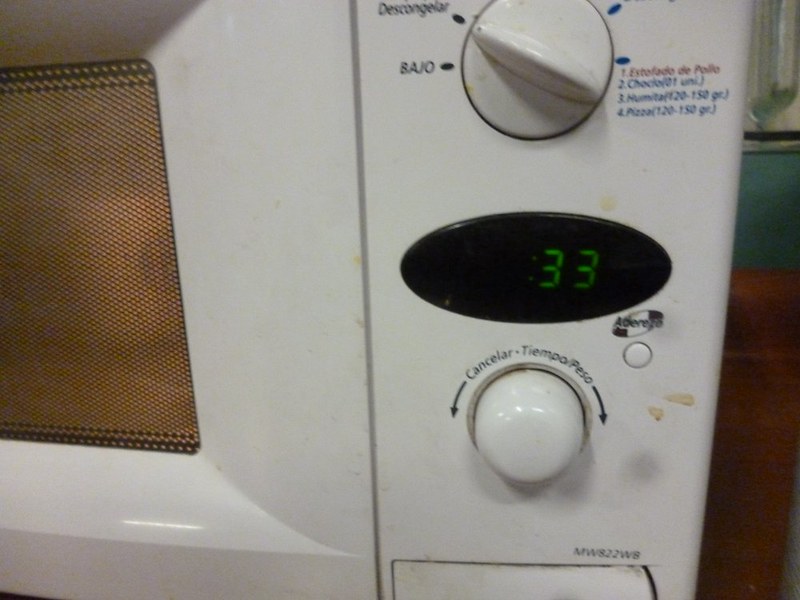
Pour out your milk into your mug. Put the mug of milk into the microwave and heat it up in 20-30 seconds intervals, test the temperature of the milk and you are ready when the the milk is steaming hot.

Microwave the milk so it's hot

Step 3: Submerge your chocolate and stir

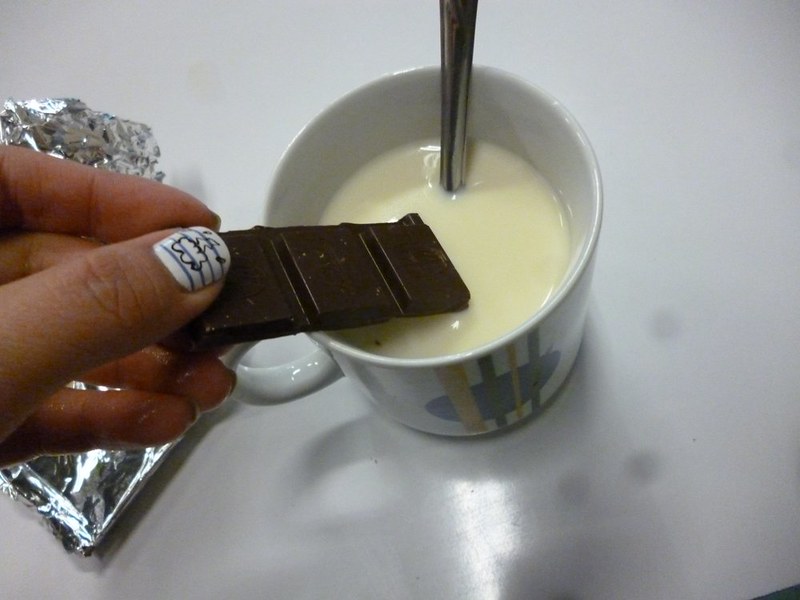
Drop a row of chocolate

Break off a row of chocolate and drown it in milk. Stir vigorously with your spoon.

Once most of the chocolate has turned to liquid, you are ready to…

Step 4: Serve

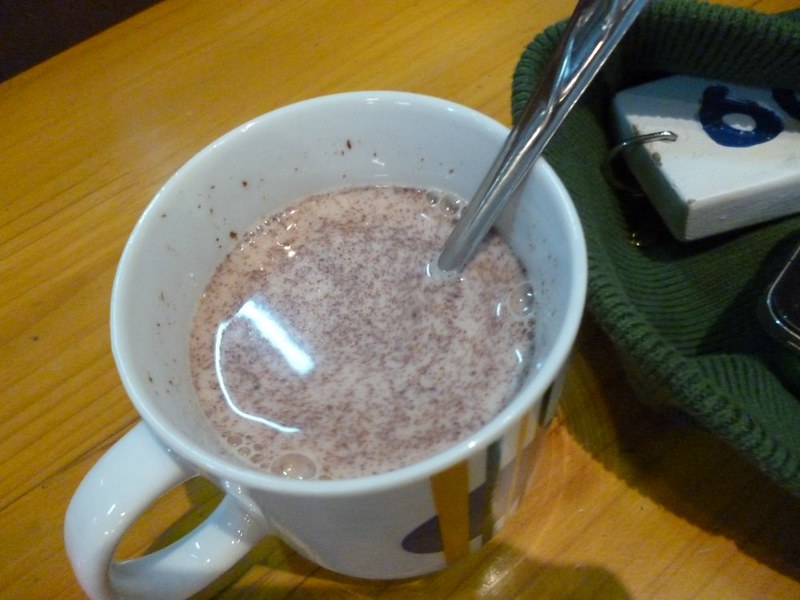
A mildly successful submarino

Drink the whole mug in a go.

Oh, you might need to bathroom afterwards because even people who are not usually lactose intolerant will have some of its symptoms when finishing a large glass of milk. (Or maybe it’s just me.)

Have you tried the recipe? How do you like it?

#FoodFriday I love ceviche!

foodfriday ceviche

Welcome to YQtravelling’s FoodFriday. The day of the week when I show off some of the lovely eats I had while travelling.

Today we’re going to going to South and Central America for some raw fish yummies.

It was my mom who introduced me to the wonders of sashimi. A long long time ago, I didn’t realize just how tasty raw fish with a hint of spicy wasabi is. One day, she encouraged me to try out “just one slice” of tuna sashimi. I was hooked!

Since then, I always welcome dishes with raw seafood (even if they taste like rubber) so imagine my joy when I learned about Latin America’s ceviche.

The dish, also spelled as “cebiche”, is raw fish or seafood marinated in citrus juice. The juice “cooks” the fish using some scientific magic. Or About.com can explain better:

In the culinary arts, ceviche is a Latin American recipe for raw fish and seafood marinated in citrus juice, mainly lime and lemon juice. The acid in the citrus juice coagulates the proteins in the fish, effectively cooking it.

Ceviche is served in the morning and until noon in Peru because it’s not good to keep the half-cooked fish until dinner time. However, for tourists, restaurants do serve ceviche for dinner.

Ceviche at Chan Chan, Buenos Aires

My first ceviche experience was in a Peruvian restaurant in Buenos Aires.

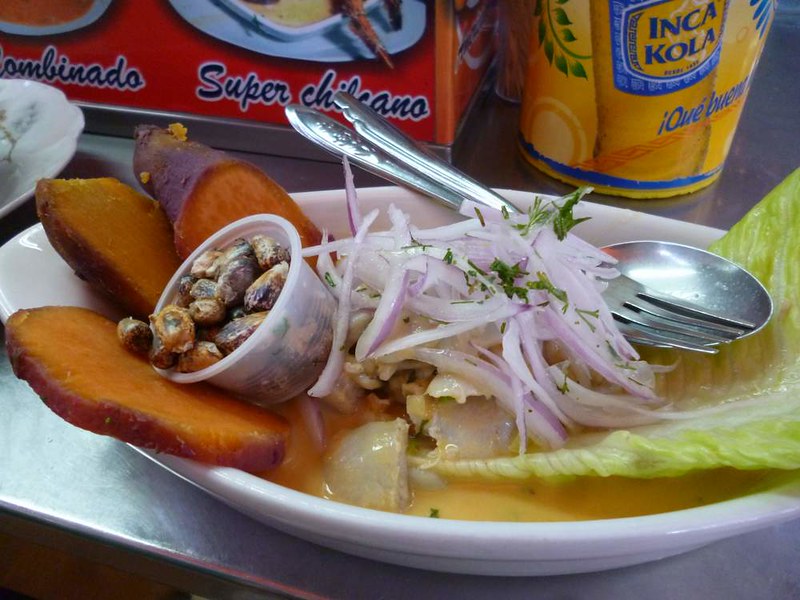
Chan Chan was near my hostel and was said to serve cheap food. I ordered the ceviche, despite not knowing what to expect. I imagined a large plate of sashimi slices but it looked like this:

Cebiche from Chan Chan, Buenos Aires

There was a bush of onion on my fish and a piece of tapioca and a small corn. I thought it was going to be all meat. :(

Still, I fell in love with the tangy dish despite my ulcers which were stabbed by the lime juice with each bite.

From then on, I was open to tasting as many ceviches as I could. However, until now, the dish from Chan Chan remained the best tasting and the most filling ceviche that I’ve had.

Ceviche at San Camilo Market, Arequipa, Peru

I’m hesitant about eating ceviche in most places because the combination of raw fish and unsanitary conditions equals disaster.

So I was glad to learn that the couple from GQtrippin did not have problems with the ceviche at San Camilo Market in Arequipa. I made it a point to visit the market and taste the local ceviche.

Ceviche from San Camilo market
Cebiche from Chan Chan, Buenos Aires

The sauce for my ceviche was dyed a slight orange color from what I hope was the tapioca. The dish was nice but it couldn’t compete with my memory of my dish in Buenos Aires.

This other ceviche place in Arequipa

Cebiche

I adore ceviches but I find it frustrating that they never serve a big enough serving to strerch my stomach. Ceviches are served in petite portions with more garnish than the actual fish.

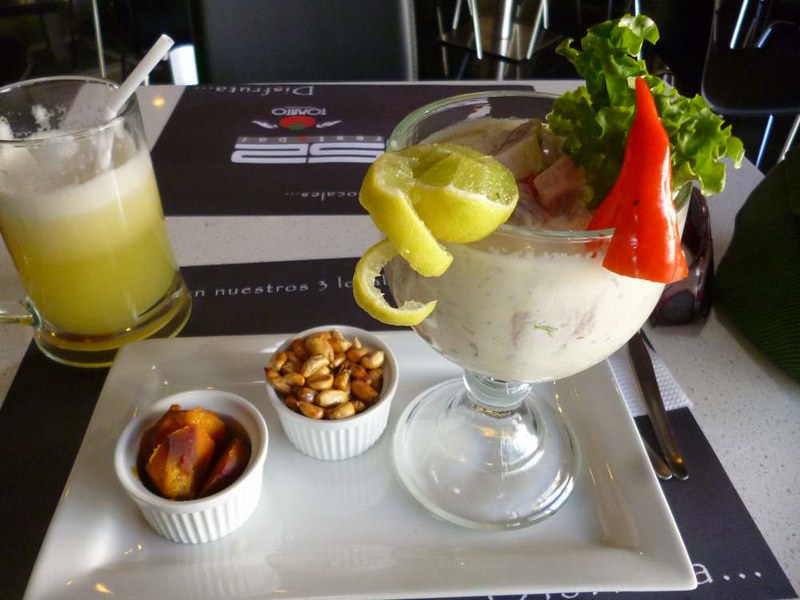
Sometimes the dish is served in fancy wine glasses like this one from a ceviche recommended by one of the teachers in Arequipa.

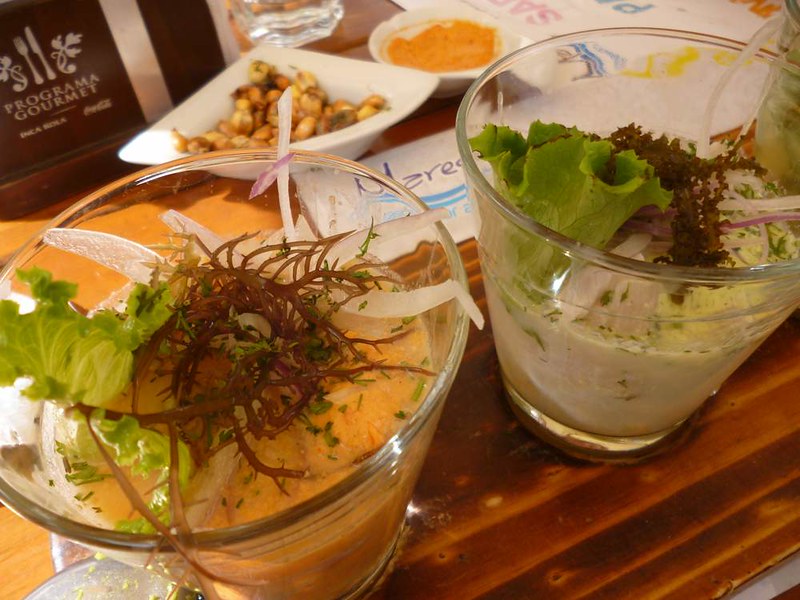
Four-taste ceviche from Mares, Arequipa

Cebiche from Mares
Cebiche from Mares

As a budget traveller, I do not frequent fancy restaurants much. But when I was studying in Arequipa, Peru, my retired schoolmate Tasha* (not her real name) always had plans to visit nice restaurants. I could have said no but I always went along.

At Mares in Arequipa, they have a dish with four different sauces for ceviche. I quite like the one that tasted of fruit but I do not remember the proper name.

El Salvadorian ceviche

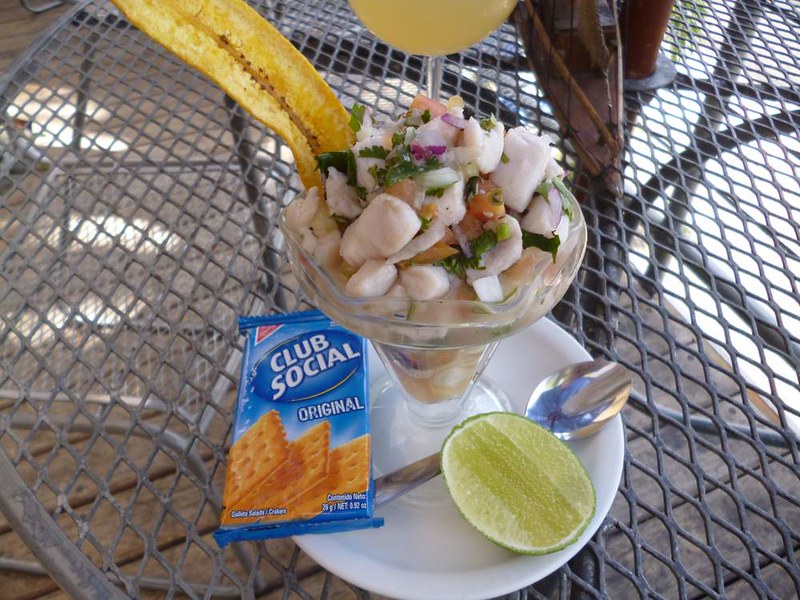
El Salvadorian ceviche

I tried ceviche at a seafood restaurant in San Salvador. There was quite a lot of fish and even a fried banana biscuit to garnish.

I was surprised by the crackers they gave me. The waiter told me that I should eat the fish with the cracker.

The fish was quite OK and I liked the salty taste of the cracker combined with the lime juice. Yum yum.

When I head back to Southeast Asia, I’ll miss ceviche the most. Even if restaurants sell ceviche, I seriously think that the price will be over the roof so I’ll just eat all my share of ceviche here before I head home.

Have you eaten ceviche? Do you like it?

Where to find cheap food in Aguas Calientes [#FoodFriday]

menu at aguas calientes market

Aguas Calientes is the town nearest to Machu Picchu. This is where you will likely stay a night before you visit the site or having a meal before you take the train back to Cusco or Ollantaytambo.

Most of the infrastructure in Aguas Calientes is targeted at tourists. This means jacked up prices.

In Aguas Calientes, I had eaten a 45 soles (S$21) set meal where the rice was as large as the head of my fork and a 67 soles meal (S$30) that was actually pretty tasty.

Of course, not every meal in Aguas Calientes has to exceed 50 soles. I can show you a place where you can have a meal plus a fruit juice for just 10 soles (S$4.50).

Where to find cheap food in Aguas Calientes

This little piggy went to market

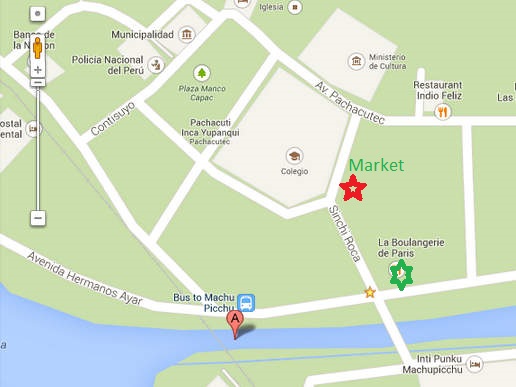
Go to Aguas Calientes market for cheap food

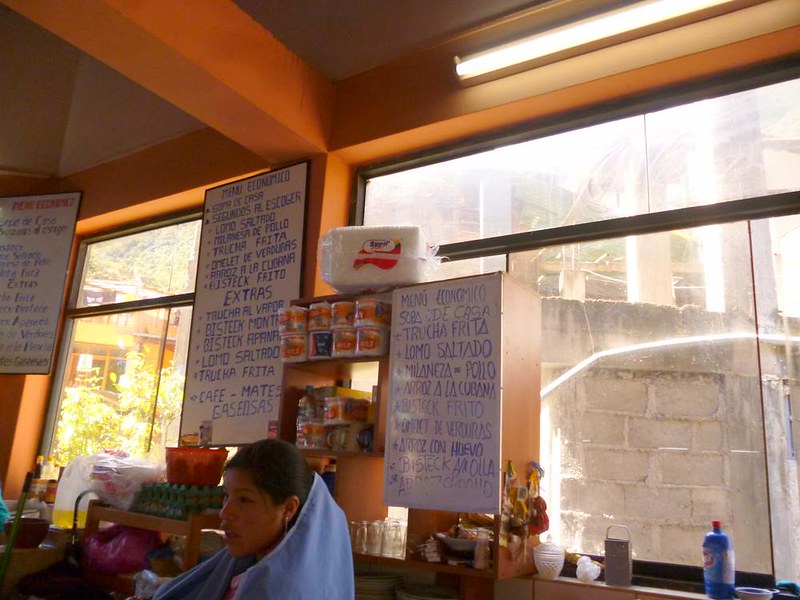
On the second floor of the local market (not the “craft market) is where they sell cooked food. At lunch time, a lot of the stalls write their dishes of the day on a whiteboard. Just order off the list and you will have tasty, freshly made food.

Second stall in Aguas Calientes market

The second stall on the left gave me a good vibe so I had both my meals there. The stall is run by a family of women. The first time I went, the elder sister cooked while the second time, the mother cooked.

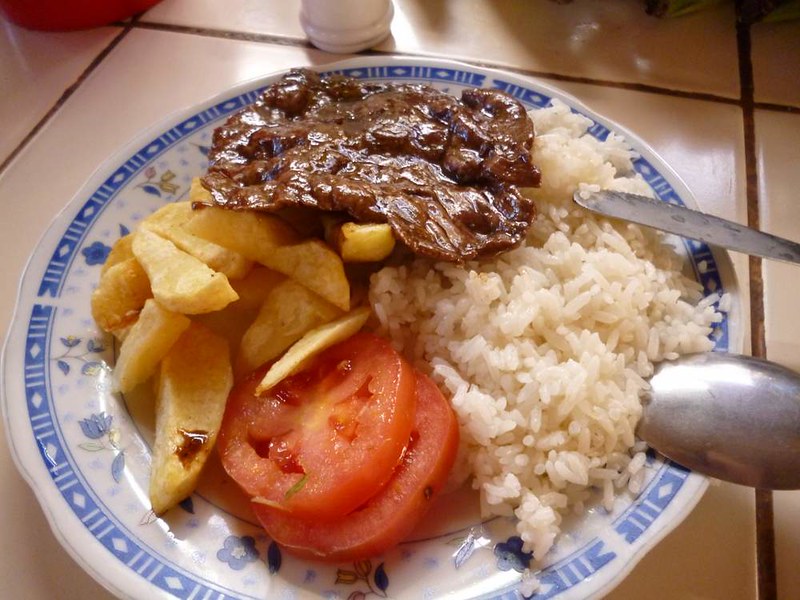
Bistek frita
Bistek frita

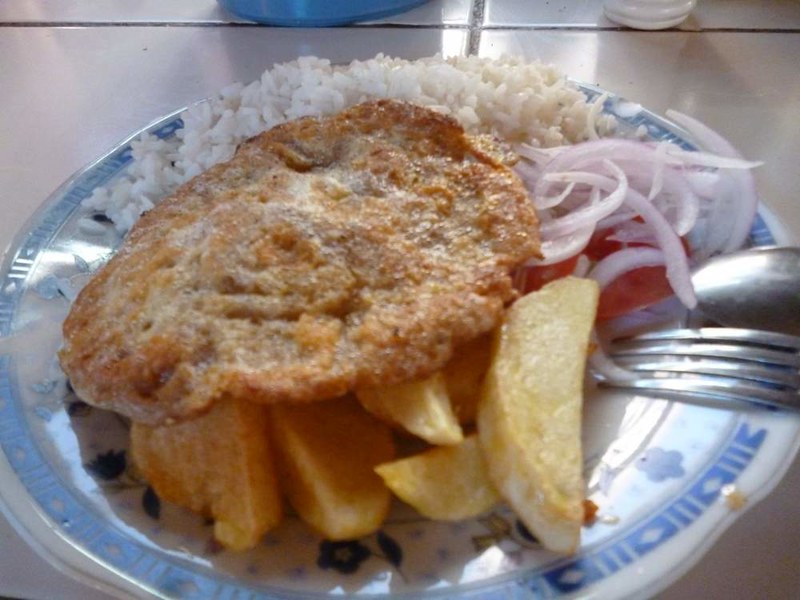
The beef steak meal was lovely but the Milanese chicken (breaded chicken cutlet) wasn’t as good. I love how they have rice along with the meal. I also requested that they only give me tomatos and not greens as the salad.

Milanesa pollo
Milanesa pollo

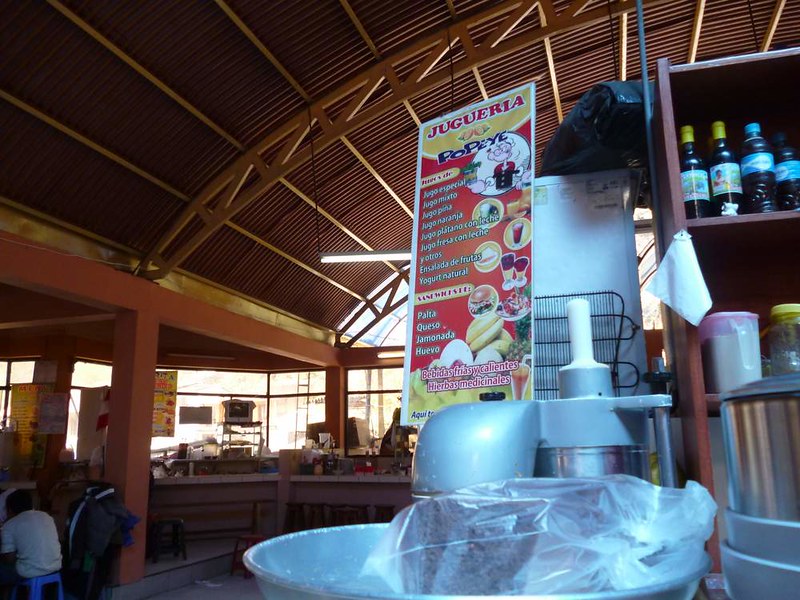
After your meal, you might want to have a drink. At the market, juices sell for 5 soles. For this price, you get about 2 glass-full of juice. That was enough to stretch my stomach.

Fruit juice stall at Aguas Calientes

I will definitely miss the generous servings of fruit juices in Peru.

Special fruit juice
Special fruit juice
Mixed fruit juice in Aguas Calientes market

More about Aguas Calientes:

Who likes Aguas Calientes? I kind of do

Finally, the day I visit Machu Picchu [YQrtw Day 109 Jul 27]

Hot springs at Aguas Calientes [YQrtw Day 108 Jul 26]

#FoodFriday Lactose-less milk in Peru

lactose-less milk-001

Did you know that you can suddenly get lactose intolerance even though you were OK with dairy products for the longest time?

That happened to my friend D. She was the biggest fan of dairy (Milk! Cheese! Cakes! Milk tea!) so she’s now missing out on a lot of her favorite food.

That’s why I instantly thought of D when I saw lactose-less milk in an Arequipa supermarket. I even snuck a photo on my phone.

Even though there’s high lactose intolerance among Asians, I’ve not seen such a product in my life. I wonder if there’s a market for it in high-income countries such as Singapore and Japan. (Please do steal my business idea.)

0% lactose milk taste test

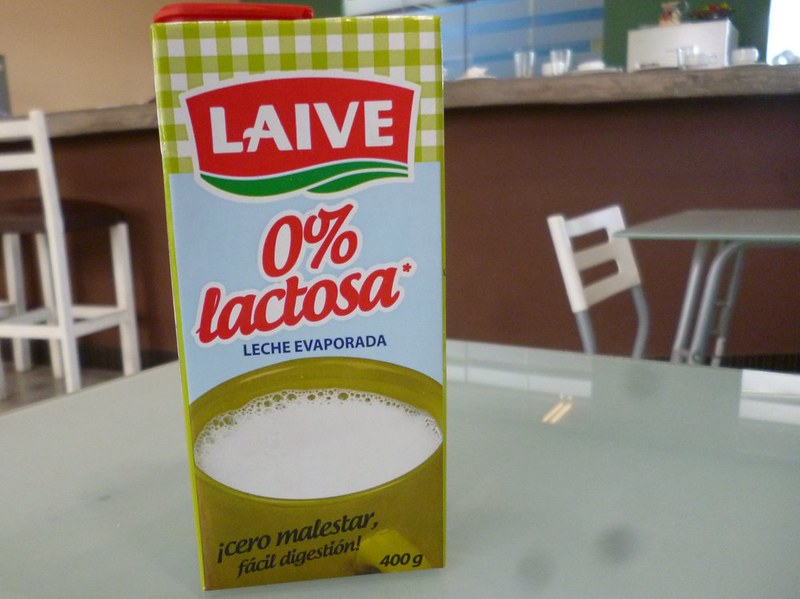
The lactose-less milk was available in a 1 liter plastic bag or in small boxes. I bought the 400g box because I don’t think I was able to finish a liter in a week.

0% lactose milk
0% lactose milk

0% lactose*
Evaporated milk
Zero discomfort, easy to digest
400g

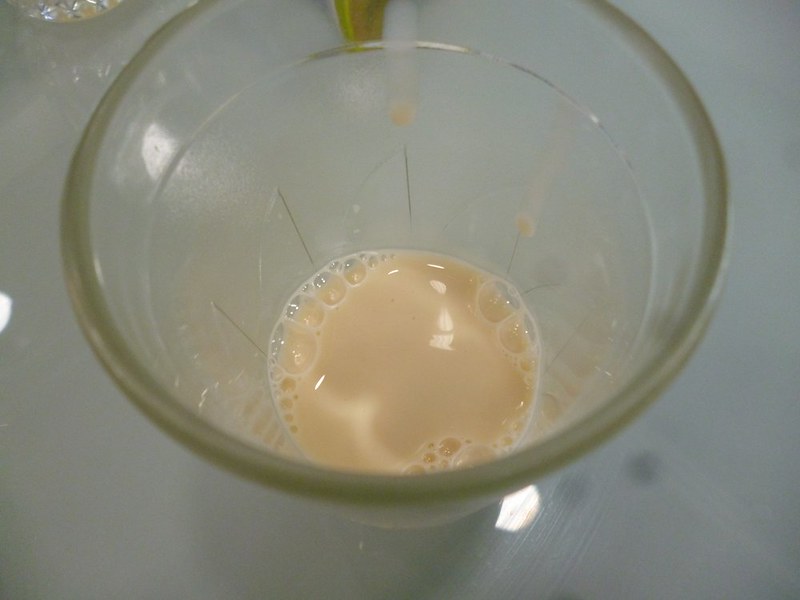
I then discovered that the box was actually evaporated milk and not whole milk. Oh well, I can add it into my coffee in the morning. (I also added equal parts of water to the milk to make it whole milk.)

Color of lactose-less evaporate milk is the same as regular evaporated milk. I was expecting something paler.

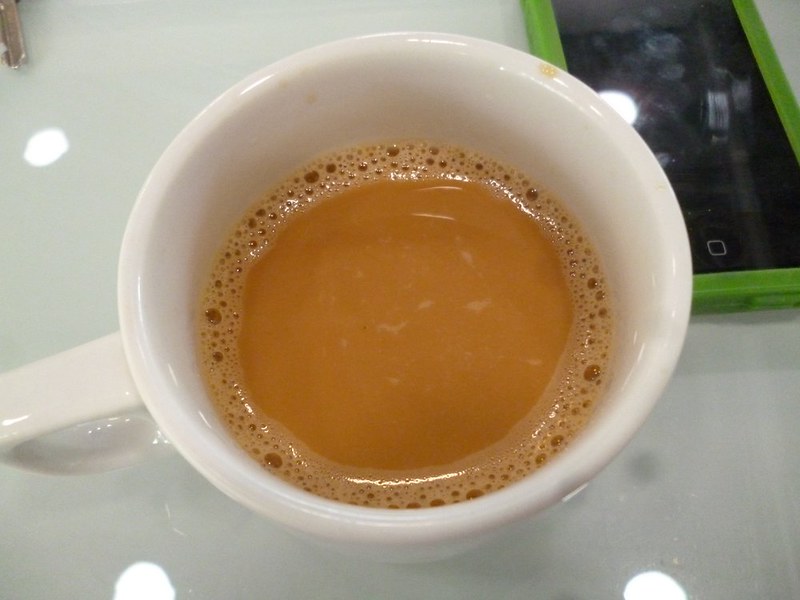
One morning, I used the lactose-less milk in my coffee instead of the regular milk the hostel provides.

Surprisingly, it tasted the same!

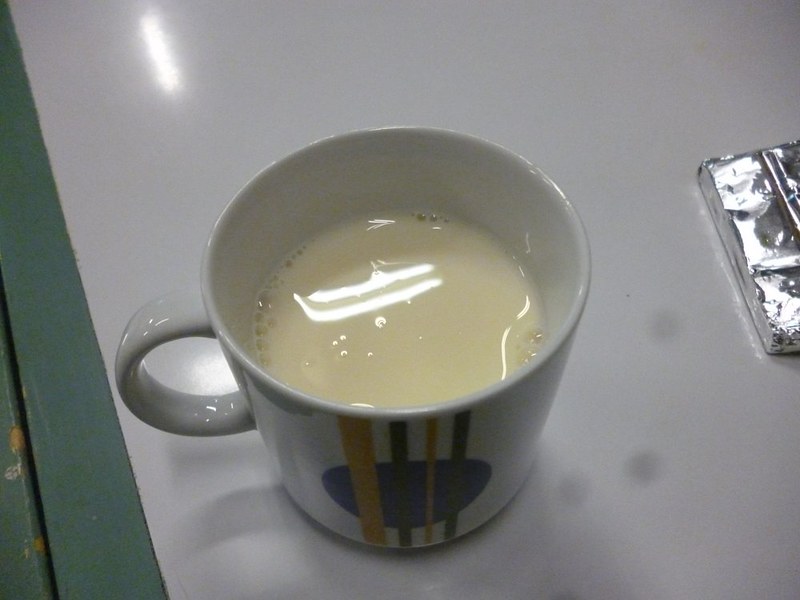
Kopi C suitable for the lactose intolerants

I also made a submarino with the lactose less milk. (The how-to will  I’m glad to report that the submarino did not cause “symptoms of lactose intolerance”.

Someone really should start a lactose-less milk business in Singapore.

More from the lactose-less milk box

Nutritional label of lactose-less milk

On left:

0% lactose*

Address bla bla bla

Ingredients: Low fat milk, Vitamins (A, C and D), stabilizers (E-399, E-407) and lactase enzyme

*(LDD) Detection limit 0.01g/ml

Suitable for celiacs

100% cow milk, low fat, ultra pasturized and homogenized

Would you invest in my lactose-free milk business?

#FoodFriday: Cooking instant noodles in a hostel

cooking instant noodles

Welcome to YQtravelling’s FoodFriday–the day of the week when I show off some of the lovely eats I had while travelling.

Today’s post is a special feature where I teach you how to cook instant noodles in a hostel. Let’s get cooking.

Last month, I showed you how to cook a steak in a hostel. Today, I want to show you how to cook instant noodles in a hostel.

OK, I caved in and ate instant noodles in my hostel in Arequipa, Peru. The result wasn’t that good but if you need to eat, you need to eat.

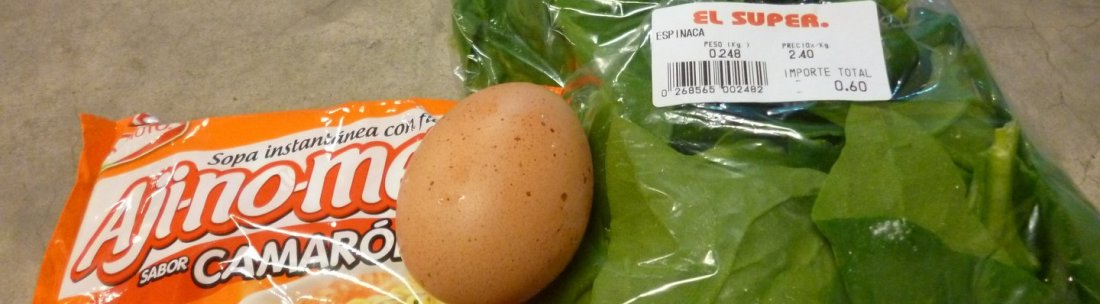
For this recipe, you will need

  • One instant noodle
  • One egg
  • Some vegetable
  • Pot with cover
  • Water

Ingredients for cooking insta noodles

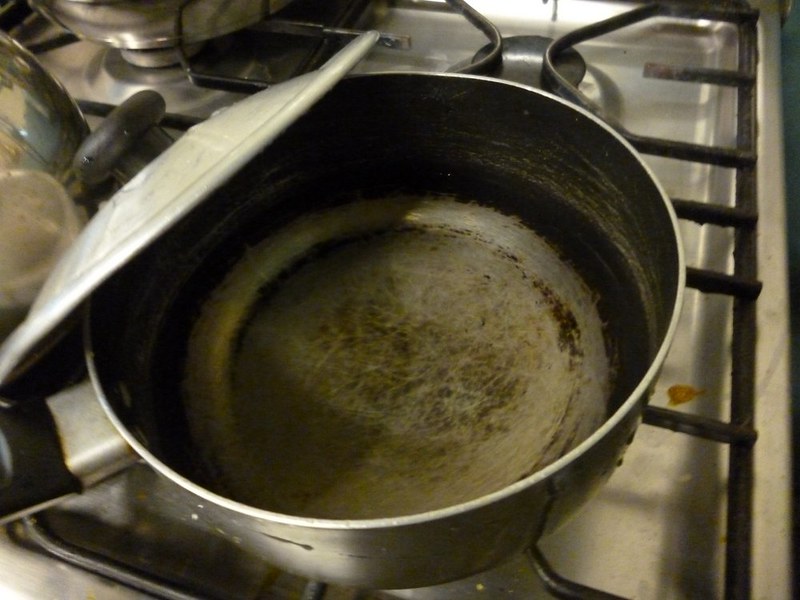
Step 1: Boil some water in the pot

Step 1: Boil water in a pot

Get the water to a boil to cook the noodles.

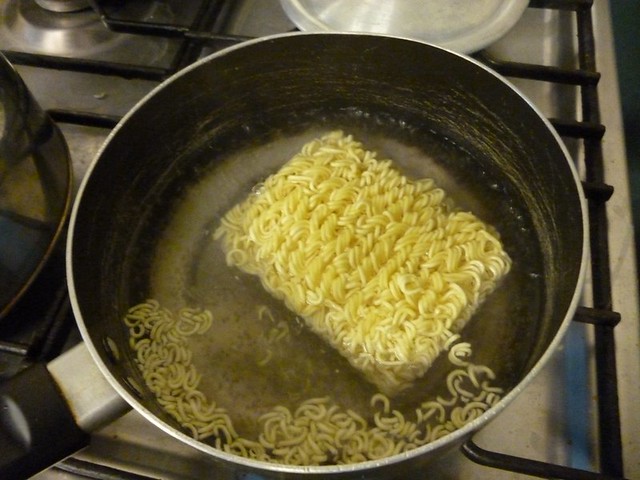
Step 2: Cook the noodles

Cook the noodles

Cook the noodles.

I don’t time my cooking and wait for the noodles to disintegrate from brick of noodles.

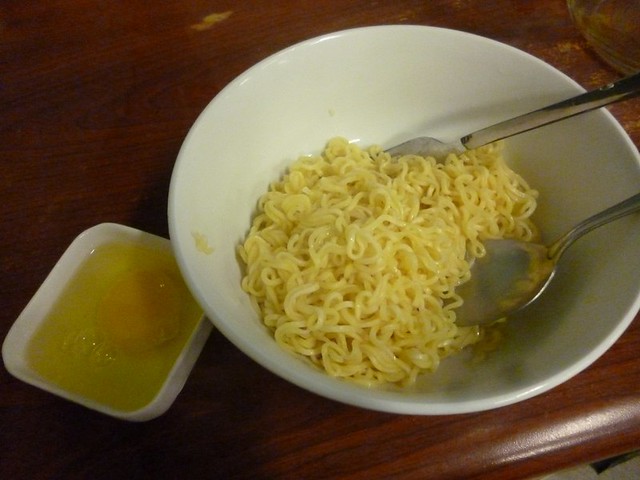
Take the noodles out of the water

Take out the separated noodles and put them into a bowl.

Step 3: Make the soup with new pot of water

Pour out the noodle water and wash the pot.

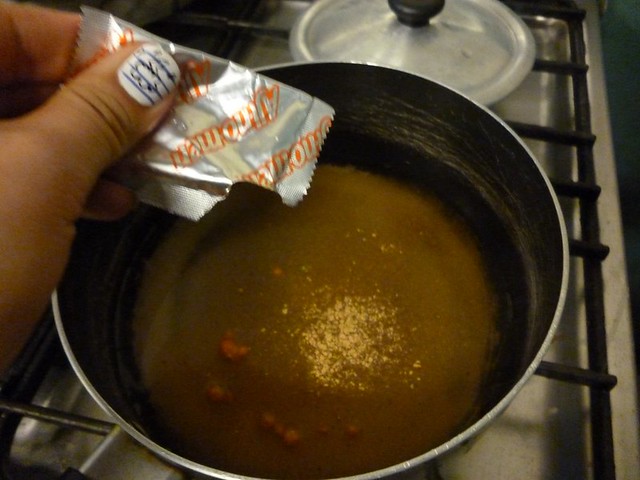
Boil another pot of water but don’t use too much because you don’t want thin soup. While you wait for the water to boil, put the seasoning into the water.

I usually use part of the seasoning, pinching one corner of the packet so those seasoning do not fall into the soup. This results in disgustingly underseasoned noodles but that’s how I roll.

Put the seasoning into the water

Step 4: Cook the vegetable and egg

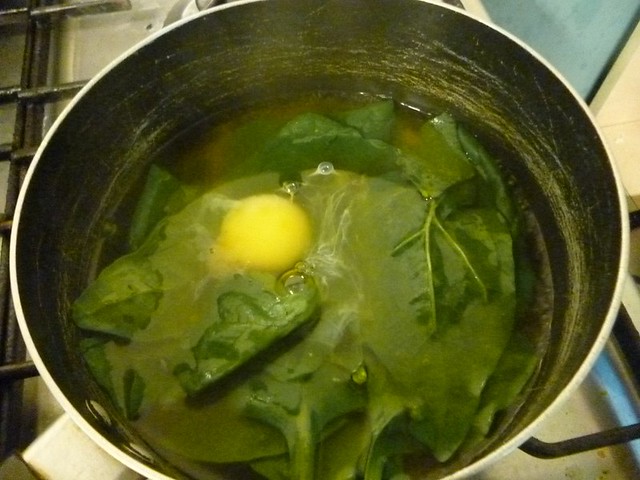
If you have more vegetable than water, cook your veggies in batch. Blanch your veggies until they turn a darker shade. Take the veggies out into the bowl.

When you have your last batch of veggies, you can crack the egg into the soup. Break up the egg if you want floating pieces of eggs or leave it untouched.

Spinach and egg in instant noodles

Step 5: Serve

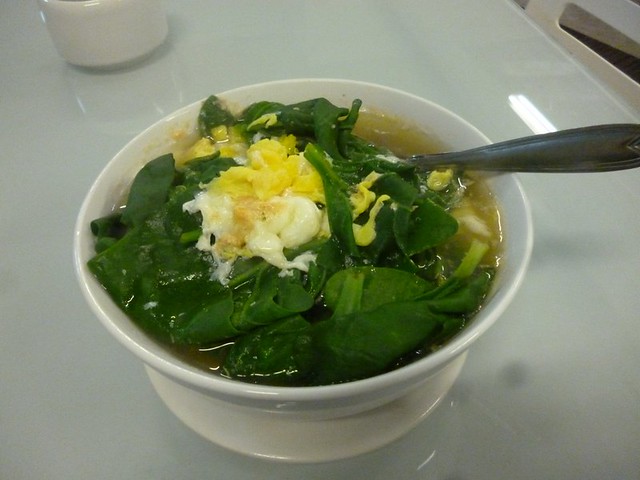
When the egg is cooked to your preference, pour the soup into your bowl of noodles.

A complete bowl of instant noodles

Do you have any secret recipe for yummy instant noodles? Share them in the comments.