I used to travel a lot but now I'm a homebody with a lot of side hustles.
Author: Liau Yun Qing
Yun Qing is a writer, improviser and curious person. She loves finding little adventures in life. In 2013, she went on a 130-day round-the-world trip. She wrote a book "Your Big Break" to help those who also want to go on a career break.
BootsnAll has a post on why you should visit Southeast Asia. I want to bring you deeper into SEA.
Welcome to Kota Kinabalu.
I was born and raised in Kota Kinabalu, the capital of Sabah. I’ve always been fiercely proud of being a Sabahan. In fact, I think myself as a Sabahan first, a Malaysian second.
Where is Sabah and where is KK (pronounced keh-keh in our local accent)? It is in the northern part of Borneo–the third largest island in the world. The second largest state in Malaysia.
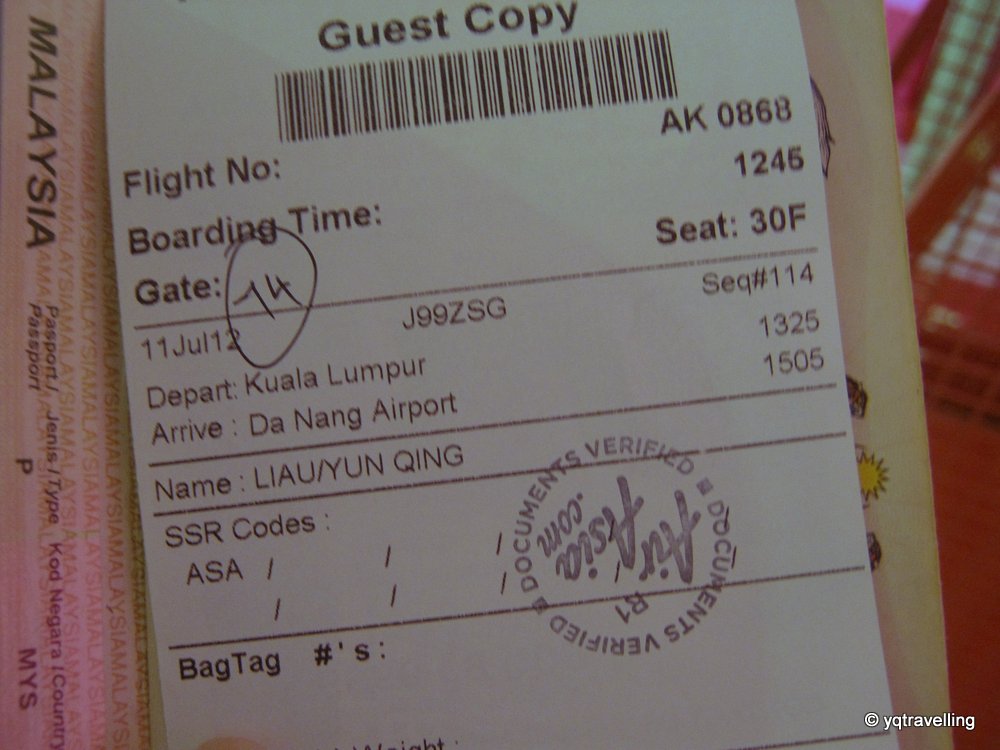
I just found out that there is a code called YQ (and YR) in airlines tickets.
It actually means fuel surcharge, according to ehow.com. Maybe they were looking for a combination that would not appear anywhere in the English language.
Maybe I should have chosen a better twitter handle/wordpress.com subdomain. But it’s my name!
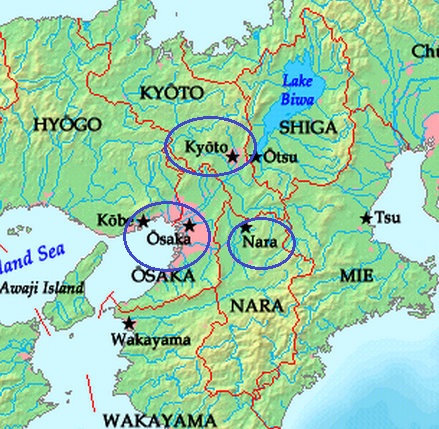
During my 10-day trip to Japan last October, my mom and I spent 6 days in the Kansai region and visited Kyoto, Fushimi-Inari shrine, Uji, Nara and Osaka.
Since we wanted to see many sites in Kyoto as well as the Jidai Matsuri, we used Kyoto as a base and took day trips to the other Kansai cities. But if you are more of a city person, you’d probably like staying in Osaka better than Kyoto.
Our itinerary was like this:
Day 1: Arrive in Kyoto
Day 2: Kyoto – Fushimi Inari – Uji – Nara – Kyoto [Kansai Thru Pass]
Day 3: Kyoto
Day 4: Kyoto – Osaka – Kyoto [Kansai Thru Pass]
Day 5: Kyoto – Nara -Kyoto [JR]
Day 6: Kyoto (Jidai matsuri)
My mom and I are temple, old building lovers so three days in Kyoto was fine. (Although we did spend a large part of our last day napping in the public bus.)
I was inspired by The Traveling Writer’s post on writing a bucket list. She said it’s not just a list of goals but of dreams.
Unfortunately, I’ve never gotten around to writing a bucket list, mainly because I was afraid of disappointing myself by not crossing out every one of the wish.
I blame my stinginess to being a Taurus. I love bargains and cheap buys. But most of all, I LOVE free things.
For this fortnight’s Travel Local series, I’ll be sharing some of the free things you can do in Changi Airport right after you land (or before you fly off)!
(Most of these are available in the posher terminals and might not be present at the budget terminal where airlines such as Tiger Airways leave.)
Changi Airport lost to Hong Kong International Airport for Best Airport 2011. I’ve not been to HK’s airport but can it really beat all the free stuff you can get at Changi?
I’ve bought a return trip ticket to KL for the Feb 11 weekend. This will be my first time taking the overnight train in Malaysia.
I named the trip the “KL light bulb trip” because I’m joining N and her boyfriend (whom I’ve not met) who are both coming in from overseas. “Light bulb” in colloquial Chinese means a third person among a couple. (Coincidentally, my first overnight train trip in China was with N.)
During my first trip to Japan in 2008, I bought a 7-Day Japan Rail Pass–JR Pass which currently costs 28,300 yen/US$ 367.90–and took the Shinkansen from Fukuoka to Tokyo, stopping in the Kansai region for sightseeing.
While the Shinkansen was speedy and comfortable, I decided not to buy the JR Pass during my last trip to Japan in October for four reasons
JR Pass is really expensive even for one person, imagine splurging for two.
We were in Japan for a 10-day trip and the JR Pass came in only 7-Day, 14-Day and 21-Day form so it wasn’t economically wise.
We only planned to visit the Kansai region. If we were travelling a lot farther, I might have gotten the JR Pass or flew.
By travelling by bus at night, I could save on accomodation but still get to my destination. My cheapest accomodation during the trip was my Tokyo stay at 5,300yen a night while Kyoto’s was 7,980 yen.
This was the book that inspired my round-the-world trip dreams. By inspired, I mean “to really make plans” instead of just jotting it down in my mental bucket list. I actually borrowed it twice from the library.
Long story short, Taiwanese indie traveller 943 shares how she went on a RTW in 80 days by only spending slightly more than NT$100,000 (US$3,340). She used point-to-point flights instead of a RTW ticket.
She flew from Taipei to Singapore to Europe (overnight at Bahrain) where she hopped around a bit. Then she flew to the US then to Central and South America where she took long distance buses. She then flew back to US where she flew home to Taipei.
I think it’s absoluteley brilliant that anyone can do a RTW with less than US$10,000! Speaking of which, here are a few examples of how much other people spent on a RTW.
From what I’ve read, she mostly saves money on lodging (which is a killer!) by bunking with Couchsurfers. She also does her research to make sure that she’s using the cheapest transportation. It’s chock full of indie travel gems if you read Chinese. Besides being full of tips, her book is quite humorous. I laughed at many parts.
During her Central and South America trip, she deliberately not learn Spanish beyond numbers 1 to 10 and the word for toilet (baño–pronounced ban-nyo, if you are interested). Instead, she experimenting if she could get by with body language. Apparently, it worked.
My mom was peeling mangos one day and I thought it would make a good blog post since it’s one of the best tropical fruits around.
Wikipedia told me that the “hedgehog” style is a common way to eat mangoes. But I can assure you, none of the people I know actually eat it that way. (Trust us, we have mango trees in our yards.)
I’m going to teach you another way of peeling a mango. Using this method, you are able to eat two different parts of the mango: the juicy flesh and the fibrous flesh around the stone.






 YQtravelling
