I used to travel a lot but now I'm a homebody with a lot of side hustles.
Author: Liau Yun Qing
Yun Qing is a writer, improviser and curious person. She loves finding little adventures in life. In 2013, she went on a 130-day round-the-world trip. She wrote a book "Your Big Break" to help those who also want to go on a career break.
Ronald greets us with a wai
Hello, I’m still in Bangkok and I’ll be returning to Singapore on a 6.30pm plane this evening.
I quite like Bangkok. I love the Skytrain. Any city with a metro system gets one thumbs up for me. Two thumbs if it doesn’t smell like pee.
I love the shrines along every street. I love how the king is loved so much that I see as many of his posters as I would a regular celebrity.
Unfortunately, I’ve only eaten one meal since I have arrived. Yes, the Glutton ate ONE meal in Bangkok. It’s a long story: I had to wait 1.5 hours for a massage and I was too lazy to find food. Plus, having a full stomach is not conducive for the wrestling moves I had to do.
Here’s a video I did before I head out into the streets.
When people ask me what food I miss most from home. I can rarely give an answer.
Saying “Seafood” is too easy. Who doesn’t love cheap seafood?
So instead of a real answer, I will show you one of my favorite dishes from home.
This noodle dish is called “ban mian” which roughly translates as “plank noodles”. I think the “ban” or “plank” signifies how the dough is chunky…I think.
A regular bowl of banmian (which is available in Singapore as well) has a pork-based stock, doughy noodles, pork, salted anchovies and some vegetable.
But not all banmian are good. It depends on the stock and the noodles. Some soup are so bland that my tears are probably tastier. Some noodles are undercooked or overcooked.
At my favorite banmian shop, everything is mixed in perfect harmony. The soup is tongue-scaldingly hot and the noodles chewy. The meat that accompanies it is always tender.
When I was planning my third trip to Tokyo, I thought I would not discover anything new since I have crossed off a lot of the tourist attractions in my previous two trips.
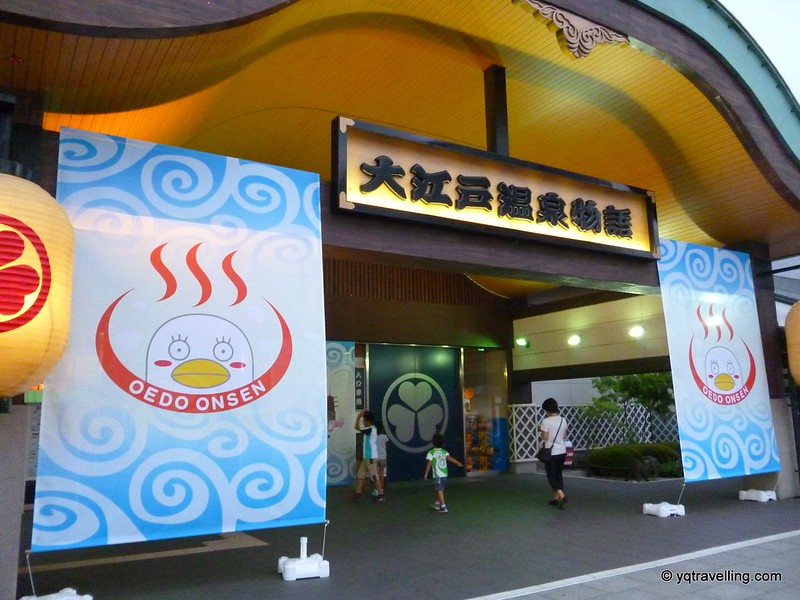
I spent my second day wandering around Shinjuku, waiting for the evening to come so I could go to Ooedo Onsen Monogatari hot springs theme park.
My mind was numb as I walked from one street to another. All the buildings looked very much alike.
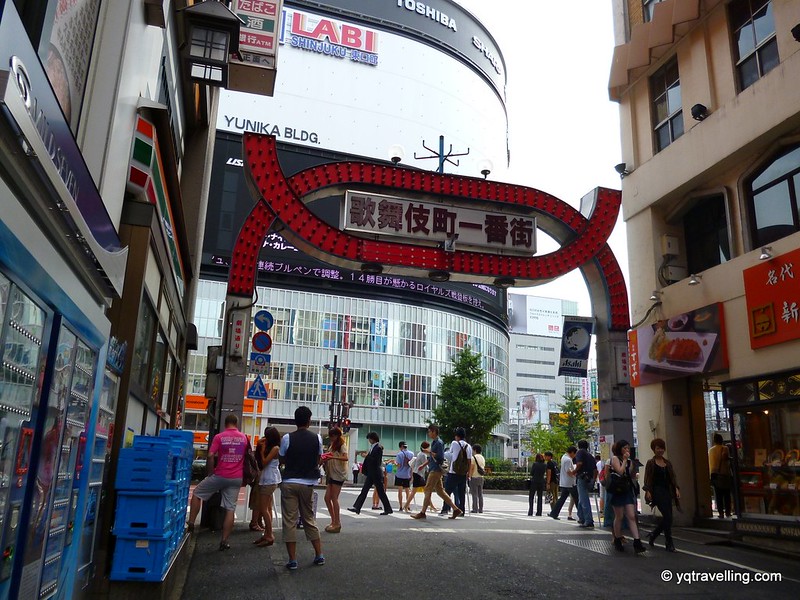
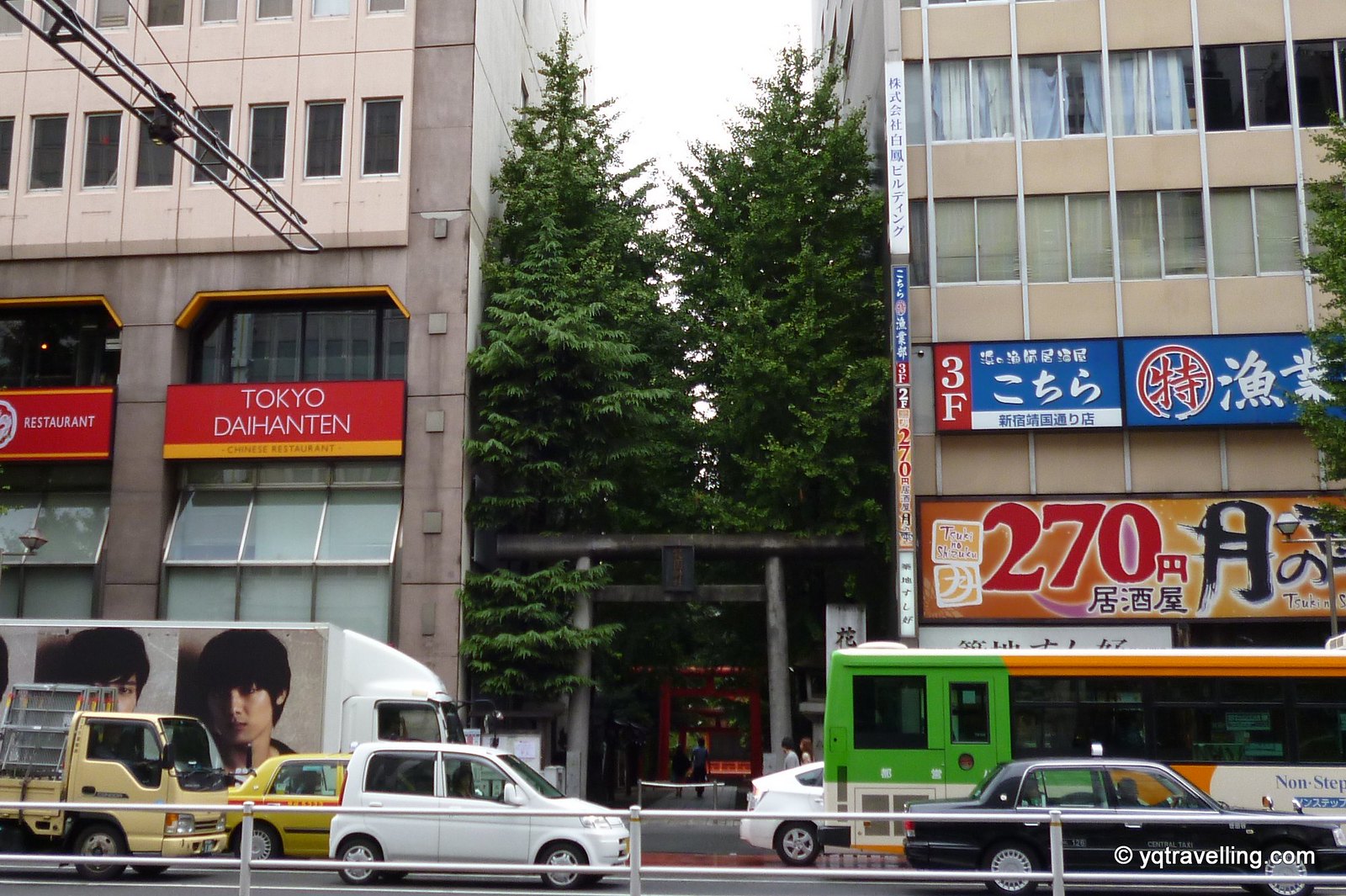
Suddenly, I spotted a patch of green between two buildings. I stopped in my tracks just before the traffic lights to look more clearly. Yes, it was indeed an entrance wedged between two tall concrete constructions.
Hidden entrance of Hanazono Shrine
I crossed the street to take a closer look. The name Hanazono Jinja was carved into a stone pillar. Hanazono shares the same Chinese character as “flower garden”, so I named it my secret garden shrine.
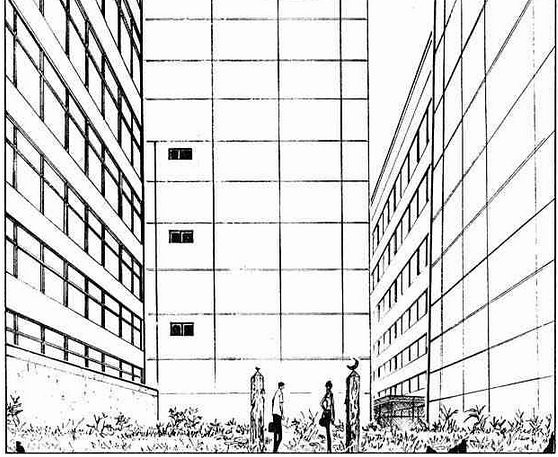
I was attracted to the hidden gates because it reminded me of Yuuko Ichihara’s house in xxxHoLic. A building (or empty field in the case of this screenshot) between two taller buildings. xxxHolic
I didn’t immediately go through the gates. Instead, I got a coffee at a cafe opposite the shrine.
While sipping my drink, I found out that the shrine was famous enough to be included on the map of the free guide pamphlet. However, there was no description of the place and why it was in the strange location.
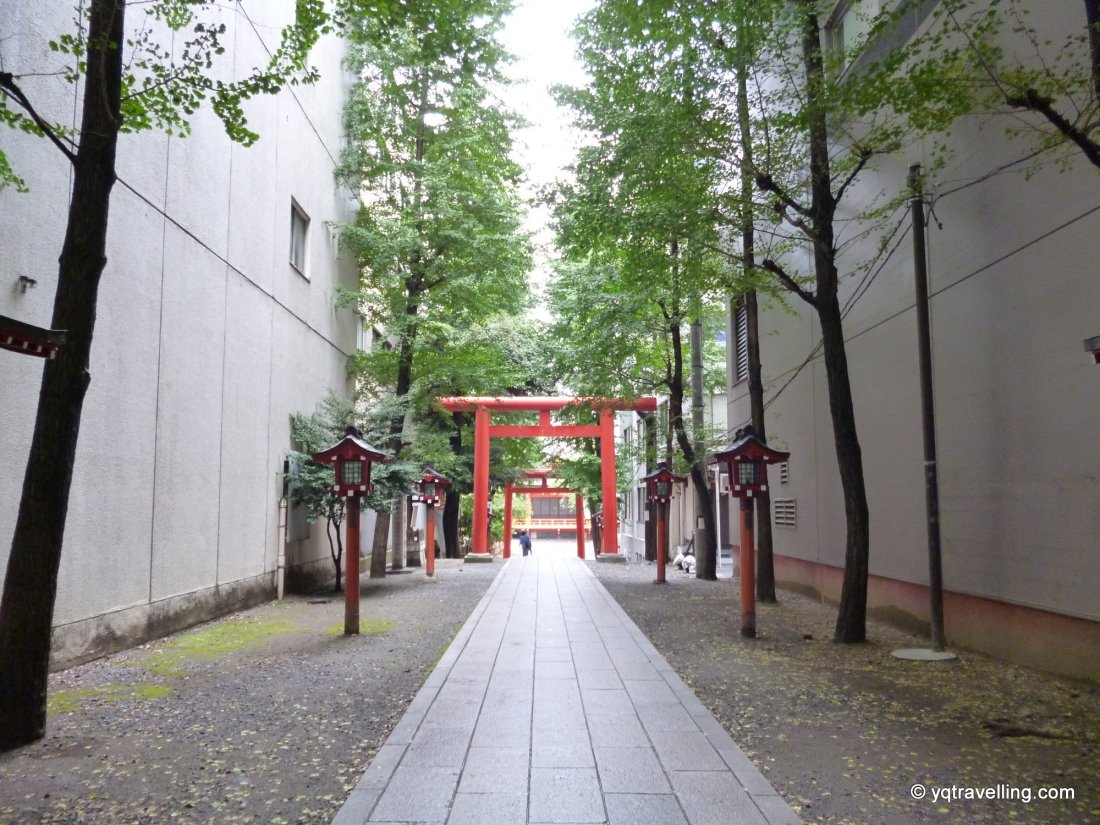
After my latte, I crossed the road to the shrine. The path was shaded not so much by the trees but by the walls of the buildings. Path to Hanazono Shrine
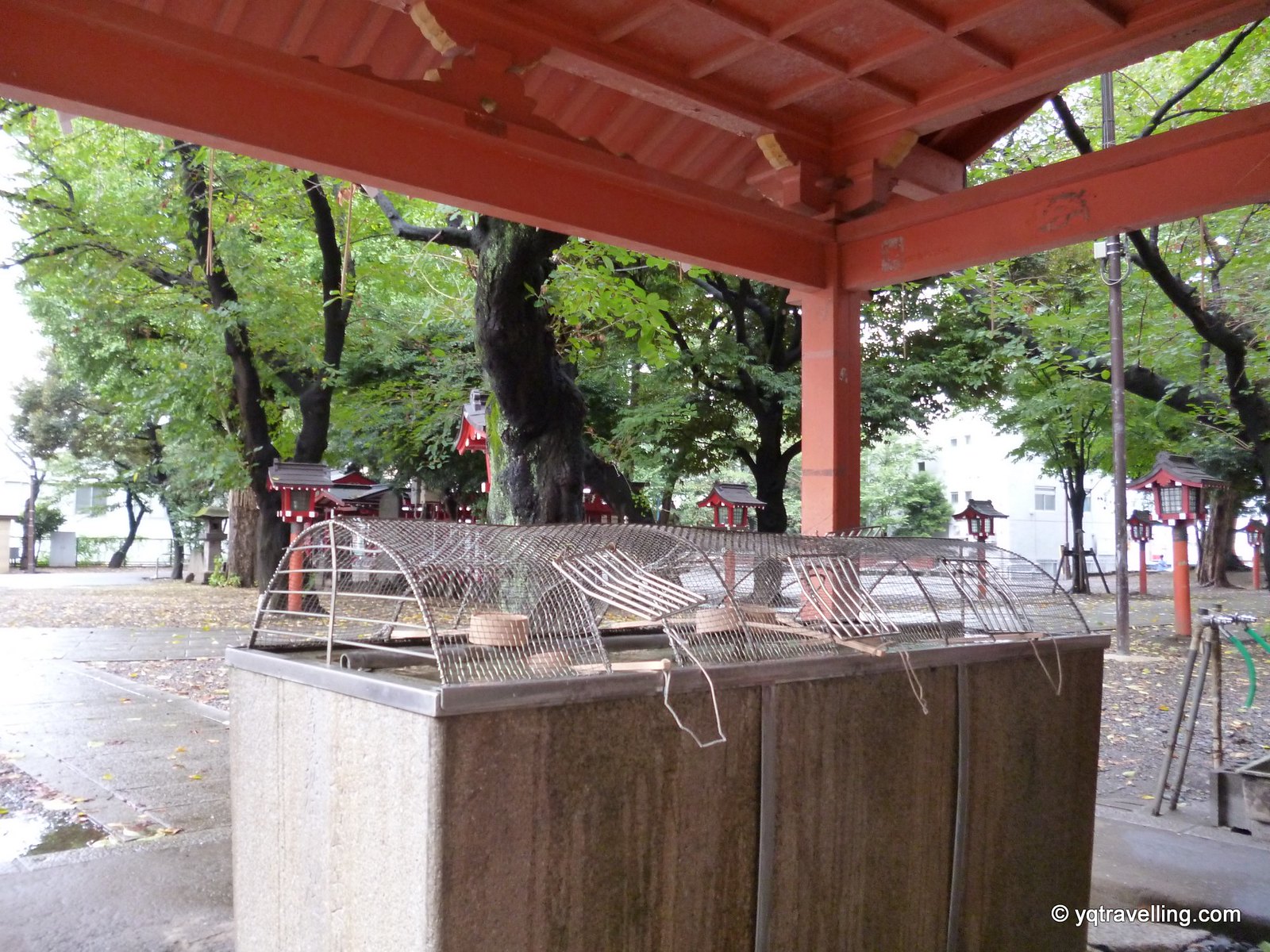
At the end of the path, there was the “cleansing station” where visitors wash their hands and rinse their mouth.water. Cleansing water at Hanazono Shrine
Entering the shrine grounds
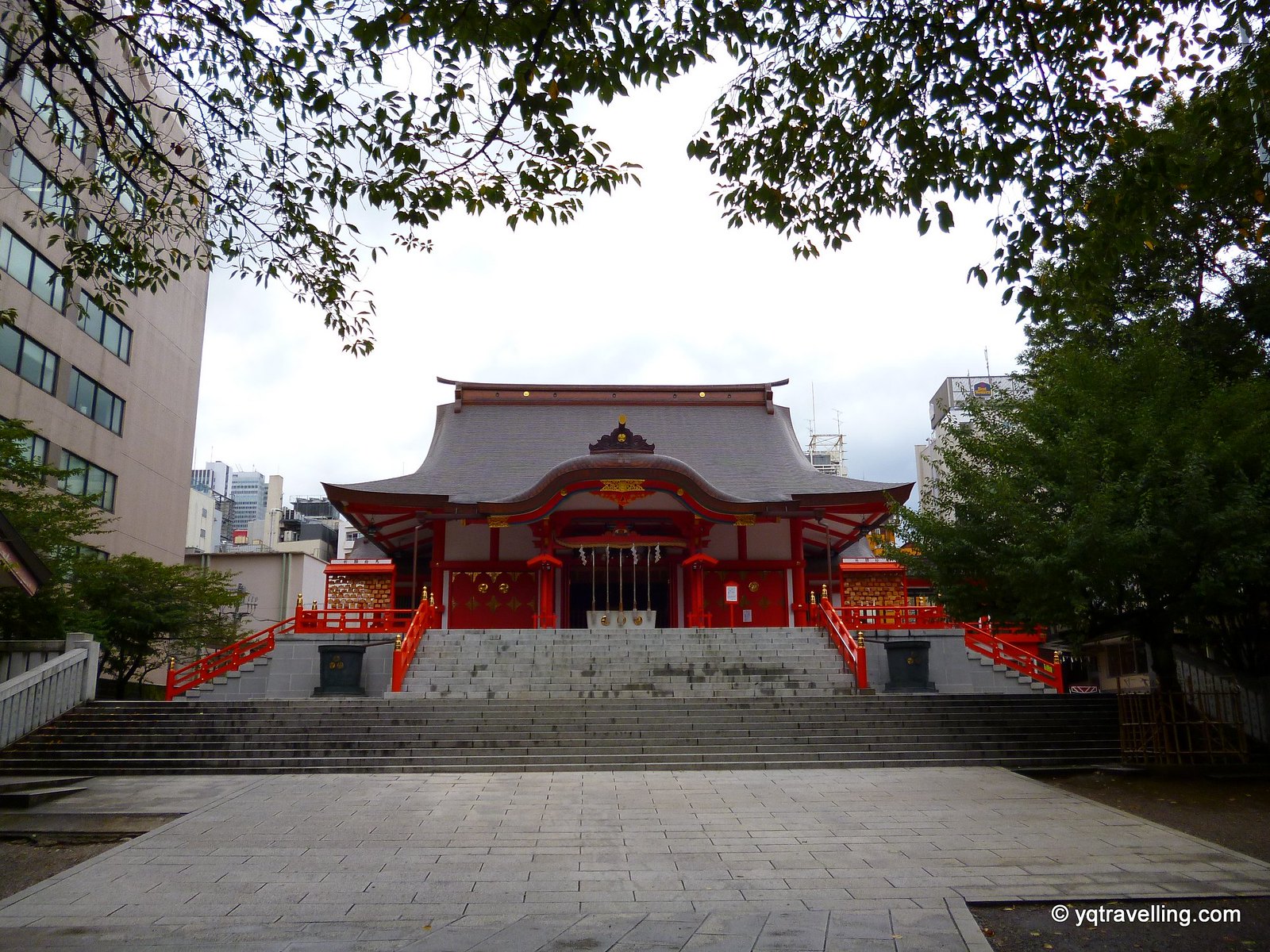
When I first walked into the shrine ground, I was expecting a small shrine at the end of the path, not a semi gigantic red shrine. Main shrine
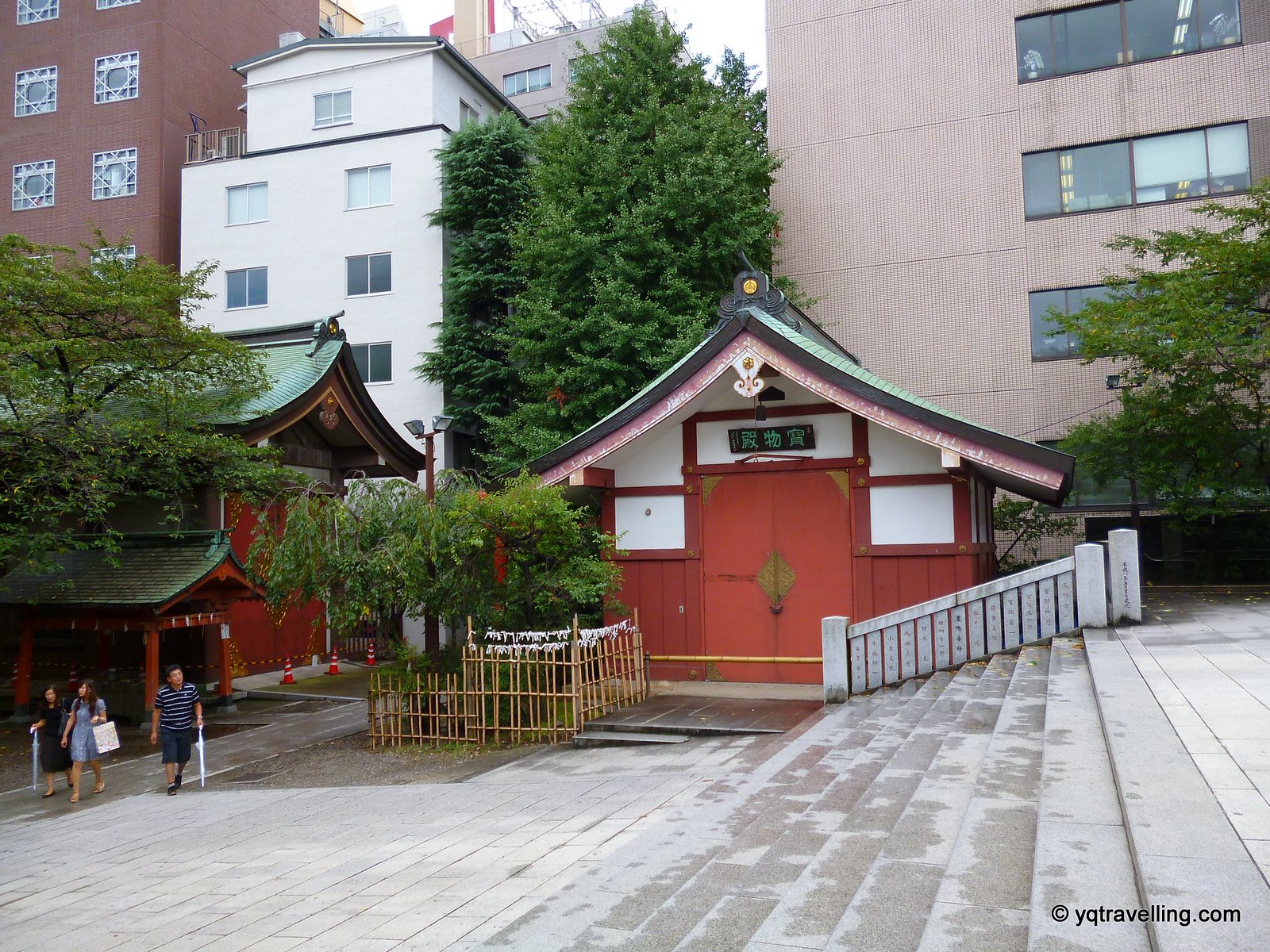
There was also a Treasure Room but I wasn’t sure what treasures could be hidden inside. Treasure room
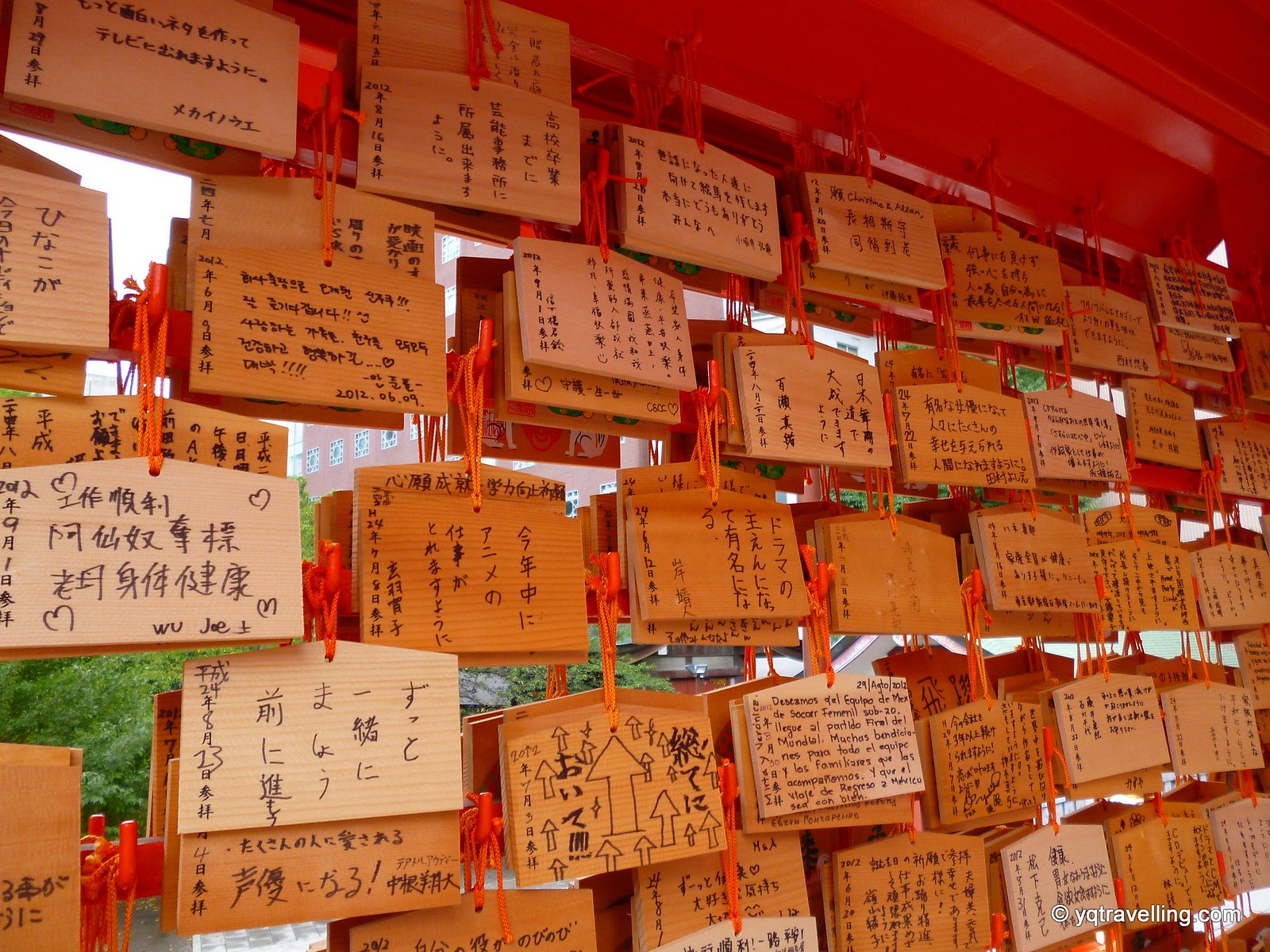
Similar to other Shinto shrines, Hanazono Jinja sold charms and ema. You write your wish on an ema and hang it up at the temple. Wishes on ema
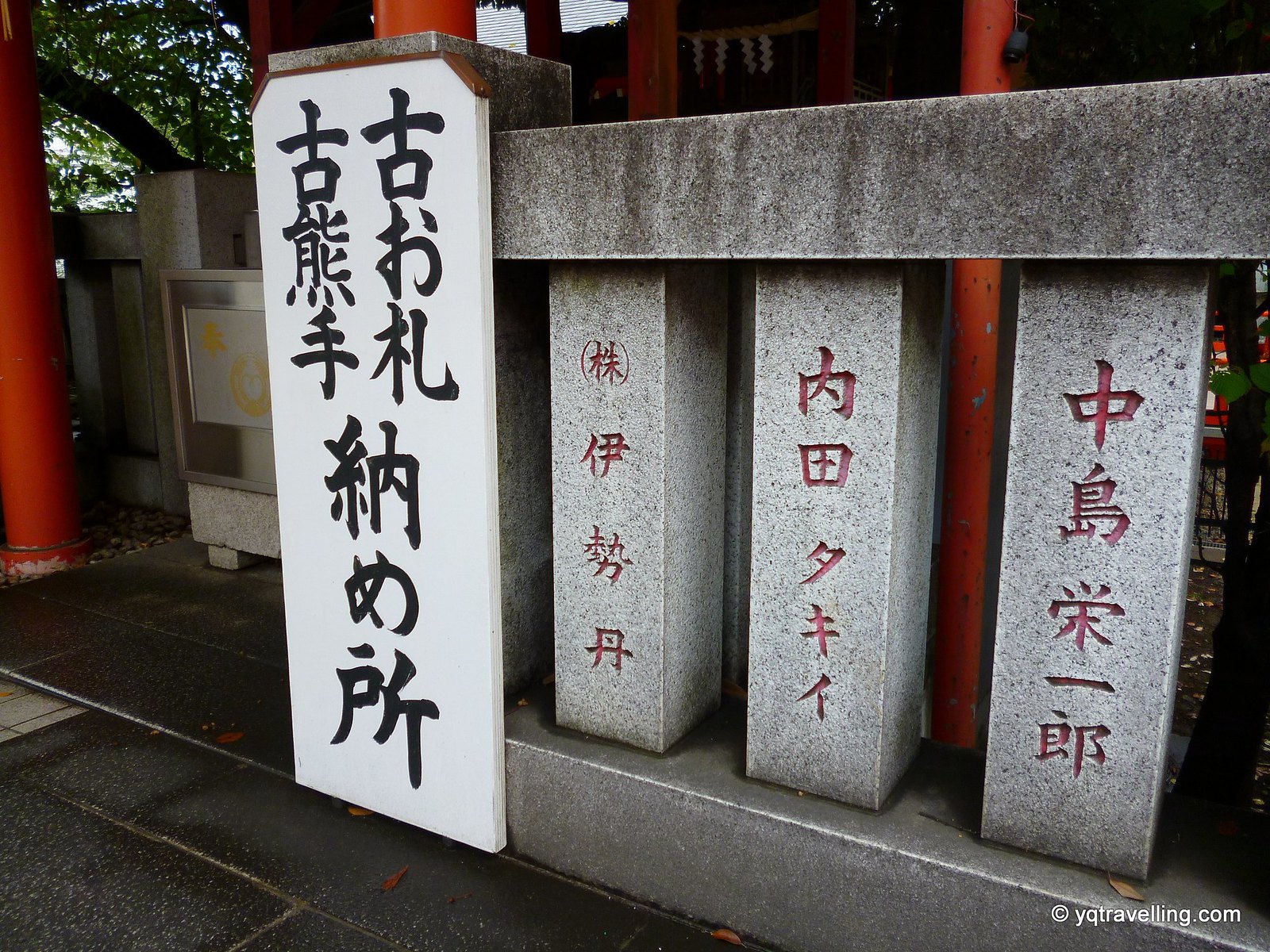
I didn’t quite get what the banner said but I thought the calligraphy was beautiful. “Old rake” submission area
Praying to Inari
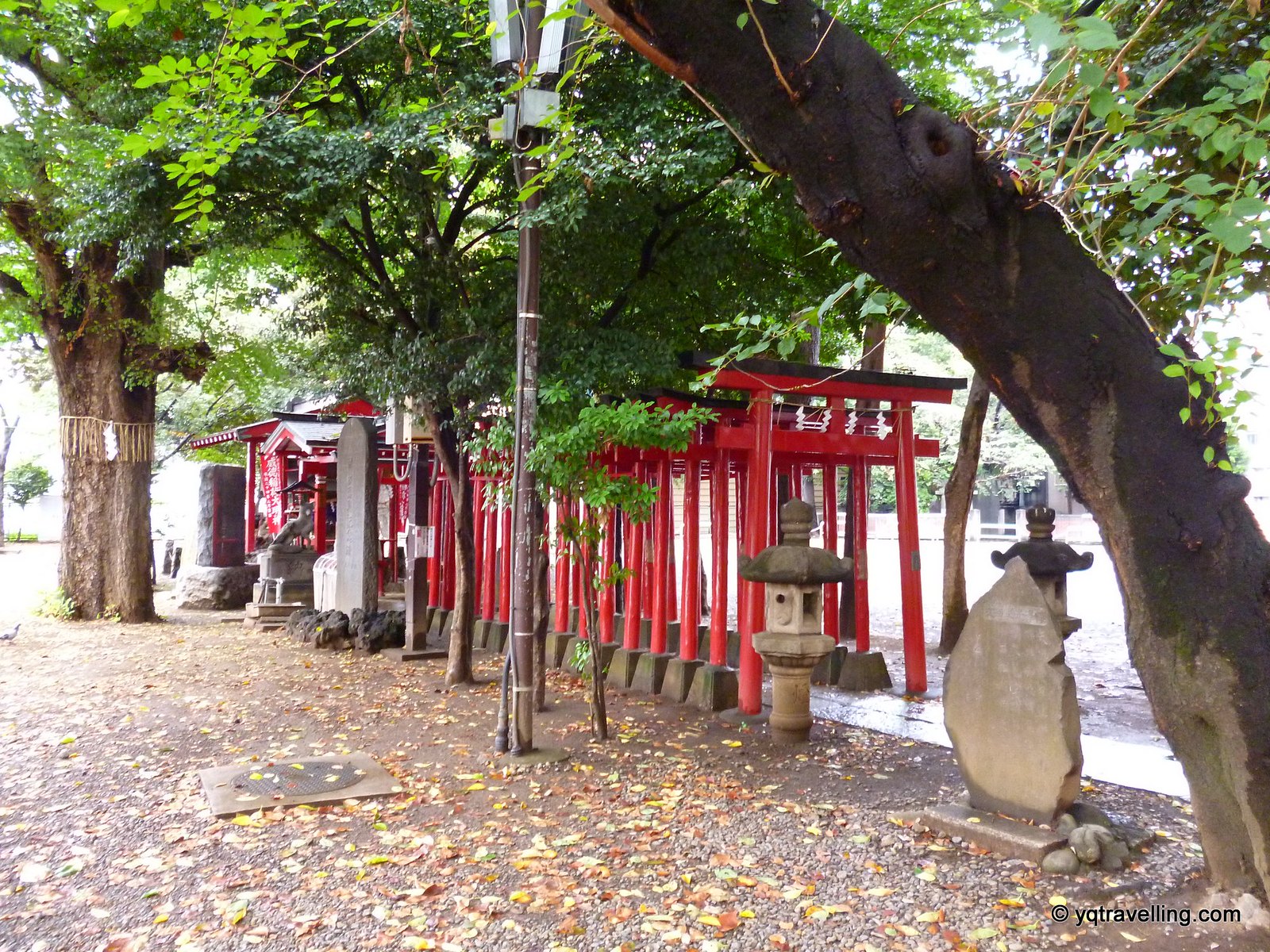
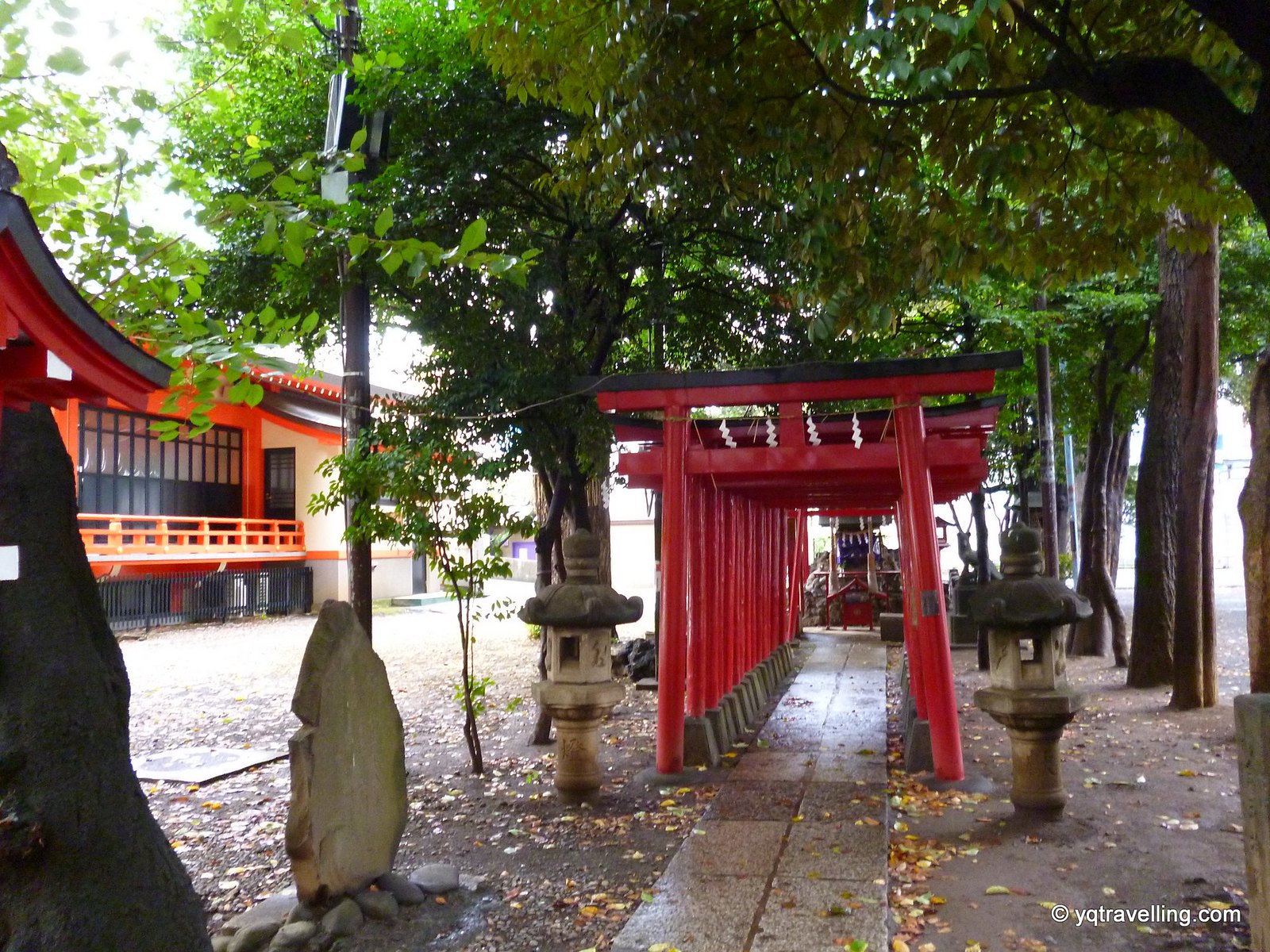
Tori leading to the small Inari shrine
At Hanazono Shrine, there was a smaller shrine for Inari. You will recognize Inari shrines because of the red torii lined in front.
Torii
Compared to the grand main building, the Inari shrine was small and cute.
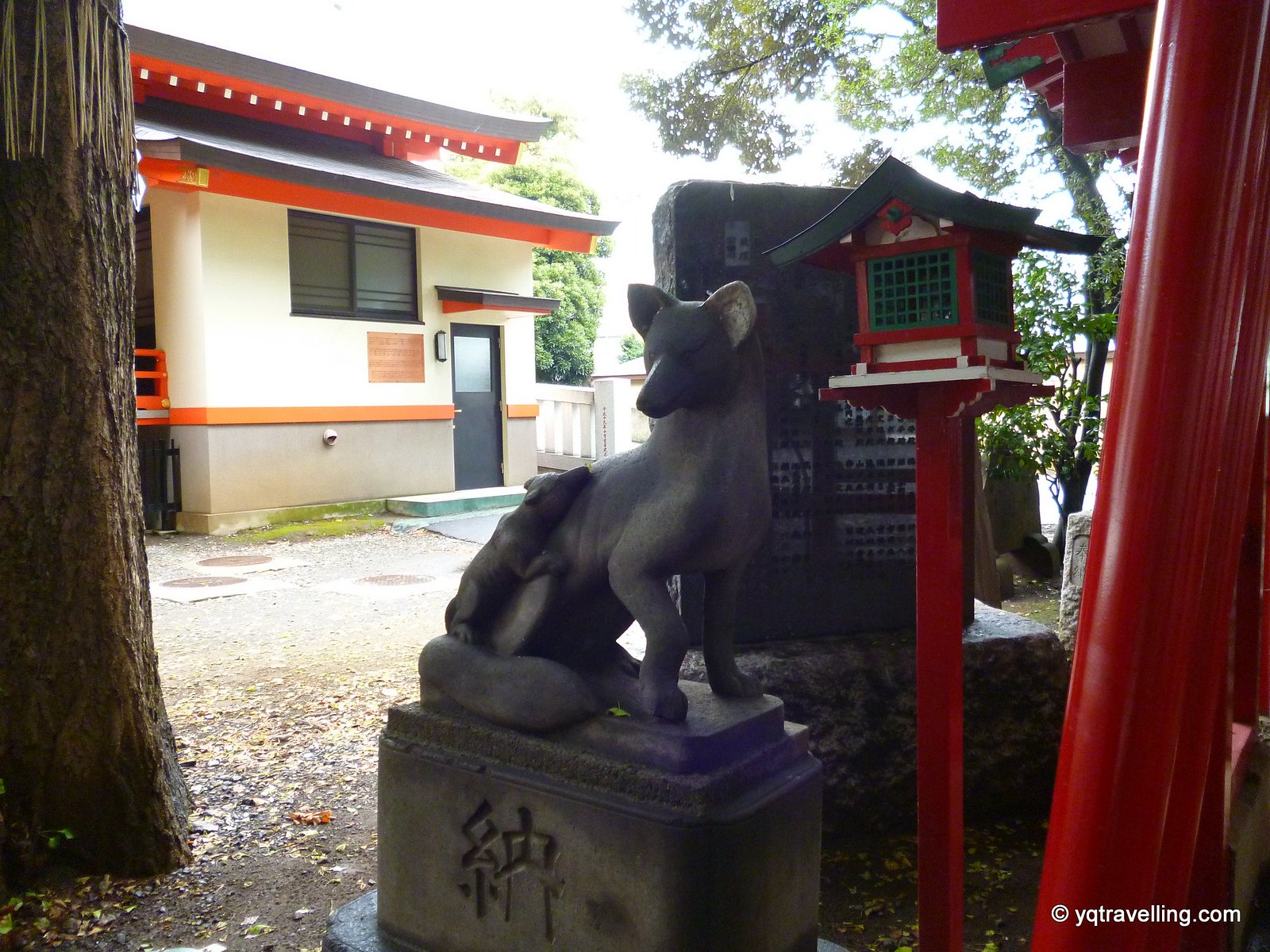
In front, two adult foxes guarded. I realized that the papa and mama foxes have little fox cubs with them. If these were Chinese stone lions, I expect one to have cubs while the other to have a golden ball to symbolize the female and male.
Parent fox 1Parent fox 2
I left by the main entrance, which was large. I’m glad that I found secret Garden Shrine through its smaller entrance.
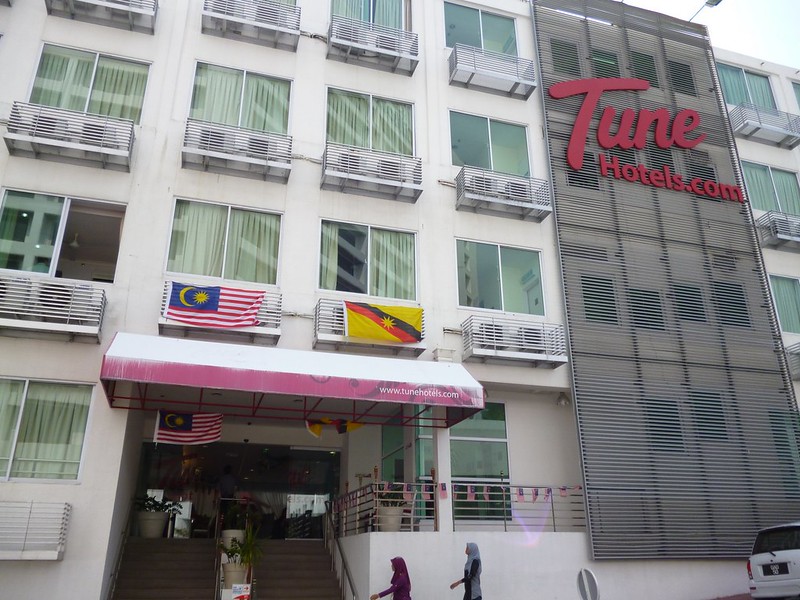
I stayed at Tune Hotel Waterfront Kuching during my weekend in Kuching on Sep. 15.
When I booked my plane tickets for Kuching, the plan was to go to Sematan where my two friends were vacationing at a resort. Unfortunately, it takes a while to get there and the pools close in the evening so D suggested I stay in the city.
I checked out room prices. 360xpress Hotel where I’ve spent a night before was absurdly expensive. Luckily, Tune Hotel was having a sale and I got my room for RM66 (including airconditioning and towel rental).
Tune Hotel Kuchingl
Even though Tune Hotel Waterfront Kuching say they have a shuttle, you have to have 2 passengers as a minimum and call in advance or something. I ended up taking a RM30 cab there.
I’ve stayed at Tune Hotel in Kota Bahru and Ipoh so I was familiar with the facilities.
The location of Tune Hotel Kuching was fabulous (even better than 360xpress Hotel). It’s just opposite Hilton Hotel (dimsum buffet lunch!) and a stone’s throw away from the Waterfront.
If you’re interested in how the single room looks like, check out a video tour of the room:
In a nutshell
Stayed at Tune Hotel Waterfront Kuching
Pros: Cheap, near waterfront
Cons: No real shuttle to hotel
One of my favorite yoshoku (Japanese-style western food) dish is omurice.
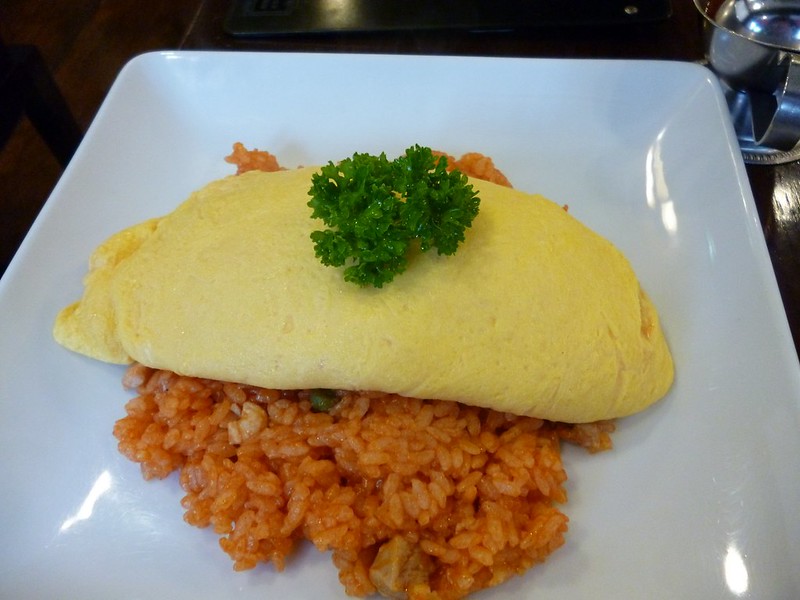
It’s a rather strange dish with an equally strange name. Omu + rice = omelet + rice. An omelet covers a serving of fried rice like a snug blanket and garnished with a dash of ketchup.
Good omurice has a tangy taste. Bad omurice is just fried rice topped with a lazy omelette.
I’ve wanted to try Taimeikan’s omurice ever since I read about the Tampopo Omurice on food blog Just Bento. Maki’s photo of a runny omelet on top of rice makes me hungry every time I look at it.
I had the chance to pop into Taimeiken for lunch during my last day in Tokyo. Even though my stomach was still full from my buffet breakfast, I knew that I needed to try the dish or I would fly back with regret.
The restaurant was a bit difficult to find because I couldn’t find the Exit C5 at Nihombashi station. When I did find the exit, I was confused by the street level buildings as the Taimeiken sign was not there that day.
I eventually figured out the place. I was reached the doors slightly before 1 p.m. and it was strange that the queue was not as long as I expected.
Little did I know the queue would snake out when I left the restaurant.
The queue after I had my meal
I was soon seated in the crowded restaurant. The place was smaller than I imagined. My elbow was almost touching the lady at the next table’s.
Even though there was a 800 yen lunch set, I ordered the omurice. I was informed that my order was for a normal omurice so I changed it to the famous Tampopo omurice.
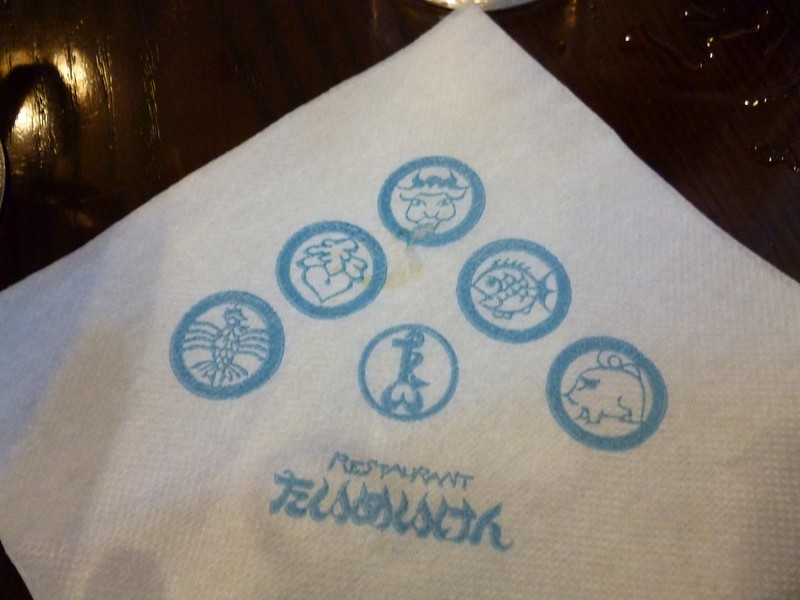
The deco was vintage. The chair even had what look like animals. Taimeiken chair
The pattern was repeated on the serviette. Taimeiken serviette
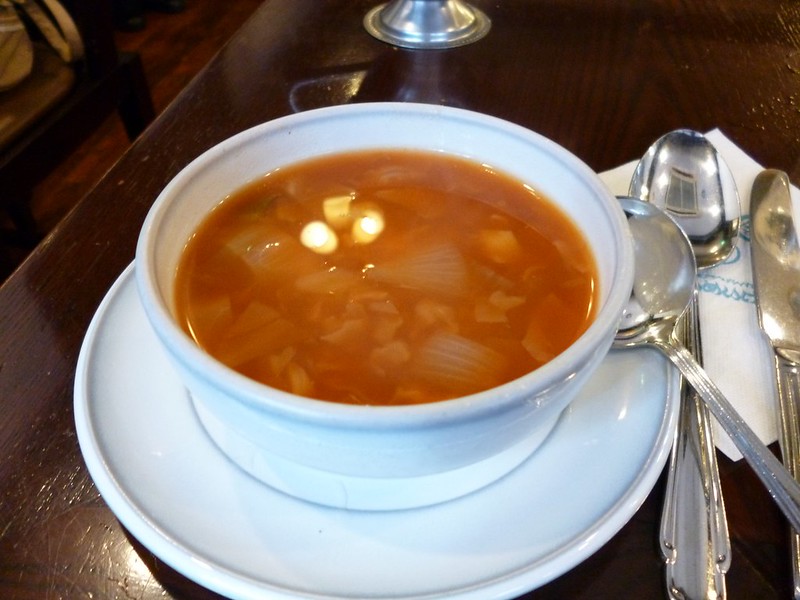
My 50 yen borscht arrived before my omurice. The serving was larger than I expected. (I imagined a small Chinese bowl of tomato-based soup.) Taimeiken 50 yen borscht
Soon my omurice came, along with a small serving of ketchup. The dish looked beautiful and I took a while to find the best angle to take a photo of it. Taimeiken tampopo omurice
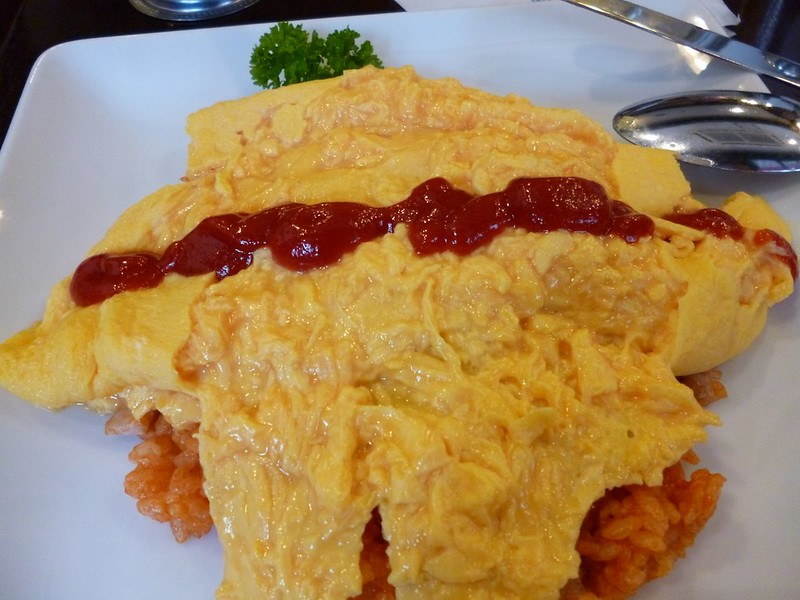
Unfortunately, that extra 30 seconds caused my egg to overcook. Instead of a beautiful waterfall of egg flowing over my rice. Mine looked like a the face of Two Face, a character in Batman.
Taimeiken tampopo omurice fail
For 1,850 yen, the taste wasn’t exceptional. It felt like it lacked salt. (Or my friend D likes to say: Too little seasoning.)
I ate every grain of rice because it was expensive. But I didn’t feel satisfied. :( I think I will go for the normal omurice, or even the lunch sets next time.
Directions
Take Exit C5 of Tokyo Metro’s Nihombashi station. Once out of the station, turn to the right and another right at the corner of the street. It’s just down the road.
This post is part of my money saving tips for Tokyo series. Last week, I talked about ways you can save on transportation in Tokyo.
Today, I’ll be talking about my favorite topic: Food.
Eating and drinking (even water, not beer) in Tokyo is not terribly cheap. But here are a few ways you can save those extra 100 yen (to buy more food).
Lunch time fixed menu + combo sets
Lunch menu
During week days, some restaurants have prix fixe menu. Taimeiken had 800 yen set lunches. I didn’t get the set lunch because I wanted to try its omurice so I got the 1,890 yen dish instead (but with much regret).
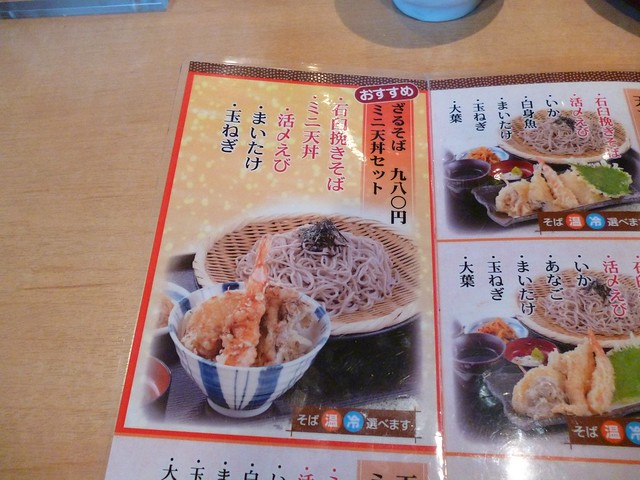
Besides lunch sets, regular menus would have combo sets which allow you to try out smaller portions of two different dishes. The soba restaurant I visited in Kamakura had a combo of tempura don and zarusoba which were both delicious.
Fast food
Yes, McDonalds has a 100 yen menu. But since you’re in Japan, you should try out the Japanese fast food outlets.
Although this menu from Nakau was from last October, you get a taste of how low food prices can go in these outlets.
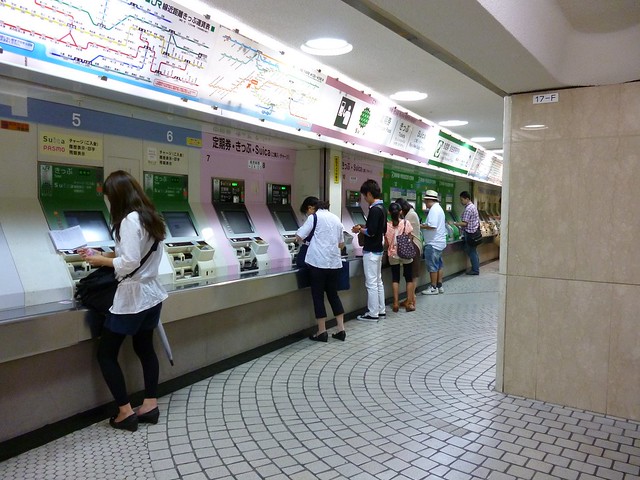
Another benefit of these outlets which use coupon machines is that you don’t need to speak Japanese to order. Instead, you look at the pictures on the machine and pay it with your bills or coins.
Convenience store food
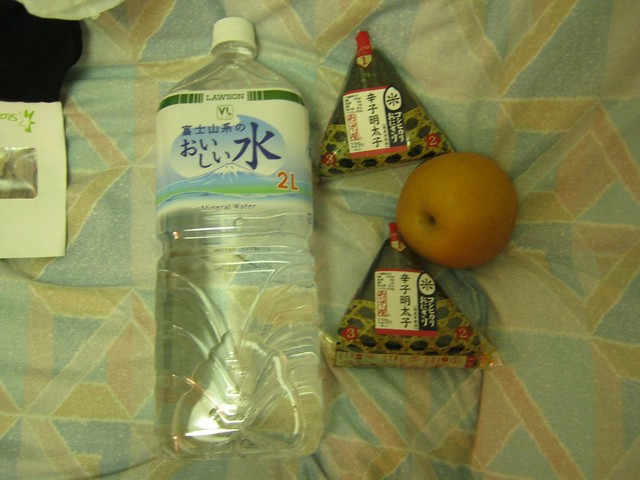
The onigiri (rice balls) in the photos were 129 yen each. Having two can substitute a meal.
These Japanese takeaway food are available at convenience stores which open 24/7, this means you will never go hungry.
Free drinking water
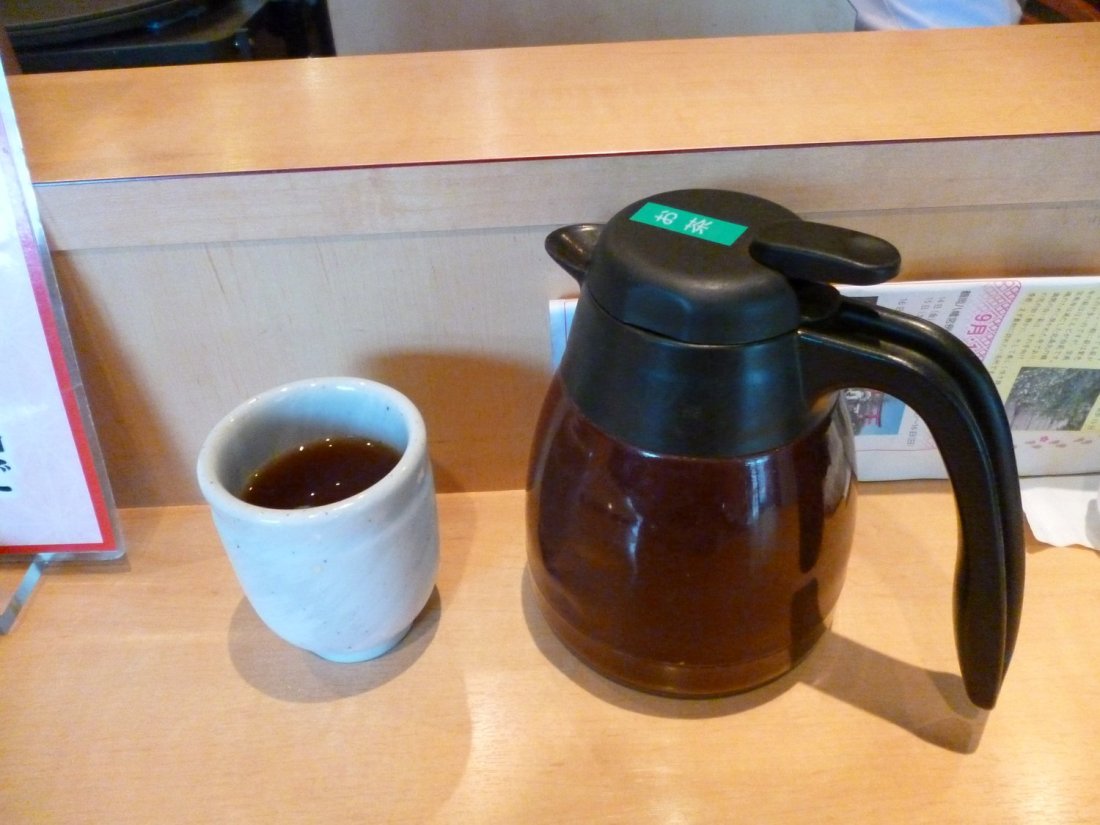
Free tea
I tend to forget to hydrate when I’m travelling because it’s too much of a chore to buy water.
Luckily in Japan, there’s quite a lot of free drinking water outlets. I’ve seen some at the platforms of train stations.
Restaurants also have free ice water or tea on the table, I admit that I’ve pour half a pitcher of water into my bottle once. Just once.
Do you have other tips for saving money on food and drinks in Tokyo?
Like what you’re reading? Head to Facebook to “Like” my page or follow me on Twitter to get updates of new posts and other random travel-related tidbits.

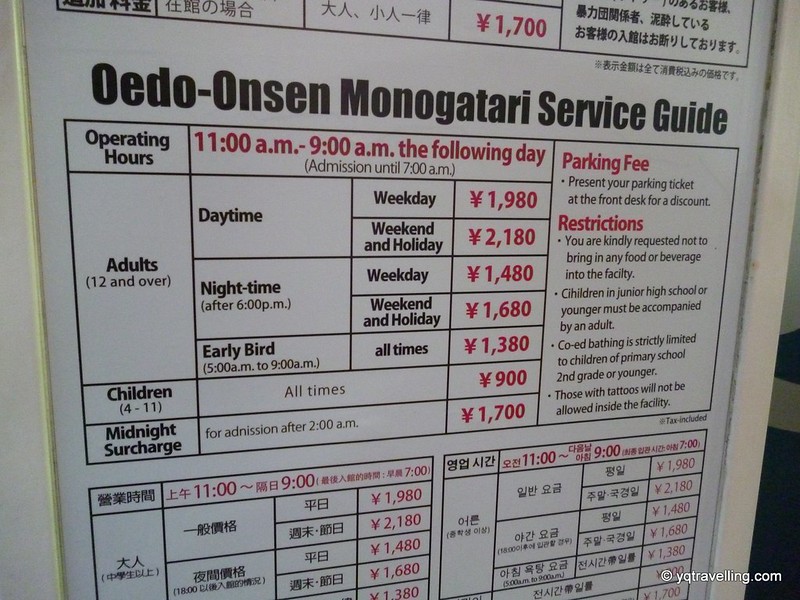
For me, staying overnight at Ooedo Onsen meant saving one night’s stay at a hotel. Since I already want to soak in hot springs, adding on the extra 1,700 yen wasn’t too bad. But if you are travelling in pairs, this might be a more expensive option for accommodation.
Checking in
Entrance fee
Since I was going to spend the rest of my night at Ooedo Onsen, I decided to pay for the evening entrance (past 6 p.m. 1,680 yen) instead of day entrance fees (from 11 a.m. to 6 p.m. 2,180 yen). I also bought my tickets from 7-11 so there was a 180 yen discount.
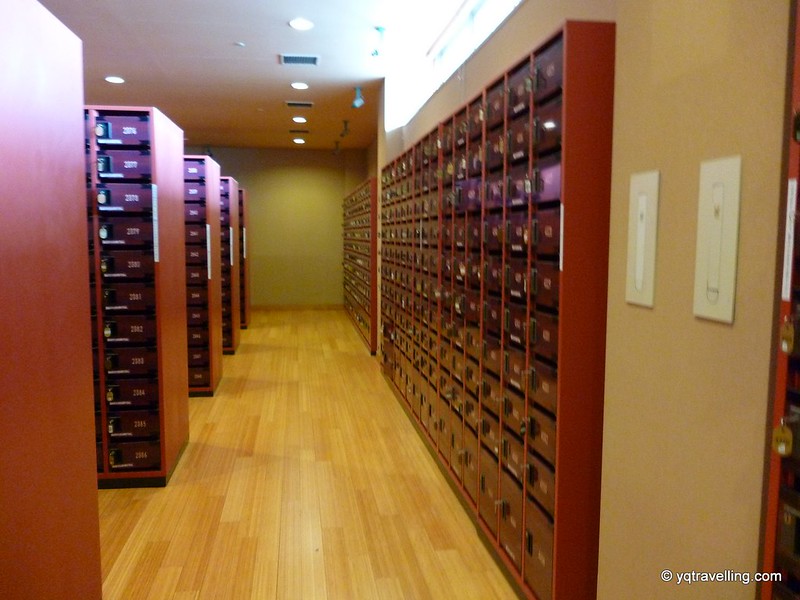
Before heading to the ticket counter, visitors need to put their shoes in shoe lockers. Shoe lockers
After putting away my shoes, I went to queue with the rest of the people. Since there was still about 10 minutes before 6 p.m., everyone had to wait patiently.
Waiting area
About 5 minutes before 6 p.m., a lady dressed in traditional outfit came out with a pair of clappers and said lots of things in a sing-song tone.
I remember from their Web site that she’s the kanban-musume Oshino. This literally translates to “Signboard girl” which means she’s the attraction of a business.
Too bad I wasn’t too sure what Oshino was saying. I guess it was to welcome all of us to Ooedo Onsen. Ooedo Onsen’s kanban musume (Sign lady)
Soon, the counters opened for the evening session. I handed over my my coupon and was given a wristlet with a barcode taped over and a key.
Before heading into the changing room, everyone gets to choose a yukata. There are different designs and sizes of yukata. I picked on with purple flowers.
Yukata choosing
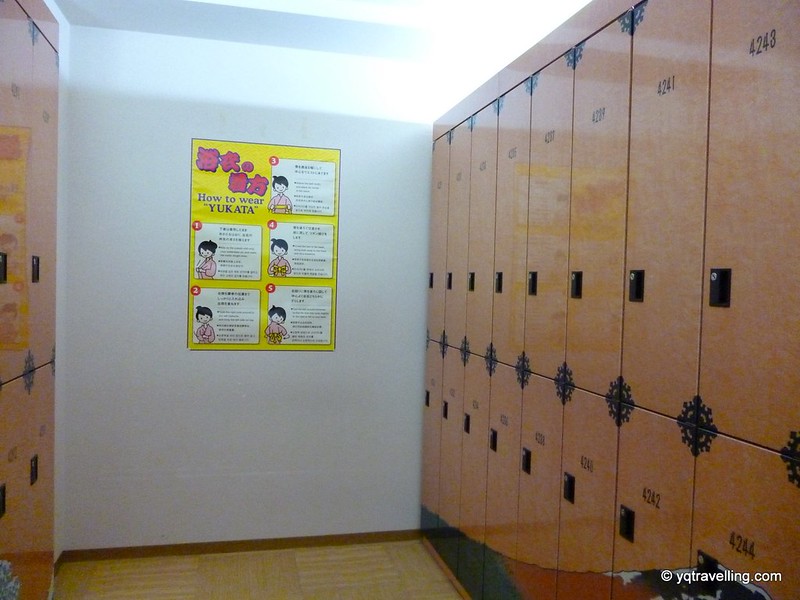
After yukata choosing, it’s time to hit the lockers. Find the locker corresponding to your wristlet. It’s in Japanese so if you don’t read hiragana, you might need help.
The size of the locker was enough for my backpack.
Lockers
At the lockers, strip down to your underthings and wear the yukata.
Remember that the left side needs to be on top, or else you are wearing the bathrobe as a corpse would.
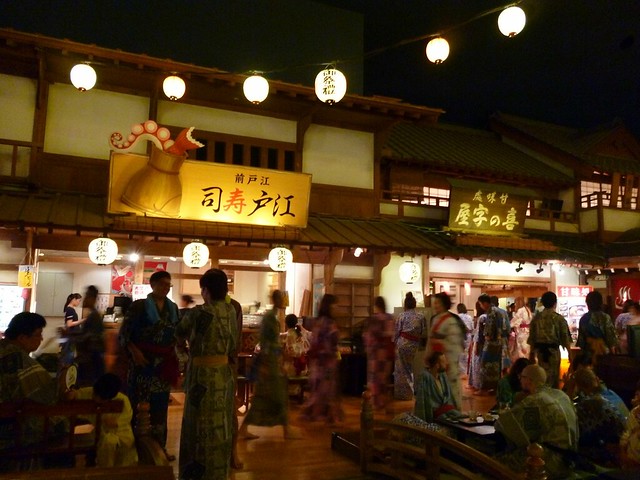
Strolling on Edo street’s
Edo streets
In my yukata, I went out to the fake Edo streets. There are plenty of food stalls around so don’t worry about being hungry. There’s also free hot tea and both hot and cold water so you won’t go thirsty.
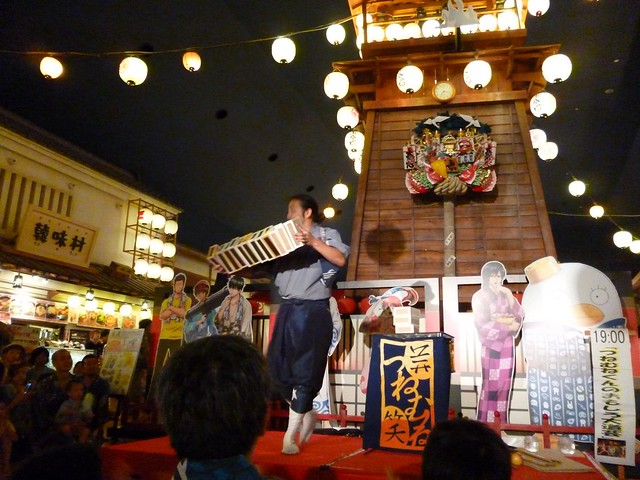
When I was there, there was a performance at 7 p.m. I think the shows change every season.
Performance
Soaking in hot springs
I couldn’t take photos at the onsen or its changing room so I can only tell through words.
Before heading to the ladies’ hot spring area, we need to put our things in another changing room. There’s other lockers here to put yukata and underthings in before heading to the hot spring area.
In the changing room, there’s a corner with samples of makeup remover, toner, face lotion. There’s also hair bands and toothbrush provided.
Before heading to the hot spring, take everything off. Everyone strips naked so no need to be shy.
The hot springs are divided into indoor and outdoor pools. There’s a large section where everyone washes their hair and body. Free shampoo, conditioner and body soap is provided too.
After vigorously washing and conditioning my hair, I headed to the pools.
There were a variety of pools and areas:
Ooedo Onsen hot spring which was real undersea hot spring, instead of just hot water. The color was a bit rusty. There was also a side with recycled Ooedo Onsen hot spring which didn’t have a rusty color.
40 degrees Celsius pools
Massage jacuzzi pool
Pool with frothing machine which makes the water much more “fine” and is good for the skin
Cold water (brr)
Sauna
Outdoor pool
The pools outdoors were limited. There was only a large pond and an area with a few fake vintage bathtubs.
Off to bed
After soaking in the pools for the longest while, I head to the changing rooms and bought myself a small glass bottle of milk.
At about 11 p.m., I decided that it is time to find a place to sleep.
Ooedo Onsen has a capsule hotel but it’s catered only to men. The private rooms are too expensive for me.
I think there are also large halls where they layout tatami for people staying over. This I’m not too sure though.
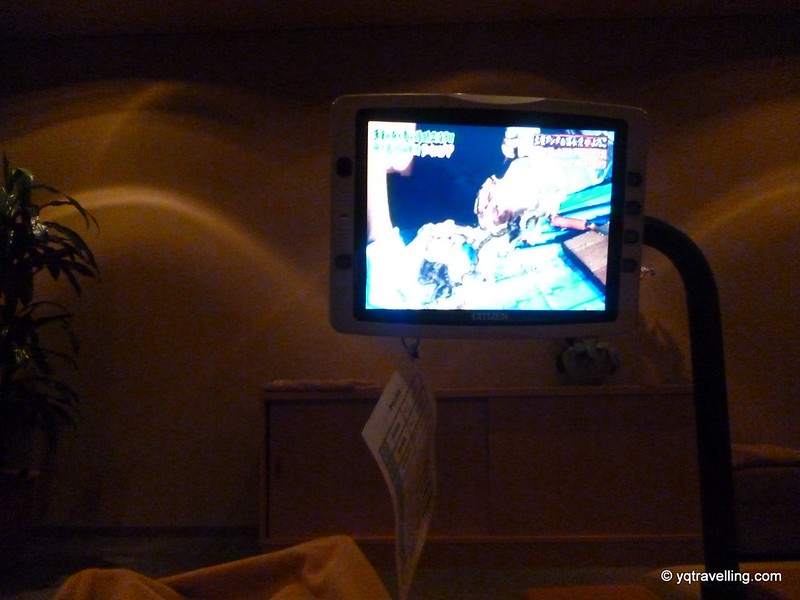
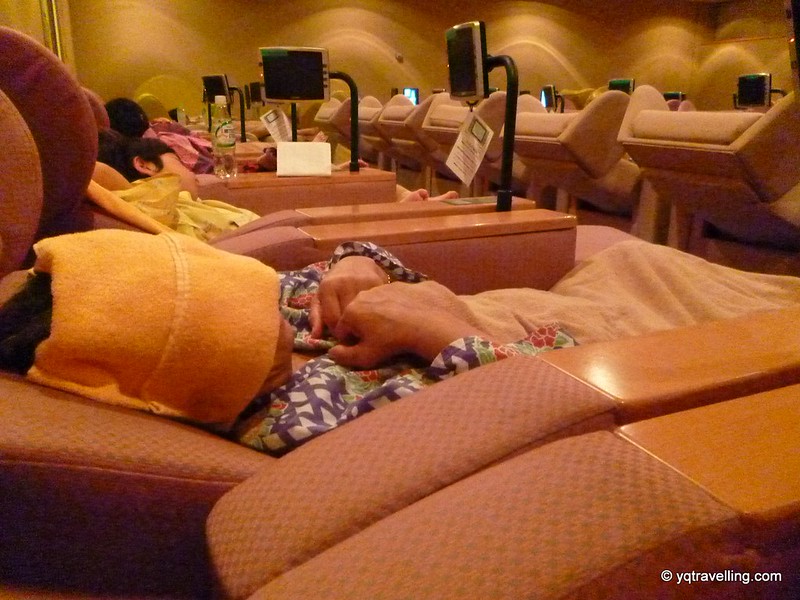
My choice was the ladies’ lounge on the second floor. Here, they have reclining chairs with mini TVs. They even provide blankets.
Chairs for sleeping
Most of the chairs were taken by the time I got there. I found a chair with a broken TV and settled there. A mother and her young son slept one chair away.
Mini TV
I put on my eyemask and ear plugs and tried to sleep on the 150 degrees chair.
Suddenly as I was drifting off to sleep, I heard a loud rumbling noise. I took off my eyemask and discovered an older lady snoring in the seat next to mine.
Hazard: Snoring old ladies
It wasn’t easy blocking her snores out even with my earplugs but I managed to sleep.
In the morning, I woke up and realized that she was gone. I was also surprised to find that it was almost 7 a.m. which meant that I had less than 1 hour before the pools close for cleaning.
I went back for a last soak of onsen. Soaking in the morning and at night was different. I could see the blue sky in the outdoor pool while at night everything was a blur because I wasn’t wearing glasses.
After the soak, I changed back into my real clothes and checked out.
REVIEW
Stayed: Ooedo Onsen Monogatari
Pros: Save on entertainment and accommodation; fun
Cons: Snoring seatmates; not having a real bed
Tokyo’s Tsukiji is the famous fish market. Some guidebooks recommend visiting early in the morning at around 5 a.m. to catch the tuna auction.
Being the lazy glutton, I didn’t wake up that early. I did visit Tsukiji, but only for the sushi which was slightly disappointing.
As I didn’t want to walk around with an open guidebook, I roamed the outer stalls of Tsukiji and missed the inner market.
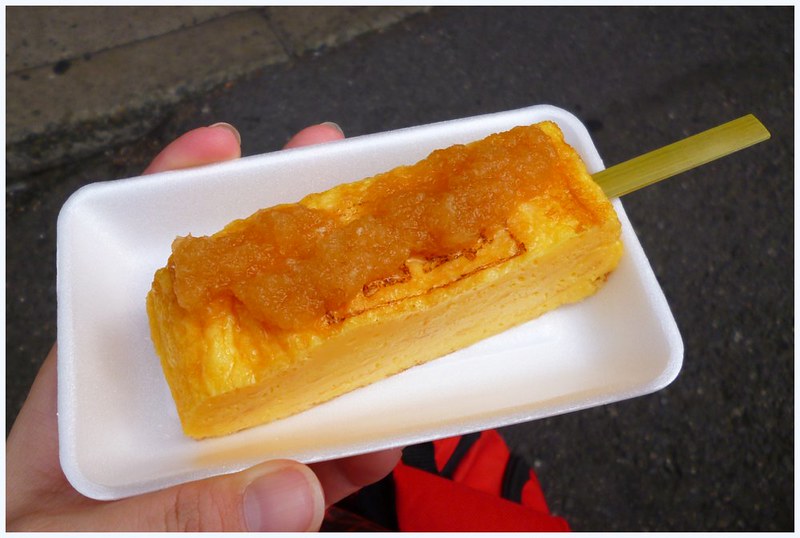
Tamagoyaki
I broke my fast with a tamago-yaki, or grilled egg, on a stick from Yamanaga. It wasn’t the most famous tamago-yaki stall in Tsukiji but the egg tasted yummy.
I ordered the warm tamago-taki which came on a styrofoam plate. There was some shredded white radish with sauce which gave the sweet grilled eggs a balanced flavor.
Sushi at Tsukiji
It is sacrilegious to visit Tsukuji without eating sushi. So after my tamago yaki, I went off to find my breakfast.
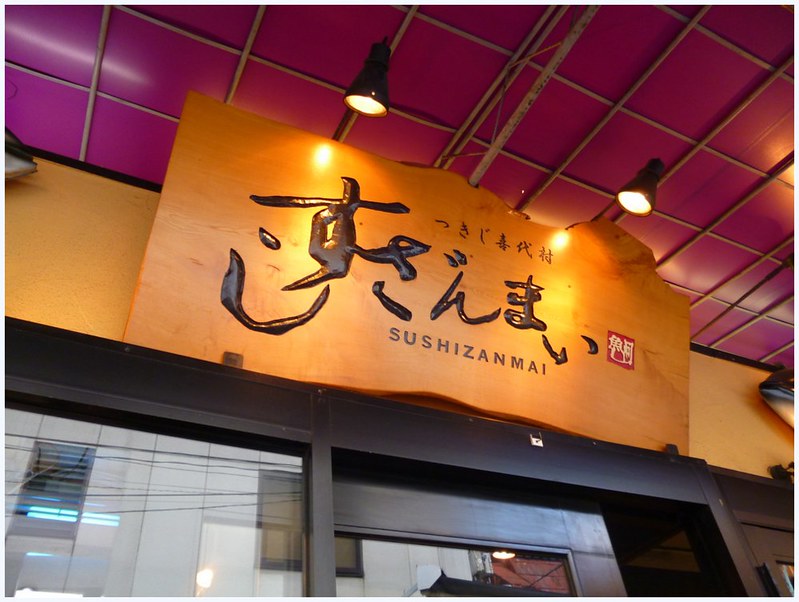
I stopped at the main chain of Sushizanmai. I had to wait outside before I was ushered into the restaurant before I was seated at the counter.
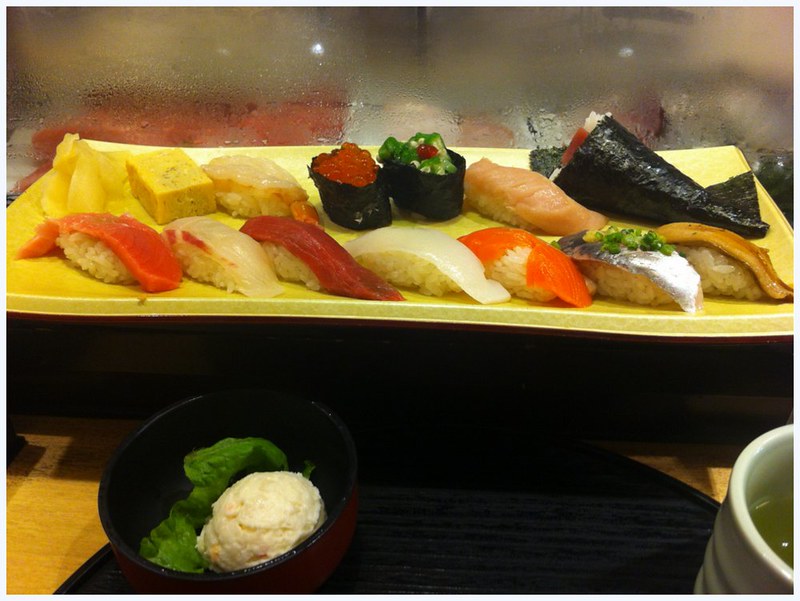
I ordered a sushi set which was disappointing. I was not as yummy as I thought it would be. I suspect I ordered a lower quality set.
From my side of the counter, I saw the chefs work. One took a fish out of the tank, sliced the flesh off its bones and served the slices on a plate.
It was a bit horrifying watching the fish die in front of my eyes. But I forgot about it after I bit into my piece of onigiri.
Ramune
When I walked back to the train station, I passed by a stall selling drinks for 100 yen. I picked ramune which tasted like ice cream soda. At the top of the bottle, there is a frustrating marble rolling around which sometimes blocked my from enjoying the drink.
I never figured out how to get the marble out. But some people have videos of how you can do it.
As I was writing this money saving guide for Tokyo, I realized that there is just too many sub-categories so I split the tips into three different posts.
This post is about saving on transportation. There is another on food and drinks as well as accommodation and sightseeing.
Transportation in Tokyo is crazy. A short trip would cost 180 yen (US$2.3) on the train which is very expensive compared to Singapore.
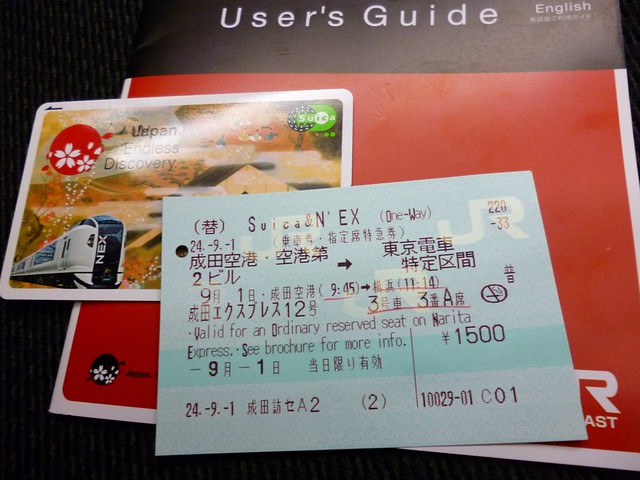
From Narita Airport: Get the Suica & N’EX package
Suica & N’EX package
I picked up the Suica & N’EX package for 3,500 yen when I reached Narita airport. It includes transport into the city (and slightly beyond) as well as a 2,000 yen Suica.
The package also good value because the N’EX limited express train to Tokyo is 2,940 yen (gasp!).
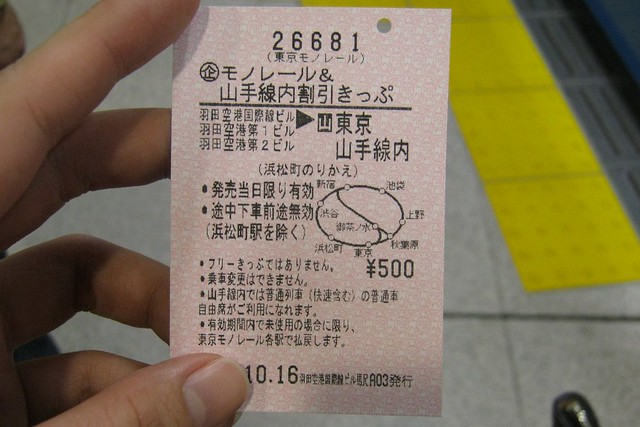
From Haneda Airport: Get Monorail and Yamanote Line Discount Ticket
Monorail and Yamanote Line Discount Ticket
Only available on weekends
If you arrive at Haneda Airport during the weekend, remember to pick up this discounted ticket.
For just 500 yen, you can take the monorail and leave at any stations on the Yamanote Line. If you are exiting at other JR stations, just pay the extra at the counter.
Free one-way day trip with Suica & N’EX package
If you have a day trip planned to either Yokohama or Kamakura, I recommend doing it on the day you arrive if you reach before noon.
I was planning to visit Yokohama but when I found out that the package covers Kamakura, I changed my plans immediately.
A trip from Tokyo Station to Kamakura would cost 890 yen. So in theory, I’ve saved a little by heading straight there instead of taking the day trip on another day.
Transfer rebate with Suica
If you are using Suica to pay for your transport, it automatically gives you rebates when you transfer from trains of the same company.
Stick to the same company on trains
Tokyo Metro
Planning your transport within Tokyo is really tricky. There are just too many lines and too many different train companies.
Many times, I had to transfer from one train line to another to reach my destination. I accidentally took different train lines for a ride and it cost me more than it would if I had transferred from the trains of the same company.
So, I suggest taking trains from the same company when you travel. This might mean an extra 5 minutes, but it’ll cost 200 yen less.
My blog is turning into a Visit Japan blog with all these posts about Japan! We interrupt your regular program with a visit to Kellie’s Castle in Ipoh.
I first read about Kellie’s Castle in a guidebook. It sounded like a fairy tale gone wrong. Let me tell the story with a bit of help from Journey Malaysia.
“Once upon a time, in a land far far away, a Scot by the name of William Kellie Smith made a lot of money in Malaya.
“In 1909/1910, he built a Moorish-styled manor for his family (wife Agnes Smith and daughter Helen Agnes). When his long-awaited son was born, he decided to extend his house into an even grander building.
“Unfortunately, the great building was never finished as many of the workers caught the Spanish flu and died. Smith was said to have died in Portugal of pneumonia.
The wife, daughter and son who left Malaya never returned.
“Nobody lived happily every after.
“THE END”
Yes, that is the sad tragic tale of Kellie’s Castle. Kellie’s Castle Ipoh
From town to Kellie’s Castle
As L and I were not familiar with the public transport, we took a private cab recommended by the Tune Hotel Ipoh receptionist. I believe it was a RM40 trip to the site and back to Ipoh town.
The castle wasn’t as creepy as the travel brochure portrayed. Kellie’s Castle wasn’t the grey stone castle of Scotland which I had imagined. Instead, the walls were mostly brick red.
Most of the castle was crumbling. There were dangerous areas on the upper floor with nothing to protect the visitor from falling of the building. Living on the edge at Kellie’s Castle
One of the rooms was reportedly haunted by a young girl. The problem is, I don’t think Helen died when she was young. I think it’s one of the stories people make up to pretend it is more mysterious than it is. Haunted room at Kellie’s Castle
Yellow House
Yellow House of Kellie’s Castle
Behind the red building was a crumbling yellow house. This used to be the original manor but was somehow damaged really badly.
I mostly felt sad wandering in the unfinished compound. Some of the walls were newly painted but most were uncovered and other had moss crawling all over.
What made me happy were the two sets of people having photoshoots.
A couple was taking pre-wedding photo shoots while we were there. I adore wedding shoots at historical places as they are more interesting than generic flowerbeds. Wedding shoot at Kellie’s Castle
Then a bunch of people were also taking cosplay photos. The people dressed up in futuristic warrior outfits while the camera folks held reflective boards. Cosplay shoot at Kellie’s Castle
When I showed my colleagues photos of the castle, they were unimpressed. I think they wanted to see buildings as grand as Edinburgh Castle.
Have you visited Kellie’s Castle? Did you see ghosts there?